 Global
Commentaries | 27 October, 2026
Israel goes to polls amidst crisis and conflict
Earlier this month, Israel marked the third anniversary of the October 2023 terror attack by Hamas, which altered the country’s politics and national security doctrine and plunged the wider West Asian region into turmoil. Subsequent strikes against Iran, carried out in concert with the US, brought the region to the brink of a wider conflict. For Tel Aviv, the challenge is not limited to Iran. Netanyahu himself has described the conflict as a ‘seven-front’ war involving Iran, its proxies, including Hezbollah in Lebanon and Hamas in Gaza, as well as forces in Syria, Iraq and Yemen, among others.
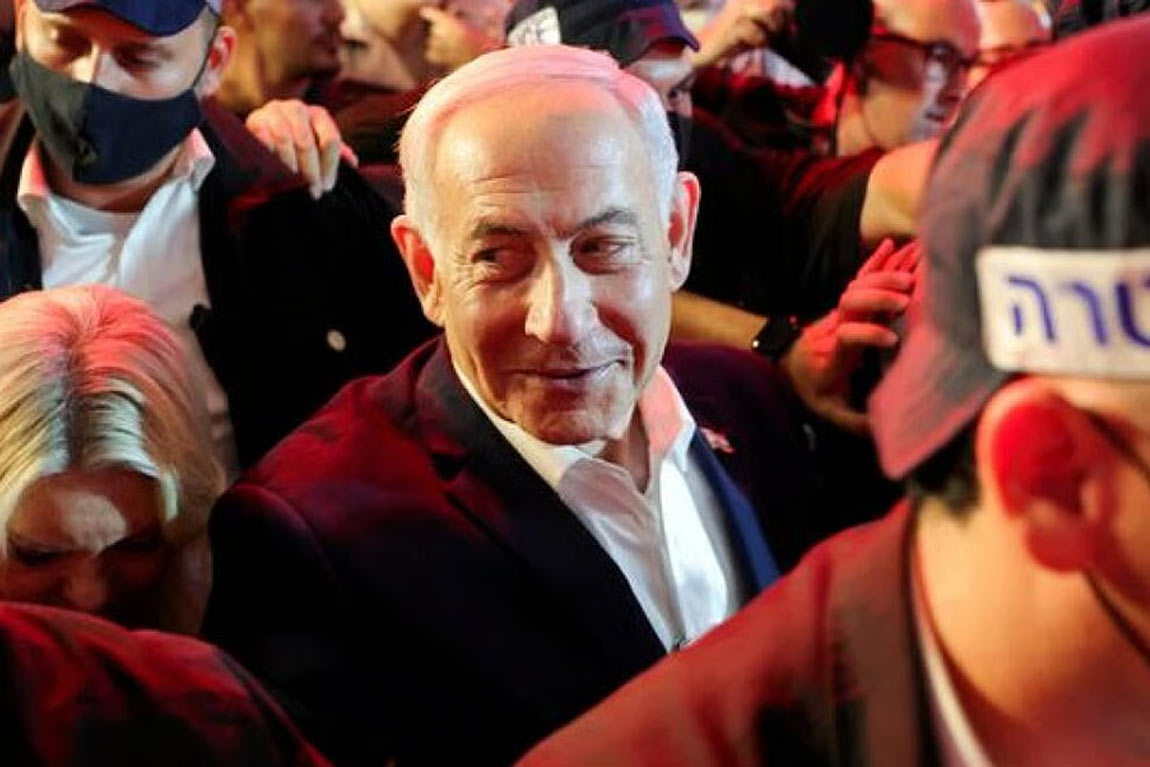
Israel’s Prime Minister Benjamin Netanyahu has long been a divisive figure, even before the October 7 massacre by Hamas intensified tensions. From mass protests against his judicial reforms to a political career spanning four decades, during which he has repeatedly survived crises and reshaped alliances, the coming elections could be a defining test for Netanyahu, Israel and its parliament, the Knesset. In a sense, it is fitting that Netanyahu is at the helm as the country confronts this enormous challenge to its security and identity.
The Israeli elections remain uncertain, with no clear winner expected as the electorate remains deeply divided. Netanyahu faces a paradox, enjoying support among some sections while remaining unpopular with others. Established opposition figures such as Naftali Bennett continue to present themselves as alternatives, while also acknowledging Netanyahu’s political resilience rather than dismissing his approach outright. However, Gadi Eisenkot, a former chief of staff of the Israel Defense Forces (IDF) and leader of the Yashar party, is mounting the main challenge. Considered more grounded than Netanyahu, Eisenkot has lost a son and two nephews in combat operations in Gaza. He is in a close race with Netanyahu for the country’s leadership and has vowed to end the war within a year and restore Israel’s damaged international standing.
Of the seven fronts Netanyahu faces, two could prove particularly important in determining the election outcome. The first is Iran. The war against Tehran is not easily assessed within the Israeli public psyche. There appears to be a consensus that the Iranian threat is real and existential. The conflict has benefited Netanyahu in some respects and may have partly repaired his significantly damaged reputation, both before and after October 2023. Direct military action against Iran has been less divisive than the war in Gaza. Strikes on Iranian nuclear sites have received broad support across the political spectrum, including among opposition figures who do not support Netanyahu.
Meanwhile, Netanyahu’s coalition partners on the far right, particularly National Security Minister Itamar Ben-Gvir and Finance Minister Bezalel Smotrich, have provided him with political backing in exchange for pursuing hardline religious, political and military policies. Netanyahu has conceded to many of their demands to preserve his leadership and hold on to power.
The second, and more politically charged, front is Gaza and the war against Hamas. With a direct and daily impact on the population, the conflict has profoundly altered Israeli thinking. Three years on, with much of Gaza flattened, there is no firm basis to claim that Hamas has been disarmed, let alone defeated. Given Israel’s mandatory military service, almost every household has citizens deployed on one of the seven fronts, making the war a domestic concern. However, the Gaza conflict has inflicted the greatest damage closer to home and triggered institutional fallout. It has also exposed rare public tensions between Netanyahu and the IDF leadership, damaging the image of a state whose security apparatus is widely respected.
The irony is that Netanyahu and Iran share a defining characteristic: both are persistent political survivors. If Netanyahu forges another alliance and returns to power, the Iran question will remain unresolved. US President Donald Trump has openly endorsed Netanyahu following the war with Iran. Netanyahu has reciprocated by supporting Trump, who faces a midterm election showdown in November. Although some polls place Eisenkot ahead of Netanyahu, questions remain over whether he could assemble a coalition capable of unseating the incumbent if the election produces a deadlock.
Finally, domestic issues will play as important a role in determining Israel’s political future as the ongoing wars. For Netanyahu, the political costs of remaining in power or leaving office are substantial. For the opposition, the challenge will be to rebuild Israel’s regional and international standing, including its relationship with the US, while moving beyond Netanyahu’s legacy.
This commentary originally appeared in Deccan Herald.