 Global
Special Reports | 27 October, 2026 Download Report (PDF)
Beyond Washington: Gulf Partnerships Under Review
Attribution: Clemens Chay, Ed., “Beyond Washington: Gulf Partnerships Under Review,” ORF Special Report No. 327, ORF Middle East, October 2026.
Editor’s Note
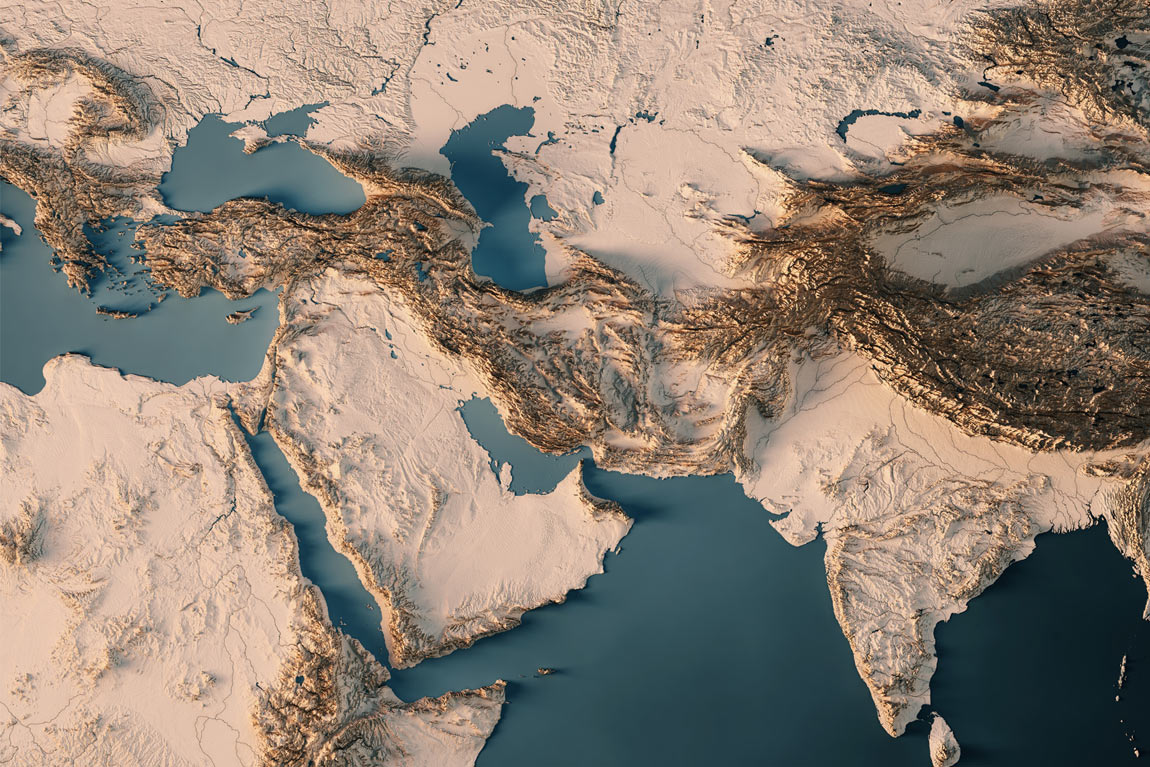
The United States (US)-Israel military campaign against Iran, launched on 28 February 2026 under the codename Operation Epic Fury, did not merely redraw the Middle East’s security map. It also stress-tested every significant external partnership the Gulf Arab states had cultivated over the preceding decade.
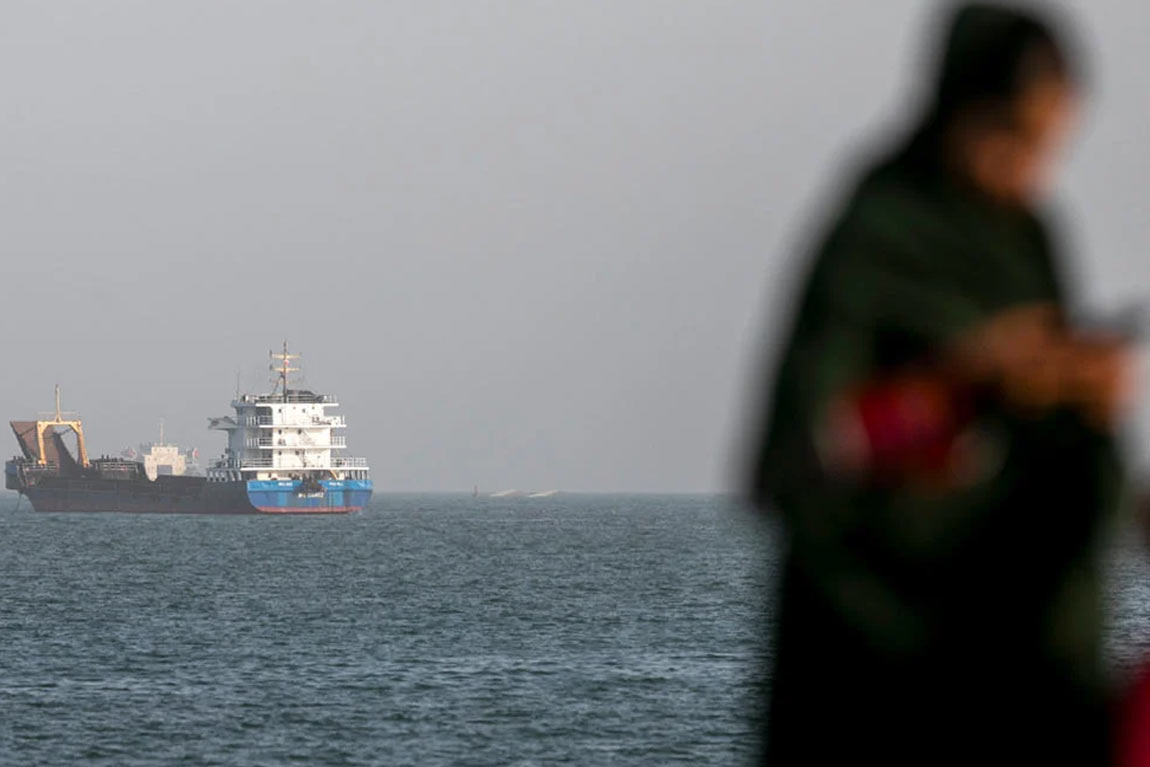
Iran’s closure of the Strait of Hormuz, through which roughly a quarter of the world’s seaborne oil and a fifth of global LNG had until that point moved freely, severed the arteries of Gulf commerce and overwhelmed every government at the helm of countries with economic stakes in the region. The spike in waterway volatility, encapsulated by the US naval blockade of Iranian ports accompanying Iran’s strait closure—and now, the Houthi threat on the Red Sea—produced immense global energy security challenges, with cascading effects on oil markets, LNG supply chains, fertiliser trade, and the economic transformation agendas that Gulf states had staked their post-hydrocarbon futures on.
What the crisis revealed, with uncomfortable clarity, is that the Gulf’s carefully cultivated web of partnerships—with Beijing, New Delhi, Ankara, Seoul, Tokyo, Moscow, and various European capitals—had been calibrated for an era of managed competition, not open war.
This report examines eight of those partnerships through the prism of the 2026 conflict and its aftermath. Each chapter assesses a relationship that was elevated, strained, or fundamentally reoriented by the events in the Persian Gulf between February and June 2026. The selection is deliberately varied in register, and several cross-cutting trends emerge from the essays as a whole.
The first is the gap between declared partnership and demonstrated commitment: across multiple relationships, the war exposed a distance between the deep rhetoric of bilateral ties, and the willingness—or capacity—of partners to act when Gulf states were under direct attack. The second is the growing premium on hardware: air defence systems, interceptor stocks, and defence-industrial cooperation moved to the centre of Gulf partnership calculations in ways that will reshape procurement and alliance logic for years. The third is the limits of strategic ambiguity: partners that had cultivated productive neutrality between Washington and Tehran found that open war foreclosed the middle ground, forcing choices—or exposing the consequences of refusing to make them. Lastly, running beneath all the others, is the accelerating diversification of Gulf security relationships away from a single anchor: the United States remains indispensable, but as these essays show, the Gulf is actively diversifying the load it has long placed on a single security anchor.
The report is structured in two halfs. The first part examines Asian partnerships with the Gulf—relationships defined, in the main, by deep energy dependencies, expanding economic and defence-industrial ties, and the particular challenge of managing Washington’s expectations while pursuing independent Gulf strategies. The second turns to European partners, each of which entered the war with a distinctive bilateral profile and emerged from it having learned something specific about the limits and possibilities of their Gulf engagement.
Ji-Hyang Jang opens the volume by making the case that South Korea must move beyond its role as arms supplier to become a genuine security partner in the Gulf.
Shigeto Kondo, in the second essay, examines Japan’s navigation of three simultaneous imperatives during the war: preserving the US alliance, protecting energy security, and retaining diplomatic room for manoeuvre with both Iran and the Gulf states.
Md. Muddassir Quamar follows with an assessment of the contradictions at the heart of India’s strategic autonomy doctrine as they surfaced during the conflict, and asks whether India’s friend-to-all posture can survive the stress-test of open war.
Ahmed Aboudouh closes the first half of the volume with an interrogation of China’s studied wartime neutrality and what it has revealed about the nature of Beijing’s comprehensive strategic partnerships with GCC states.
Souhire Medini opens the European section by examining how France’s network of bilateral defence agreements with the UAE, Qatar, and Kuwait—formalised over decades—was activated under live Iranian missile attack for the first time.
Leo Goretti, in the sixth chapter, traces Italy’s unexpected emergence as a Gulf security actor when GCC states urgently requested its SAMP/T batteries—the only European-made system capable of intercepting ballistic missiles—following the Iranian barrage of 28 February.
Neil Quilliam then assesses Britain’s decision to offer its bases for defensive strikes on Iran as the volume’s clearest example of a European partner making a concrete operational commitment rather than a declaratory one.
The volume closes with Nikolay Kozhanov’s analytically distinctive essay on Russia–GCC relations. Russia emerged from the war as a quiet economic beneficiary with an uptick in oil revenues, while simultaneously providing reported intelligence support for Iran, and declining to use its leverage over Tehran to protect its most important Gulf economic partner—the UAE.
Taken together, these essays do not argue for a single thesis of Gulf realignment. They make the case, rather, that the war made the cost of ambiguity visible. Crucially, the partnerships emerging from the regional crisis will be shaped less by historical affinity than by demonstrated utility at a moment of genuine jeopardy.
Read the report here.
Clemens Chay is Senior Fellow, Geopolitics, ORF Middle East.
All views expressed in this publication are solely those of the authors, and do not represent the Observer Research Foundation, either in its entirety or its officials and personnel.