 Global
Expert Speak | 06 November, 2026
Can Multilateral Approaches Do More for Free Passage in the Strait of Hormuz?
The following excerpt is from Chapter 1 — Hormuz: Breaking the Insecurity Continuum
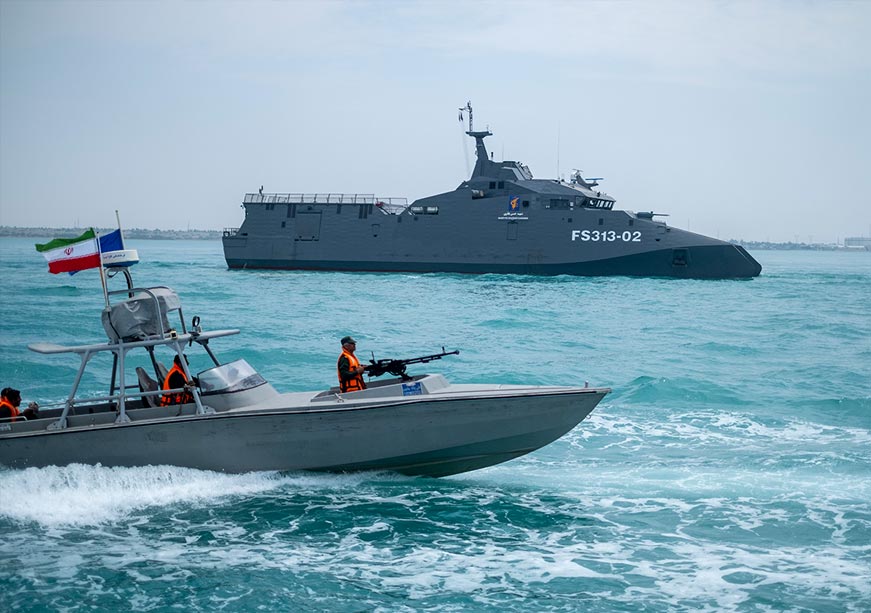
In February 2026, the United States (US) and Israel launched a war of choice against Iran, prompting the latter to close the Strait of Hormuz. In response, the US enforced a naval blockade targeting vessels travelling to and from Iranian ports. Since then, efforts to restore freedom of navigation in the region have been largely ineffective. Neither the unilateral US response through “Operation Project Freedom” nor various multilateral initiatives, such as the France-UK-led initiative to secure the Strait,[1] have succeeded in resolving the crisis.
However, this setback does not imply that multilateralism is not a viable solution to the Hormuz crisis, but that many of its core principles have been insufficiently applied in the efforts to address the issue and to engage with Iran’s role and influence in the region. Multilateralism extends far beyond coordinating actions among a group of states: it requires a shared commitment to collective problem-solving, equality and inclusivity, shared responsibility, a rules-based international order, dialogue and diplomacy, and the principle of leaving no one [country] behind.[2] Without these foundational elements, a multilateral initiative is unlikely to be perceived as either legitimate or effective, undermining its ability to achieve a durable resolution.
The Strait of Hormuz: Leverage, Recognition, and Reintegration
While the Strait of Hormuz is a strait used for international navigation, connecting one part of the high seas or an exclusive economic zone (EEZ) with another part of the high seas or an EEZ, its waters are not “international waters”.[3] The Strait lies within the territorial seas of Iran and Oman and is therefore subject to their sovereignty. The extent of the coastal states’ control over navigation through the Strait depends, however, on whether the applicable regime is transit passage or innocent passage. Iran maintains that, as it is not a party to the UN Law of the Sea Convention (UNCLOS) and considers the transit passage regime not to have attained the status of customary international law, passage through its territorial waters in the Strait is governed by the more restrictive regime of innocent passage.[4] This position would afford Iran greater control over navigation through the Strait than would the transit passage regime under UNCLOS.
For years, Iran faced growing domestic pressure to close the Strait in response to what was internally perceived as coercive actions by foreign states, particularly the imposition of economic sanctions.[5] Until the current crisis, however, the international community continued to benefit from the uninterrupted use of the Strait for international navigation. The threat of an Iranian closure was largely dismissed as a hypothetical worst-case scenario, based on the assumption that Iran lacked both the risk tolerance and tactical capability to execute such a blockade.
These longstanding assumptions have now been challenged. Iran’s considerable leverage over the Strait has allowed it to shape the process of its reopening to its own advantage. This is reflected in the Iran-US Memorandum of Understanding (MoU) formally signed on 19 June 2026,[6] under which Iran committed to facilitating the safe passage of commercial vessels free of charge for a period of 60 days until 18 August 2026. Longterm administration, governance, and provision of maritime services in the Strait were deferred to future negotiations. However, even this shortterm agreement was breached by mid-July, with both sides blaming each other for violating terms.
Two decades of economic sanctions have forced Iran to watch neighbouring countries prosper while it has remained unable to fully capitalise on its strategic position along one of the world’s most important maritime chokepoints. Moreover, the country has had to divert significant resources towards circumventing sanctions to maintain its imports and exports. One of the stated purposes of sanctions is to avert full-scale military confrontation. In Iran’s case, however, the country has also been subjected to military strikes by the US and Israel. These attacks have reportedly damaged industries and critical infrastructure, including steel facilities, bridges, and water reservoirs – assets that were built and maintained despite years of severe economic restrictions. While Iran has previously retaliated with attacks on military and civilian facilities in neighbouring countries, through the closure of the Strait, it now seeks recognition as a pivotal actor – both as a legitimate regional stakeholder and as an influential participant in global affairs. It aims to reinforce its strategic importance and underscore its ability to influence maritime security as well as the economic interests of the countries that depend on the Strait for international commerce.
However, Tehran’s actions reinforce the international perception that it is weaponising the waterway, effectively holding it hostage to extract political leverage. Iranian officials increasingly view the Strait as one of the country’s most significant sources of strategic leverage: not for ending the war but for shaping the post-war order.[7] In the aftermath of the conflict, Iran is likely to negotiate its reintegration into the international economy: secure and uninterrupted passage through the Strait in exchange for Iran’s economic normalisation and its restoration as a legitimate participant in the global economy.
No Iran, No Effective Multilateral Initiative
Resolving the Hormuz crisis requires collective decision-making; unilateral actions cannot secure a waterway upon which so many states depend economically. The reopening of the Strait will not automatically restore normal operations. Several challenges will remain that can only be addressed through a multilateral approach, including the clearance of naval mines, the management of shipping traffic, and the establishment of a sustainable security framework for the waterway.
Therefore, Iran must be included in any future arrangement governing the Strait and allowed to share in the economic benefits generated by the waterway. In line with the principle of “leaving no one behind”, a sustainable solution requires active participation from all key stakeholders, which includes Iran and Oman. Excluding Iran risks reproducing the same policy of isolation that prolonged the nuclear crisis, perpetuating the underlying dispute.
Similarly, a coalition-based military intervention to forcefully reopen the Strait would further complicate the situation rather than resolve it.[8] As the war has already demonstrated, military action may not only fail to resolve the existing problem but also create new challenges that further destabilise the region.
Additional sanctions too offer no guarantee of securing long-term stable and uninterrupted passage through the Strait. While the European Union[9] and the US[10] continue to rely on punitive sanctions in response to Iran’s actions and policies perceived as threatening the freedom of navigation in the region, the use of such coercive tools have historically yielded limited success. Over the years, Iran has demonstrated not only political, social, and economic resilience but also a sustained capacity for resistance. Thus, isolation, sanctions, and military strikes are unlikely to produce a sustainable outcome in this case.
The Political Economy of Hormuz: Benefits, Security, and Cooperation
The reopening of the Strait of Hormuz will not automatically restore the pre-war status in the region. The current conflict has fundamentally altered the strategic landscape, paving the way for a new governance framework in which regional stakeholders share in the economic and strategic benefits generated by the Strait. By ensuring all stakeholders have a shared interest in safeguarding uninterrupted navigation in the Strait, a multilateral governance mechanism would rely on reciprocal commitments, institutional oversight, and aligned mutual interests. The objective is to replace unilateral crisis management with a framework in which all principal stakeholders have both rights and responsibilities.
To understand this dynamic, the Strait of Hormuz must be analysed from Iran’s perspective across three interconnected aspects: security, economics, and legality. From a security perspective, control over the Strait is one of Iran’s most significant strategic assets – serving as both a source of political leverage and a deterrent against potential military action. By disrupting one of the world’s most important maritime chokepoints, Iran has demonstrated its ability to drive up the potential global economic and security costs of any military confrontation.
From an economic perspective, the issue can be understood in two ways. First, Iran may use its strategic position in the Strait as leverage to negotiate international sanction relief and global economic reintegration. Second, Iran has repeatedly suggested the possibility of imposing transit-related service fees on vessels transiting through the Strait. While the Iranian Parliament has not adopted a formal legislation on the matter, and some political and legal voices urge caution until post-war diplomatic relations become clearer, there is growing domestic pressure to institutionalise such charges.
From a legal perspective, any attempt by Iran to implement a transit fee will face severe international hurdles. The legal status of the Strait of Hormuz remains a heavily contested area of international law. Despite signing the UNCLOS, Iran has not ratified it and does not recognise the “transit passage” regime as reflecting customary international law. It maintains instead that the regime of “innocent passage” applies to the Strait. Having consistently maintained the position of a “persistent objector”,[11] Iran can choose to apply the rules governing innocent passage, under which a coastal state may take appropriate measures within its territorial sea to prevent passage that is not innocent. Furthermore, in cooperation with Oman, Iran has the right to request that the International Maritime Organization revise the existing Traffic Separation Scheme applicable to the Strait.
While the Strait of Hormuz is frequently compared to the Turkish Straits of Bosphorus and the Dardanelles, the legal frameworks governing these waterways are fundamentally different. The Turkish Straits are regulated by the 1936 Montreux Convention, which establishes a specific legal regime and excludes them from the transit passage provisions of the UNCLOS. By contrast, the Strait of Hormuz has never been governed by a comparable treaty regime, either before or after the adoption of UNCLOS in 1982. As a result, its legal status continues to be shaped by competing interpretations of international law, particularly regarding the applicability of the transit passage and innocent passage regimes.[11]
For long-term stabilisation, any new governance architecture must ensure that the closure or disruption of the Strait negatively impacts every state, including Iran. Historically, sanctions and the limited integration of its ports into international trade networks have limited Iran’s ability to capitalise on the economic opportunities associated with maritime trade, leaving it with little to lose from disruptions. If Iran continues to remain economically and politically isolated from the benefits generated by the Strait, the long-term security of the waterway cannot be guaranteed. A sustainable security framework must therefore create shared economic interests in uninterrupted navigation, ensuring that the disruption of maritime traffic is just as economically and politically detrimental to Iran as it would be to other regional and international stakeholders.
Ultimately, neither economic incentives nor security guarantees can be sustained without effective multilateral cooperation among all actors. As this is increasingly acknowledged, the proposed meeting on the Strait of Hormuz, bringing together Iran, Oman, and the other littoral states, reflects this understanding, even though the meeting has been postponed.[13]
Defining the stakeholder hierarchy is critical for this cooperation to work. While each state has a legitimate interest in ensuring its security and uninterrupted operation, their roles and responsibilities are not equal and may be understood as a hierarchy. At the highest level are Iran and Oman, whose sovereignty and jurisdiction over the Strait give them primary responsibility for its management and security. The second level consists of the Persian Gulf littoral states, which have direct economic and strategic interests in maintaining freedom of navigation and regional stability. The third level comprises the broader international community, who have no territorial connection to the Strait but rely on it for international trade and energy supplies. A cooperation breakdown at any level of this hierarchy will undermine the effectiveness of the broader cooperative framework. Thus, maintaining the safety, security, and stability of the Strait of Hormuz requires sustained collaboration among all stakeholders, with each actor fulfilling its responsibilities.
Zeynab Malakouti is Research Affiliate, Middle East Institute, National University of Singapore (NUS); and Senior Fellow, Global Peace Institute, UK.
The author acknowledges the use of ChatGPT 5.6 Sol for English-language editing prior to submission.
[1] Embassy of France in the United Kingdom, “France- UK joint statement on the Strait of Hormuz,” April 20, 2026, https://uk.diplomatie.gouv.fr/en/france-uk-jointstatement- strait-hormuz.
[2] United Nations, “Multilateral System,” United Nations, https://www.un.org/en/global-issues/multilateral-system.
[3] Nilufer Oral, “Passage Through Hormuz in a Time of War and Peace,” Fulcrum, April 15, 2026, https://fulcrum. sg/article/commentaries/passage-through-hormuz-in-atime- of-war-and-peace/.
[4] Alexander Lott, “The Legality of Iran’s Closure of the Strait of Hormuz,” EJIL: Talk, March 10, 2026, https:// www.ejiltalk.org/the-legality-of-irans-closure-of-thestrait- of-hormuz/.
[5] Zeynab Malakouti, “Following ‘Snapback’ Sanctions, More Dilemmas for Iran’s Leadership,” Observer Research Foundation, November 5, 2025, https://www. orfonline.org/research/following-snapback-sanctionsmore- dilemmas-for-iran-s-leadership.
[6] “U.S.-Iran Memorandum of Understanding: Full Text,” Foreign Policy, June 17, 2026, https://foreignpolicy. com/2026/06/17/trump-us-iran-memorandum-ofunderstanding- mou-deal-read-full-text/.
[7] Mohammad Eslami and Zeynab Malakouti, “Hormuz is not a tool to end the war but how Iran wins the aftermath,” Responsible Statecraft, April 4, 2026, https:// responsiblestatecraft.org/strait-of-hormuz-and-iran/.
[8] Nitya Labh, “A naval coalition in the Strait of Hormuz should learn these lessons,” Chatham House, May 1, 2026, https://www.chathamhouse.org/2026/05/navalcoalition- strait-hormuz-should-learn-these-lessons.
[9] Council of the European Union, Council Decision, CFSP, 2023/1532 of 20 July 2023 concerning restrictive measures in view of Iran’s military support to Russia’s war of aggression against Ukraine and to armed groups and entities in the Middle East and the Red Sea region as well as Iran’s actions undermining freedom of navigation in the Middle East, June 8, 2026, https://eur-lex.europa.eu/legal-content/EN/ TXT/?uri=CELEX%3A32026D1226
[10] U.S. Department of the Treasury, Office of Foreign Assets Control (OFAC), Executive Order 13224 as amended, May 27, 2026.
[11] Olufemi Elias, “Persistent Objector,” Max Planck Encyclopedias of International Law, April, 2024, https://opil. ouplaw.com/display/10.1093/law:epil/9780199231690/ law-9780199231690-e1455 .
[12] Alexander Lott and Shin Kawagishi, “The Legal Regime of the Strait of Hormuz and Attacks Against Oil Tankers: Law of the Sea and Law on the Use of Force Perspectives,” Ocean Development & International Law 53, no. 2–3 (2022): 123–146.
[13] Maziar Motamedi, “Temporary Hormuz Solution Deferred as Iran-Arab Summit Falls Through,” Al Jazeera, September 14, 2026, https://www.aljazeera.com/ news-analysis/2026/9/14/temporary-hormuz-solutiondeferred- as-iran-arab-summit-falls-through.