 Global
Expert Speak | 05 November, 2026
The Iran War Comes Home: Experts React to the US Midterms
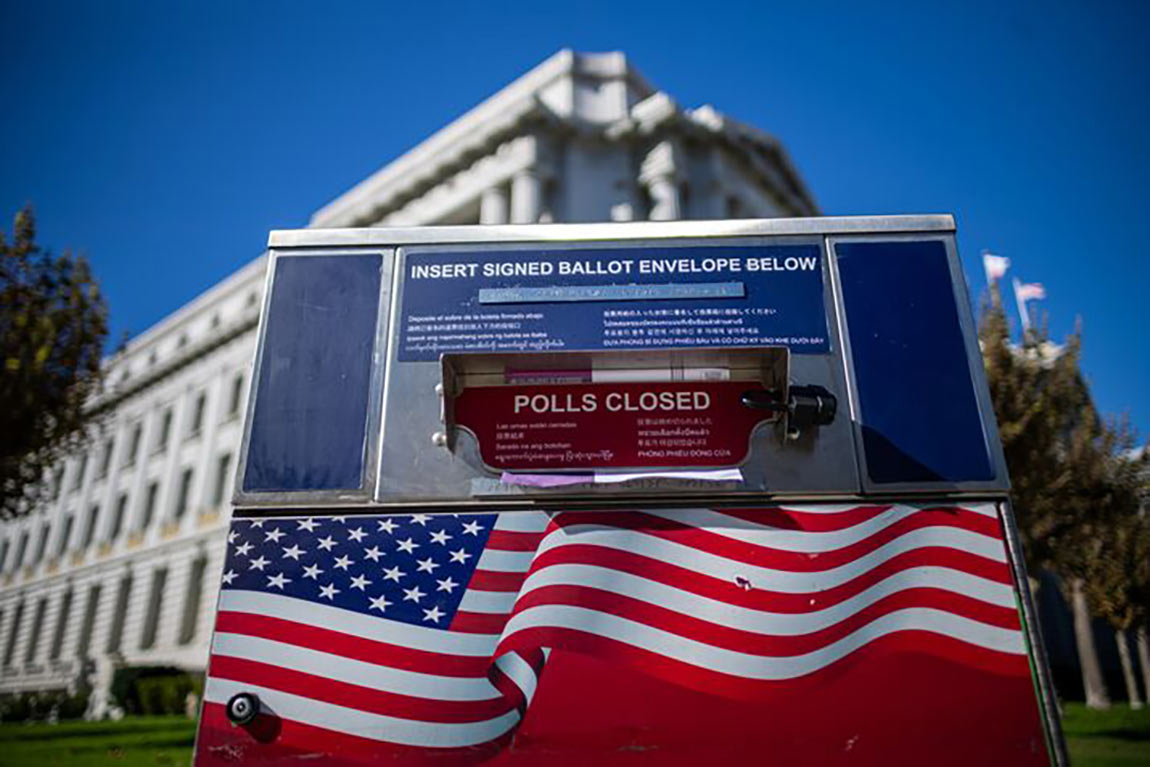
In the early hours of 4 November 2026, it was confirmed that in the United States (US) midterm elections, Democrats had won control of both chambers of Congress, flipping seven Republican-held Senate seats and ending the unified Republican control of Washington for the final two years of President Donald Trump’s term. Analysts attributed the rout to voter dissatisfaction over the Trump-initiated war with Iran—a reading publicly echoed by Vice President J.D. Vance—as well as to rising gas prices and a persistent affordability crisis. With the new Congress due to convene in January 2027, a Democratic majority is poised to test the White House’s latitude on war powers, sanctions relief, and arms sales, with implications that extend from Iran to the Gulf Arab capitals and Israel.
ORF Middle East experts offer their quick takes on this below.
Tehran’s Sweet Spot: Trump Wounded But Not Helpless
The sharp swing towards the Democrats in the US midterms is being read as an indictment of the Iran war’s misfires, a reading that President Donald Trump and, more explicitly, Vice President J.D. Vance have acknowledged in their own ways.
Misgivings remain, however, over where Trump’s Iran policy goes next. Until now, the conflict has been framed as a “military operation” rather than a war, a distinction that sidesteps the far greater Congressional oversight a war would invite. If Washington cannot expand the campaign into full-blown escalation, it will at best remain at the current status quo, which will reinforce the sweet spot Tehran firmly believes it occupies. Trump had hinted at resuming strikes on Iran after the elections, but the scale of the political loss makes that plan considerably more uncertain.
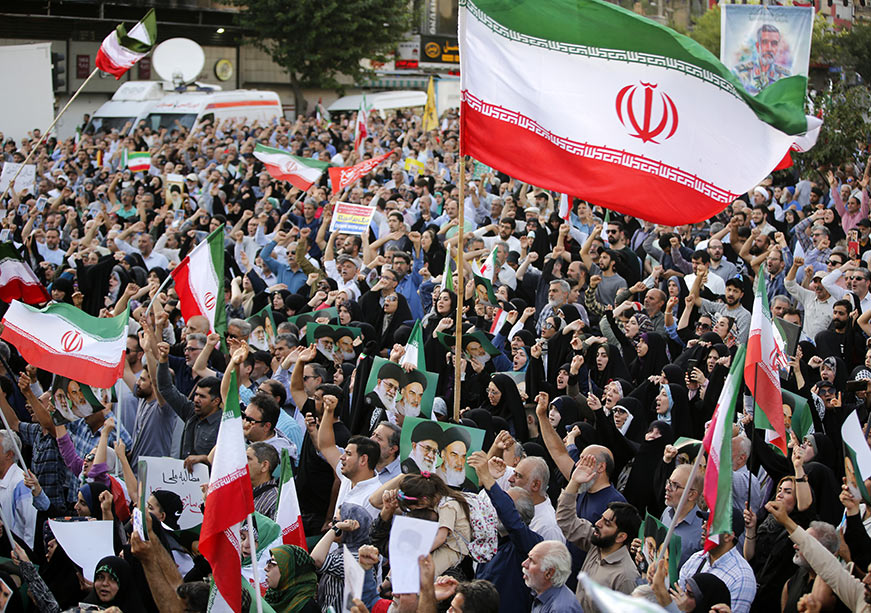
Iran has wasted no time in mocking Trump’s defeat. With Israel in a political stalemate and Israeli Prime Minister Benjamin Netanyahu faring poorly in his own elections, the Iranian regime, ironically, is the most stable of the three. Hours before the US polls, Supreme Leader Mojtaba Khamenei reportedly gave his negotiators greater powers to pursue a deal with Washington, an opening that Tehran may now chase aggressively as the political “earthquake” in Washington shifts perceptions.
It would nonetheless be a misnomer to call Trump helpless. He has two years left and considerable presidential power with which to direct his ire abroad, if not at home. A continuation of the US military campaign against Iran remains on the table.
Kabir Taneja, Executive Director, ORF Middle East
A Democratic Congress; the Same Trump
The midterms will constrain President Trump far less than the scale of the Democratic victory suggests. The last two years of his first term supply the precedent: even with Democrats controlling the House from 2019, he declared a national emergency to fund the border wall, vetoed measures to end US support for the Yemen war and block arms sales to Gulf partners, and ordered the killing of Iranian military commander Qassem Soleimani before vetoing the Iran war powers resolution that followed. Congress passed its resolutions and the vetoes held.
The post-midterm signals point the same way. Trump says that he accepts the results and can work with Democrats, but in the same breath, he has promised to veto what he calls “insane” bills, predicting that the Democrats will return to the table after a few months of vetoes, ready to cooperate on his terms. Cooperation, in other words, is conditional on the opposition toeing his line. His regard for the legislative branch is minimal, and he is unabashed about stretching the limits of his presidential authority, as his second term has repeatedly shown.
With his legacy in the final two years of his second term now resting on foreign policy, he is likely to double down on tariffs and hold to his existing approach towards China and Iran. The one meaningful lever Democrats hold is appointments, since they will control the Senate that confirms them.
For Tehran, which is under no illusions, the implication is that Washington’s approach is unlikely to change. The more probable path is a prolonged low-intensity conflict punctuated by occasional outbursts, rather than a settlement or return to full-scale war.
Clemens Chay, Senior Fellow, Geopolitics, ORF Middle East
Oil Windfall, Pump Pain: Signals From The Energy Market
The Middle East conflict has breached US insulation from foreign-policy decisions in a way not felt in Washington for a long time. Inflation and affordability, driven by high energy prices, both made and marred political fortunes in these midterms. The paradox is that America’s energy producers have profited from the same crisis: more than 50 large US oil and gas companies earned over US$130 billion between April and September 2026, against under US$47 billion in the same months in 2025, according to the New York Times. For households, though, the windfall has not translated into lower prices.
Brent and West Texas Intermediate futures fell 8.7 percent and 8.3 percent respectively after the midterm results, their lowest since late August 2026. Yet, this happened in a week of volatility due to President Trump’s signalling of renewed strikes and the forward posturing of US assets, so markets may already have priced in some risk. The fall reflects reduced geopolitical risk premiums, not easing physical supply, which still depends on tanker availability, repairs to disrupted production and transmission infrastructure, and continuing Iranian and Houthi attacks. Meaningful relief requires recovered volumes and transit and will not be immediate.
The impact will also differ between crude and liquefied natural gas (LNG) markets: LNG operates on longer contractual terms, so contractual obligations, alongside logistics, will determine how quickly any relief affects prices.
Even without a return to full-scale war, continuing skirmishes will keep risk premiums and transit times high, forcing Gulf exporters to reprice, with diversification and redundancy costs added. This may erode the Gulf nations’ value proposition as low-cost energy providers, just as more players enter the market.
Cauvery Ganapathy, Fellow, Climate and Energy, ORF Middle East
Vetoes and Votes: The Iran War Is Politically Costlier, but Not Yet Over
The US midterms, coupled with the Israeli elections, make a prolonged war by both nations against Iran harder to sustain, though they may not have a significant impact immediately. Democrats won the House and Senate and can refuse fresh war funding, but President Trump can continue operations without Congressional approval.
Democratic leverage begins only once the new Congress is seated in January 2027. The War Powers Resolution lets the Congress terminate military operations, but Trump can veto such legislation and Democrats lack the two-thirds majority needed to override him. The results therefore do not automatically change the war’s course in the immediate term. Political cost and domestic sentiment will be the main drivers: roughly six out of 10 voters said that the military action against Iran had been a mistake and the Republican leaders blame the war for their election losses.
The same dynamic is visible in Israel, where Prime Minister Netanyahu’s bloc won 53 of 120 seats, eight short of a majority. Gadi Eisenkot’s bloc won 48 and Arab-led parties won 19 seats. With consultations under way to form a government, Arab parties might endorse Eisenkot, a former Israeli military chief who lost his son in Gaza in 2023, advocates Jewish-Arab coexistence, and sees economic pressure as the best tool against Iran. He supports strikes on Iran’s nuclear programme, but not an all-out war. Even if power shifts to Eisenkot, Netanyahu’s caretaker cabinet can still authorise urgent military action.
Taken together, the elections may not end the Iran war, but they narrow the political space for prolonging it and place both the US and Israeli leaderships under greater pressure to find a resolution.
Samriddhi Vij, Associate Fellow, Geopolitics, ORF Middle East
Courting a New Congress: The Gulf’s Long Game in Washington
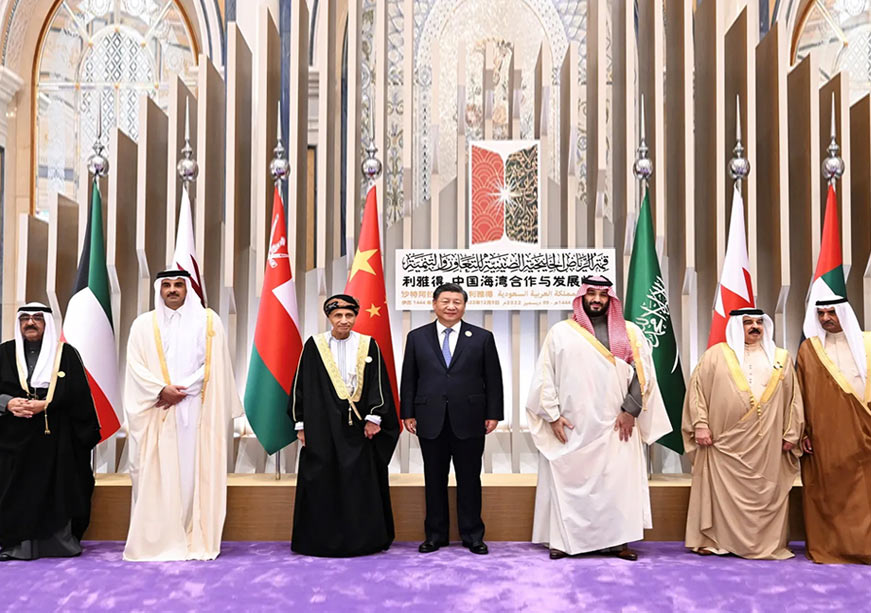
Gulf states have been watching the US midterm elections closely and their immediate concern is further escalation in the Iran conflict. It was not clear what would lead to de-escalation: a Republican win could have emboldened President Trump, while a loss could have frustrated him, and either outcome might have served as a rationale for further escalation. Since Trump retains executive authority over foreign policy, the immediate effect of the election results on the conflict trajectory is likely to be limited.
Nonetheless, with Democrats now controlling both the House and the Senate, the Gulf states will need to build and sustain new diplomatic relationships in Washington. The Congressional committees shaping Middle East policy are likely to see new faces, many of whom will outlast the Trump administration. The longer-term challenge for the Gulf is therefore to maintain engagement with US legislators and ensure that their interests retain bipartisan support. While there is a bipartisan interest in deepening relations with the Gulf, Democrats have historically—with notable exceptions—been more willing to publicly criticise Gulf states.
A more critical Congress could, however, also develop mechanisms to constrain Trump’s hawkish foreign policy, which has itself posed risks to regional stability. The Gulf states, like many across the world, would ultimately probably welcome such checks on this administration.
Mahdi Ghuloom, Junior Fellow, Geopolitics, ORF Middle East