 Global
Expert Speak | 05 November, 2026
Strengthening LMIC’s Epidemic Preparedness in a Changing Climate
Spotlight
- Gradual increases in temperature, sudden extreme weather events, and climate-related migration may create favourable conditions for the emergence and spread of epidemics.
- Low- and lower-middle-income countries remain particularly vulnerable to climate-related risks due to environmental, economic, and social challenges that constrain their adaptive capacity.
- Strengthening epidemic preparedness requires improved monitoring of social determinants of health at the national and local levels, increased national health financing and international financial flows, expanded genomic surveillance systems, and community trust.
Climate-change effects are expected to persist and intensify in the coming decades. Concurrently, research linking global warming to health outcomes, particularly the emergence and spread of epidemic- and pandemic-prone diseases, is growing. The wide range of climate-sensitive pathogens and transmission pathways demonstrates the scale of the climate-change threat to human health and reinforces the need for urgent action, not only to mitigate greenhouse gas (GHG) emissions but also to implement effective adaptation and disease-control measures.
The impact of epidemic- and pandemic-prone diseases can be particularly severe in low- and lower-middle-income countries (LMICs) already contending with overlapping socioeconomic, climatic, and humanitarian vulnerabilities. The COVID-19 pandemic highlighted inequalities in countries’ capacities to prevent and address disease outbreaks. This trend, therefore, warrants greater attention.
Against this backdrop, this article examines the vulnerability of LMICs to climate change and infectious diseases and explores how their capacity to prevent, prepare for, and respond to these may be enhanced.
Climate-Driven Epidemic Risk
Climate change influences the risk of outbreaks and epidemics through several direct and indirect pathways, including:
- Slow rise in temperature: Rising temperatures can create favourable conditions for disease vectors, expanding their geographic range and increasing the risk of transmission. Between 2021 and 2023, the Americas experienced a surge in arboviral diseases, with outbreaks spreading to new areas and occurring more frequently, partly because of climatic conditions favourable to vector breeding.
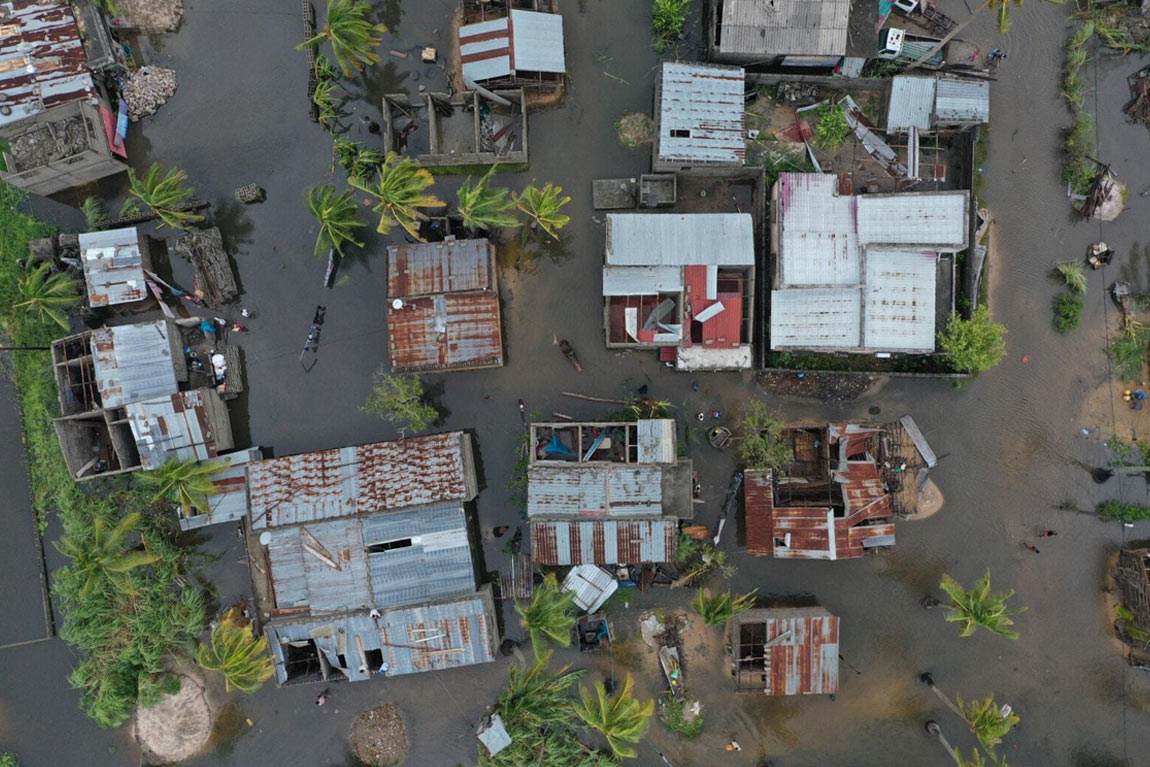
- Sudden extreme events: These disrupt social and environmental systems, creating conditions that allow pathogens, disease vectors, and animal reservoirs to spread more easily. For example, the August 2026 glacier collapse in Nepal, which has been linked to climate change, contaminated nearly all the water sources in affected communities. Many displaced people were also left without basic hygiene facilities, increasing the risk of disease transmission.
- Migration: Climate-change outcomes, including prolonged droughts and floods, can threaten livelihoods and drive population displacement. Conditions associated with climate-related disasters and displacement, including overcrowding and poor sanitation, increase the risk of mosquito-borne diseases—such as malaria and dengue—and water-borne diseases—including cholera and hepatitis A—among migrant and host communities.
LMICs on the Frontlines of Epidemic Risk
The Climate Risk Index 2026 illustrates the disparity in climate-related consequences between LMICs and high-income countries. Between 1995 and 2024, 60 percent of the 10 most affected countries were lower-middle-income economies, while none of them were classified as high-income during this period. In 2024 alone, 80 percent of the 10 most affected countries were LMICs. Furthermore, the country index of the Notre Dame Global Adaptation Initiative (ND-GAIN), which assesses the climate vulnerability and adaptive readiness of more than 180 countries, shows that poorer developing countries occupy the 43 lowest ranks, most of them in Africa, Latin America, and the Asia-Pacific.
LMICs face heightened vulnerability to infectious diseases due to factors such as poverty and inadequate access to water, sanitation, and healthcare services, as well as the proliferation of informal settlements in urban communities. Their health systems are constrained by fragmented surveillance, workforce shortages, and fragile supply chains, which can amplify the effects of disease outbreaks.
Climate change can compound these existing vulnerabilities by creating a “self-reinforcing poverty disease environment trap,” in which poverty heightens susceptibility to disease through weak health infrastructure, limited access to resources, and low adaptive capacity, while the resulting health burdens can, in turn, deepen poverty. Sub-Saharan Africa and South Asia are among the regions at greatest risk, with climate-related health impacts projected to push 44 million people into extreme poverty by 2030.
This can create a cycle in which underfunded and unreliable primary healthcare services discourage patients seeking care, further weakening the financial and resource sustainability and effectiveness.
Moreover, LMICs often lack the financial capacity to adapt to climate-related risks and adequately treat and contain diseases. Only 13 percent of primary healthcare financing in low-income countries comes from public sources. Out-of-pocket payments (OOP) account for more than 40 percent of total health spending across LMICs and nearly 60 percent in 32 low-income countries, compared with 19 percent in high-income countries. This can create a cycle in which underfunded and unreliable primary healthcare services discourage patients seeking care, further weakening the financial and resource sustainability and effectiveness of their systems. In 2022, LMICs collectively accounted for only 3.2 percent of global health expenditure, out of a total global spending of US$9.8 trillion.
Furthermore, climate funds to help LMICs adapt effectively remains limited, with financing specifically for climate-health adaptation receiving even less attention. As of 2023, adaptation investment in emerging markets and developing economies totalled only US$46 billion, accounting for about 17 percent of global climate finance. Since 2004, health-sector adaptation has received only 0.5 percent of total multilateral climate finance and 2 percent of overall adaptation finance. An assessment found that although health is referenced in most national climate adaptation policies across 198 countries, only six countries—around 3 percent of those reviewed—specified a budget for climate-related health action.
Recommendations
Strengthen Resilience Through Social Determinants of Health (SDH)
Governments and policymakers should systematically monitor SDH and translate evidence into actionable policies. The World Health Organization’s (WHO) Operational Framework for Monitoring Social Determinants of Health Equity can provide guidance on reducing health inequities and strengthening responses to climate-related crises. The framework covers indicators such as food insecurity, income inequality, poverty, housing, water, sanitation and hygiene, healthcare access, and affordability. To illustrate, an operational framework addressing SDH was implemented across six health areas and 77 integrated healthcare teams in Costa Rica’s Brunca Region, strengthening coordination with local authorities. Its success led the Costa Rican Social Security Fund to formally express interest in institutionalising and scaling the framework nationwide.
Bridge Adaptation and Health-Financing Gaps
Stronger integration of health into national budgeting processes is critical. Developing a finance-ready Health National Adaptation Plan (HNAP) would identify key climate-related health vulnerabilities and the resilience measures required to address them, while also estimating financing needs and identifying potential funding sources. Furthermore, comprehensive approaches to debt management, restructuring, and relief are critical to restoring fiscal sustainability and creating greater budgetary space. Lao People’s Democratic Republic (PDR) demonstrates how these measures can be translated into practice. The country prepared its HNAP in 2022, incorporating a financing strategy to guide adaptation actions at national, provincial, and facility levels between 2025 and 2030. Additionally, the government streamlined the flow of funds from the National Treasury to subnational levels, removing Ministry of Health (MOH) intermediaries. It also implemented a budget-planning approach that ensures that domestic revenue regularly exceeds domestic expenditure.
Furthermore, comprehensive approaches to debt management, restructuring, and relief are critical to restoring fiscal sustainability and creating greater budgetary space.
Simultaneously, international financing institutions, including multilateral development banks (MDBs) and the International Monetary Fund (IMF), as well as organisations such as WHO, should establish sustained, predictable financing mechanisms targeting epidemic preparedness among LMICs. Existing finance mechanisms, such as the Green Climate Fund and Adaptation Fund, which already support health-related initiatives, can be leveraged to facilitate joint initiatives and financing.
Enhance Surveillance Modelling Capacity
Strengthening genomic surveillance is essential to inform national epidemic risk-mitigation efforts. Stronger surveillance systems can support earlier threat detection and enable rapid responses before outbreaks become widespread, as demonstrated during the COVID-19 pandemic. This requires increased investment and stronger capacity across governments, academic institutions, and health organisations to track the emergence, spread, and evolution of infectious diseases. Priorities should therefore include sequencing infrastructure, workforce training, and cross-country coordination. Together, these can facilitate the sharing of technical expertise and allow countries to compare local pathogen trends with wider regional patterns. Examples include the Nigerian Malaria Modelling Fellowship and a joint training initiative in Sierra Leone to strengthen surveillance and epidemic intelligence.
Build Trust and Increase Community Involvement
More effective epidemic response begins with strong local leadership. Community health workers, youth networks, traditional authorities, and other local leaders often have a degree of credibility and trust within communities that external experts may lack. These groups should therefore be engaged as partners in shaping and implementing infectious disease control measures from the outset, helping create an environment in which communities are more willing to follow recommended guidance and practices. For example, during the Ebola outbreak in the Democratic Republic of the Congo (DRC), assessments revealed that certain public health messaging had instead contributed to fear and delayed care-seeking. The Risk Communication and Community Engagement (RCCE) practitioners responsible for Ebola control and WHO then worked closely with traditional leadership structures, which monitored and reported weekly on indicators supporting community-based surveillance and strengthened communication between communities and responders.
These groups should therefore be engaged as partners in shaping and implementing infectious disease control measures from the outset, helping create an environment in which communities are more willing to follow recommended guidance and practices.
Conclusion
Following the formal elevation of health within the Conference of the Parties (COP) agenda at COP28 in 2023, marked by the adoption of the United Arab Emirates (UAE) Declaration on Climate and Health and the convening of the first ever Health Day, the upcoming COP31 in Antalya, Türkiye, should build on the momentum established. The links between climate change and epidemics should feature more prominently in health discussions. Outcomes must centre on concrete action to further integrate health into climate adaptation, particularly through stronger health financing and meaningful community engagement. Efforts should continue to ensure that health ministries play a more prominent role in shaping national climate-policy processes and adaptation strategies, rather than working in silos.
Reem Sagahyroon is Research Assistant, Climate and Energy, ORF Middle East.