 Global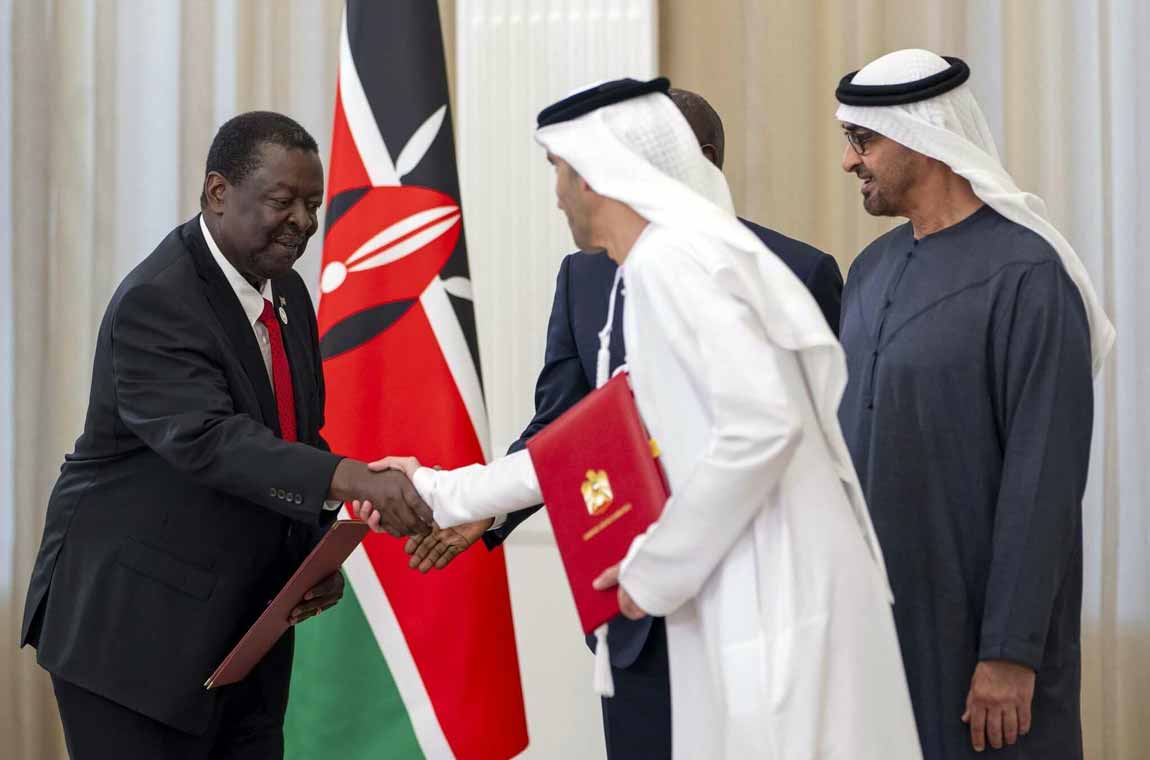
Expert Speak | 25 August, 2026
UAE–Kenya South–South Climate Cooperation: Fostering Resilience Through Finance, Energy, and Strategic Partnerships
Spotlight
- The UAE and Kenya are redefining South–South climate cooperation through strategic investment rather than traditional aid.
- Climate finance, digital innovation, and resilient infrastructure offer opportunities for mutual economic and environmental gains.
- A long-term partnership between the two nations, built on knowledge exchange and locally led development, can strengthen climate resilience across East Africa.
Kenya and the United Arab Emirates (UAE) may appear to be unlikely climate partners, yet both increasingly regard climate resilience as a strategic imperative for food security, economic competitiveness, and long-term stability. While Kenya confronts recurrent droughts and ecosystem degradation, the UAE faces intensifying heat and water scarcity. Climate cooperation, therefore, is emerging as a central pillar of a broader Gulf–Africa partnership shaped by trade, investment, and evolving geopolitical priorities.
Although formal relations began in 1982, Kenya and the UAE have deeper ties rooted in centuries of Indian Ocean trade between East Africa and the Arabian Peninsula. Today, this relationship is evolving into a more structured partnership spanning renewable energy, climate finance, sustainable infrastructure, and resilient food systems.
Bilateral relations entered a new phase in February 2025 with the signing of the UAE–Kenya Comprehensive Economic Partnership Agreement (CEPA), the first such agreement between the UAE and a mainland African country. Beyond trade liberalisation, the CEPA creates opportunities for climate-linked cooperation through investments in logistics, energy, infrastructure, technology, and climate resilience; infrastructure connectivity; and commercial integration. The agreement carries added importance, given Kenya’s position as Africa’s seventh-largest economy and the UAE’s growing role as Kenya leading Gulf trading partner. Bilateral trade has more than doubled over the past decade, reaching US$3.1 billion in the first nine months of 2024, up by 29.1 percent from the same period in 2023.
The partnership extends beyond commercial ties, reflecting a broader shift in Gulf–Africa engagement. As the UAE expands its economic footprint across Africa and Kenya strengthens its leadership in renewable energy and climate diplomacy, the relationship offers a durable model of South–South climate cooperation.
The Strategic Rationale
Climate resilience sits at the intersection of energy security, economic diversification, food systems, and national development planning. Despite tackling these challenges from different starting points, Kenya and the UAE share complementary climate priorities.
Climate resilience sits at the intersection of energy security, economic diversification, food systems, and national development planning.
For Kenya, climate change poses direct risks to agriculture, water security, infrastructure, and livelihoods. Recurrent droughts across the Horn of Africa have revealed how environmental shocks can translate rapidly into food insecurity, economic disruption, displacement, and fiscal strain. In response, Kenya has accelerated investments in renewable energy, climate-smart agriculture, and nature-based solutions while strengthening its role as a regional climate actor through initiatives such as the Africa Climate Summit.
For the UAE, climate resilience is tied to economic diversification and competitiveness, as well as food and water security. As one of the world’s most water-scarce countries, it has invested heavily in renewable energy, desalination, sustainable infrastructure, agri-technology, and climate innovation. Hosting the 28th Conference of the Parties to the United Nations Framework Convention on Climate Change (COP28) reinforced its ambition to bridge Global South and Global North priorities while advancing climate finance and clean technology, an agenda actively supported by Kenya.
These complementary strengths create a strong foundation for deeper cooperation. While Kenya can access financing from institutions such as the World Bank and the African Development Bank, its partnership with the UAE offers faster capital deployment, private-sector agility, and stronger trade and logistics links across Africa, the Gulf, and Asia. Kenya, in turn, provides the UAE with a gateway to the East African Community (EAC), expanding access to renewable energy, agricultural value chains, and a growing green economy. Together, the two countries are well placed to advance South–South climate resilience through deeper strategic cooperation.
Mobilising Climate Finance and Strengthening Carbon Governance
A core opportunity for UAE–Kenya cooperation lies in climate finance and carbon governance. Kenya is increasingly recognised as a significant player in global carbon markets, yet ecosystem restoration, land-use adaptation, and community resilience in the country remain underfunded. A partnership with the UAE could help bridge this financing gap.
The UAE’s climate agenda emphasises decarbonisation, climate finance, and participation in carbon markets to support national emissions reduction goals. This complements Kenya’s growing carbon economy. Existing initiatives, such as the framework agreement between Kenya’s State Department of Environment and Climate Change and Dubai-based Blue Carbon, are examples of how carbon markets are becoming an important pillar of South–South climate cooperation. If effectively structured, such collaboration could help the UAE address emissions from hard-to-abate sectors while supporting reforestation, conservation, and landscape restoration in Kenya.
These initiatives also expose governance complexities within voluntary carbon markets. Transparency, community consultation, land rights, and equitable benefit-sharing remain central to expanding climate finance while maintaining environmental integrity, social legitimacy, and local accountability. Strengthened monitoring, reporting and verification systems, alongside mechanisms under Articles 6.2 and 6.4 of the Paris Agreement, offer opportunities for the UAE and Kenya to advance more credible carbon market models.
Biodiversity credits, sustainability-linked financing, and green infrastructure funds provide promising pathways to deepen the UAE–Kenya climate cooperation. The UAE’s experience in deploying green infrastructure finance and blended investment partnerships through initiatives such as the UAE-Pacific Partnership Fund and UAE renewable energy company Masdar’s collaboration with Africa50 are strong proofs of concept to implement similar models to Kenya and unlock new capital for conservation and restoration.
Mobilising Climate Finance through South–South Financial Mechanisms
Bilateral cooperation need not operate in isolation. The UAE can complement direct investment through multilateral South–South financial mechanisms that de-risk climate projects and expand investment viability. Existing platforms, including the Abu Dhabi Fund for Development (ADFD), the Masdar–Africa50 partnership, and the IRENA–ADFD Project Facility, demonstrate how concessional finance, blended capital, and technical expertise can accelerate sustainable infrastructure.
Building on these models, the UAE–Kenya CEPA could provide the institutional framework to channel similar financing towards Kenya’s renewable energy, climate adaptation, and ecosystem restoration priorities. Although South–South climate finance models remain smaller than traditional Western-led institutions, they offer greater flexibility, localised partnerships, and stronger engagement with blended and non-sovereign financing systems. For Emirati sovereign and private investors, East Africa presents attractive opportunities across sustainable infrastructure, renewable energy, logistics systems, and digital connectivity.
Collaboration with institutions such as the African Development Bank, blended-finance vehicles, and specialised risk-mitigation facilities could strengthen investment across underfunded climate sectors for Kenya and the wider African region. As the UAE expands its engagement in African logistics, infrastructure, and energy systems, these mechanisms could help catalyse integrated climate finance and connectivity corridors linking East Africa, the Gulf, and Asian markets.
Building Renewable Energy and Climate-Resilient Infrastructure
Renewable energy offers a strong basis for UAE–Kenya climate collaboration. Kenya’s renewable energy landscape, underpinned by its leadership in geothermal energy, aligns closely with the UAE’s investments in clean energy, sustainable infrastructure, and climate innovation. These investments lead to opportunities for deeper collaboration in geothermal expansion, green hydrogen, energy storage, sustainable transport, and smart grid technologies. At the 2023 Africa Climate Summit, the UAE pledged US$4.5 billion to support clean energy development across Africa through entities such as Masdar and AMEA Power.
Emerging initiatives point to growing synergies between energy systems and digital infrastructure. The collaboration between UAE-based G42 and Kenyan company EcoCloud to develop a green-powered data centre within Kenya’s Olkaria geothermal hub illustrates how climate cooperation is evolving into strategic digital partnerships. For Kenya, the project advances a renewable-powered digital economy by expanding cloud capacity, fostering technical knowledge exchange, and supporting rising demand for digital services. For the UAE, it provides a gateway to Africa’s fast-growing digital markets, enabling Emirati firms to export high-value technology and expertise while strengthening the UAE’s position as a regional leader in artificial intelligence (AI), digital infrastructure, and sustainable investment.
Building Climate-Resilient Food Systems and Economic Connectivity
Food security is another pillar of UAE–Kenya cooperation. Kenya’s agricultural sector remains vulnerable to drought, land degradation, and climate variability, while the UAE has prioritised long-term food security through diversified sourcing, controlled-environment agriculture, agri-technology, and overseas agricultural partnerships.
Recent UAE–Kenya economic agreements identify sustainable agriculture and livestock development as priority investment areas, while the CEPA provides a framework for stronger commercial integration. The UAE’s expertise in food logistics, smart storage technologies, water-efficient farming, and controlled-environment agriculture aligns with Kenya’s agricultural strengths and growing climate-smart farming ecosystem.
Knowledge exchange and collaborative innovation could accelerate climate-smart irrigation, regenerative agriculture, sustainable livestock systems, and agri-technology. Kenya’s experience in cooperative agriculture, community-led production, and youth agripreneurship offers useful lessons for the UAE’s Plant the Emirates initiative. Despite differing environmental constraints, both countries are pursuing localised, climate-smart, and resource-efficient agricultural systems.
The UAE’s logistics hubs, Special Economic Zones (SEZs) and trade networks could expand Kenya’s access to Gulf and Asian markets, while Kenya offers the UAE an anchor in East Africa. These complementary advantages could strengthen trade relationships between East Africa, the Gulf, and Asia.
By aligning climate finance, clean energy, food systems, and connectivity, the partnership could strengthen sustainable development while reinforcing climate and economic links between Africa, the Gulf, and Asia.
For Kenya, climate disruptions continue to expose bottlenecks in storage capacity, cold-chain systems, and food processing. The UAE has advanced in logistics, smart storage, and food distribution. Emirati investment and technical collaboration could help close infrastructure and regulatory gaps, reduce post-harvest losses, and strengthen agricultural resilience.
As climate cooperation and economic integration deepen, the UAE and Kenya have an opportunity to build a more integrated model of South–South resilience. By aligning climate finance, clean energy, food systems, and connectivity, the partnership could strengthen sustainable development while reinforcing climate and economic links between Africa, the Gulf, and Asia. More broadly, the alliance illustrates how emerging economies can build implementation-driven climate partnerships grounded in shared interests and complementary strengths.
Fauzia Kaka Shafi is a researcher specialising in international security, climate diplomacy, and sustainable development. She is currently pursuing a PhD in Security and Global Studies.
The author acknowledges the use of ChatGPT 5.5 to assist with refining the language of this article and making it more concise, as well as to cross-check consistency in British English spelling. All factual claims, citations, and interpretations were independently verified by the author.