 Global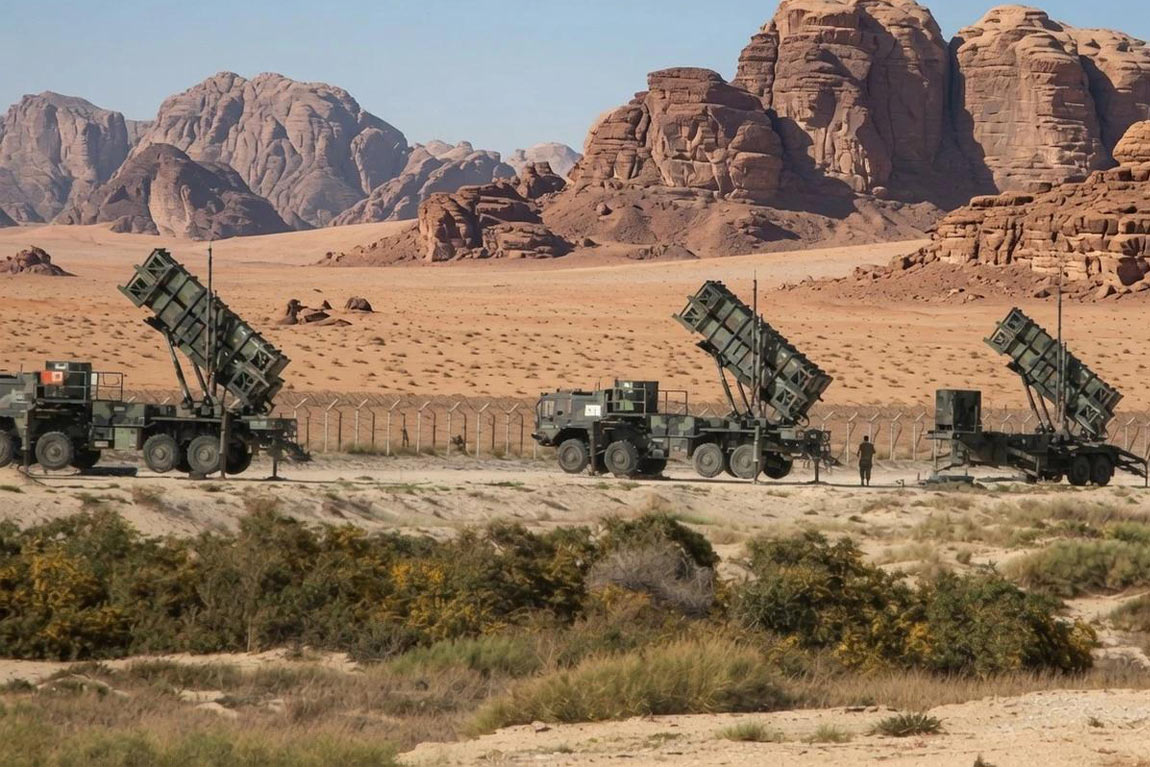
Expert Speak | 26 August, 2026
The Iran Conflict Makes Jordan More Valuable and More Vulnerable
Spotlight
- The Iran war has increased Jordan’s importance for the US and Israel, but Jordan’s dependence on the latter’s economic and security support limits its leverage.
- Energy disruptions, a weak tourism sector, high public debt, and persistent unemployment are consuming Jordan’s fiscal space.
- Intercepting Iranian projectiles will protect Jordanian territory and strengthen its relations with security partners, but visible cooperation with the US and Israel will intensifies domestic political unrest.
Jordan’s resilience has long rested on the interdependence of three pillars: external economic support closely tied to its strategic role, domestic social consensus sustained in large part through public provision and security partnerships with the United States (US), and security cooperation with Israel. In ordinary times, these pillars reinforce one another: strategic cooperation helps secure economic backing, that backing underwrites fragile social stability, and stability, in turn, enables Jordan to remain a dependable partner.
The main fallout of the 2026 US–Israel–Iran war for Jordan is not the additional strain it has placed on the Kingdom’s economy, politics, and security; it is that the conflict has intensified the connections among them, so that pressure on one domain increasingly resurfaces in another.
Jordan’s interception of aerial threats headed for US assets in the region and its securing a calm frontier is more strategically important than ever.
Jordan is one of the two Arab states bound to Israel by a peace treaty. It guards Israel’s longest land border, absorbs the region’s refugee flows, and hosts nearly 4,000 US troops as a forward platform for Western counterterrorism and air-defence operations across the Levant. Its value to its partners rests on these factors. This analysis examines Jordan’s geopolitics in light of the connections between strategic value and economic support, fiscal capacity and domestic consensus, and security cooperation and public sentiment.
Strategic Value and Economic Support
Jordan has long regarded Iran as a malign regional actor, yet it did not seek this war, as a conflict would impact regional stability. Much of the Jordanian public sees the campaign as waged chiefly in Israel’s interest. Amman’s foreign ministry kept lines to Tehran open even as the strikes began, pressing for dialogue. The posture is a deliberate hedge: Jordan condemned the strikes that landed on its soil and downgraded the standing of two Iranian diplomats, without taking the openly adversarial stance that the US and Israel would have preferred.
However, Amman cannot completely abandon Washington as it is the former’s largest single foreign supporter. It also depends on other external partners: Washington’s US$1.65 billion economic and military assistance, the International Monetary Fund (IMF) programme that helps support Jordan’s exchange rate peg, and the Gulf Cooperation Council’s (GCC) assistance in times of need. The Iran conflict has, in one sense, enhanced Jordan’s value as a stable and cooperative anchor in a volatile region. Its interception of aerial threats headed for US assets in the region and its securing a calm frontier is more strategically important than ever. One might assume that its greater importance would translate readily into higher leverage, but the conflict complicates that assumption.
The same war that raises Jordan’s strategic value also raises the costs it bears, as projectiles have fallen inside the kingdom rather than merely crossing it. With the Strait of Hormuz disrupted, the Red Sea port of Al-‘Aqabah (Jordan’s only seaport) briefly appeared poised to benefit as an alternative corridor. However, the port has been targeted by Iran directly because of its strategic location. Much of the economic support Jordan receives goes into managing the costs of the crisis. For instance, it had to incur additional electricity costs of US$140 million after Israeli gas supplies were interrupted. A weakened tourism season has added to the public debt of almost 114 percent of its gross domestic product (GDP).
The same war that raises Jordan’s strategic value also raises the costs it bears, as projectiles have fallen inside the kingdom rather than merely crossing it.
Jordanian authorities moved quickly to contain the fallout of the war, with headline inflation held near 2 percent by the end of June 2026 and support packages extended to affected sectors. While this shows a certain degree of institutional capacity, as the conflict drags on, these institutions might face tighter constraints without larger assistance packages. The conflict may have raised Jordan’s strategic value, but this value does not necessarily translate to greater autonomy; rather, it merely services the survival.
This asymmetry is sharpened by the fact that Jordan is a price taker, not a price setter. It cannot credibly threaten to withhold the security it supplies to the US or Israel because that also shelters Amman from attacks. A supplier who is unable to walk away cannot command a premium, however scarce its resources. Therefore, Jordan’s relationships with its partners can be more accurately defined as shared investments in regional stability.
Fiscal Space and the Social Consensus
Jordan has historically maintained a broad social consensus partly through public provision: subsidised essentials and extensive public sector employment. Here, the conflict’s fiscal effects take on political significance. Added strain on an economy that has been relatively stagnant since 2010, with unemployment above 22 percent, narrows the fiscal room to sustain its social consensus. With roughly half of its population being of Palestinian origin, Jordan experienced regional aftershocks of the war on Gaza through large-scale public mobilisation and the Muslim Brotherhood’s Islamic Action Front (IAF) victory in the 2024 parliamentary elections. Economic concerns, such as unemployment and the cost of living, might also have been factors in that result, apart from solidarity with Palestinians, thus binding the economic and political dimensions.
There are also economic consequences to Jordan’s ties with Israel—the interruption of Israeli gas raised power costs, while the corridor opportunities that Jordan hopes to develop depend on broader regional normalisation. Complicating matters further, the external support packages that help sustain public consensus through economic stability are also increasingly conditioning the financial aid on fiscal consolidation in terms of restrained subsidies and public hiring. This can itself test the public support that the external packages intend to reinforce.
This asymmetry is sharpened by the fact that Jordan is a price taker, not a price setter
Jordan has demonstrated a capability to manage these tensions rather than merely absorb them by pairing targeted relief with restraint in certain sectors, including a temporary moratorium on official travel, to signal fiscal seriousness to creditors while cushioning the most exposed areas. The difficulty is partly one of timing: external support tends to arrive gradually and through negotiation, whereas public sentiment can shift quickly in response to regional events, so the instruments that sustain social consensus adjust slowly while the pressures acting upon them build faster.
Security Cooperation and Domestic Sentiment
Jordan’s participation in intercepting Israel-bound Iranian projectiles strengthened its standing with security partners like the US. However, it also triggered large-scale protests in the Kingdom, perhaps the largest since the 2011 Arab uprisings. Measures to reassure external partners can thus exacerbate sensitivities domestically, and domestic sentiment in turn shapes how much visible cooperation is politically feasible.
Against this backdrop, Amman moved to ban the Muslim Brotherhood in April 2025, citing security concerns after Jordanian Brotherhood leaders were accused of diverting funds raised for humanitarian relief in Gaza to financially support Hamas. In January 2026, the US designated the group’s Jordanian chapter as a Specially Designated Global Terrorist. Officials presented these steps as necessary for security and public order. However, narrowing formal political channels for a movement long active within Jordanian institutions could complicate the management of dissent over time and fuel instability. Jordan’s interceptions also served its own security directly: projectiles and debris crossing or falling within its territory pose genuine risks to Jordanian lives and infrastructure. Defending national airspace is also sovereign responsibility for the Kingdom, independent of any partner’s interests. Both observations point to the same underlying reality: security decisions and domestic politics are tightly interwoven.
The Cost of War
These links matter the most as they converge due to the conflict. It is important to analyse which way the leadership is leaning under this pressure. In foreign policy, Amman is not drifting away from Washington: its dependence on the latter is structural, the alternatives are thin, and even the domestically fraught security coordination with Israel is hard to forego while Jordan’s power supply and frontier security partly rely on it.
It is important to analyse which way the leadership is leaning under this pressure.
Towards its people, the governing consensus is neither blanket censorship nor a complete surrender to the situation, but a targeted narrowing of the organised political Islam that fuelled widespread dissent while working towards solving their economic grievances.
On the economic front, the political and administrative capacity spent reconciling partners abroad and containing dissent at home reduces efforts expended on economic issues such as unemployment, stagnation, and debt which are the real long-run determinants of stability. That is the quieter cost of the war for Amman: the fiscal and political attention required to bolster the economy is being continually diverted.
Samriddhi Vij is an Associate Fellow, Geopolitics, at ORF Middle East.