 Global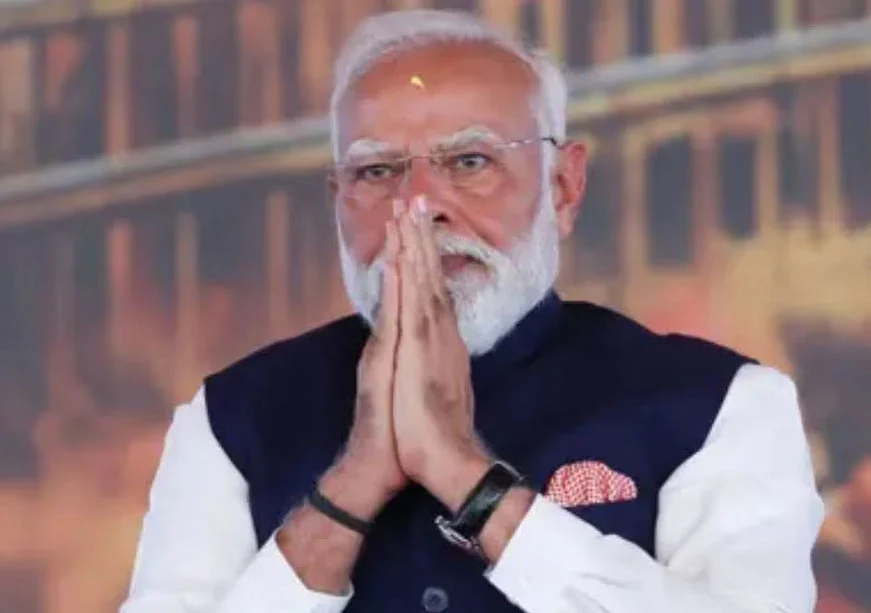
Commentaries | 15 May, 2026
India and the UAE: A New Strategic Compact
Modi’s brief visit doesn’t obscure importance; focus likely on consolidation and crisis management
Prime Minister Narendra Modi’s brief stopover in Abu Dhabi on May 15 en route to his European tour covering the Netherlands, Sweden, Norway, and Italy may be short, but it is strategically consequential. Modi is expected to meet President Sheikh Mohamed bin Zayed Al Nahyan (MBZ), continuing a pattern of high-level political engagement that has come to define India-UAE ties in recent years.
The timing of the visit is particularly significant. Escalating tensions in the Gulf—including Iranian actions affecting the Strait of Hormuz and attacks on strategic UAE targets like Fujairah—have once again highlighted the fragility of global energy supply chains. For India, which remains heavily dependent on imported hydrocarbons, the UAE has emerged as a critical anchor of energy security. The discussions are hence expected to focus heavily on ensuring uninterrupted oil and LNG supplies, deepening long-term energy arrangements, and exploring alternative energy cooperation at a moment of considerable uncertainty in global markets.
As the Gulf undergoes a profound geopolitical churn, India is seeking to position itself not merely as an economic stakeholder but as a credible security partner with long-term interests in regional stability.
Equally important is the security dimension of the relationship. The Letter of Intent signed earlier this year for a Strategic Defence Partnership (SDP) marked a major shift in institutionalising strategic cooperation. Modi’s visit is likely to push this agenda further, especially in defence manufacturing, maritime security, interoperability, cybersecurity, special operations, and counter-terrorism cooperation. As the Gulf undergoes a profound geopolitical churn, India is seeking to position itself not merely as an economic stakeholder but as a credible security partner with long-term interests in regional stability.
The visit also carries strong political symbolism. India’s outreach signals solidarity following recent attacks that affected not only Emirati infrastructure but also Indian nationals. At the same time, New Delhi continues to balance its complex regional ties, particularly with Iran, underscoring India’s preference for pragmatic multi-alignment rather than bloc politics in West Asia. Another important issue likely to feature prominently is contingency planning for the diaspora. With nearly four million Indians working in the UAE, disruptions in regional air routes or maritime traffic have direct implications for India’s overseas population management.
Beyond immediate concerns, the visit reinforces the remarkable transformation in bilateral relations over the past decade, evolving from a largely transactional partnership centred on hydrocarbons and expatriate labour into one of India’s most substantive strategic relationships in West Asia. Earlier, the engagement was primarily defined by the Gulf’s role as an energy supplier and as a destination for millions of Indian workers. Today, however, the relationship has acquired a far wider strategic canvas, encompassing trade, defence, technology, infrastructure, food security, renewable energy, logistics, and advanced innovation sectors. The political chemistry between PM Modi and President MBZ has accelerated this shift, giving the partnership unprecedented strategic direction and institutional depth.
Economic interdependence has emerged as the central pillar of this new partnership. The Comprehensive Economic Partnership Agreement in 2022 marked a turning point by institutionalising a framework for deeper economic integration. Bilateral trade has since expanded rapidly, with the UAE emerging as one of India’s largest trading partners and a key export destination. More importantly, the relationship is no longer confined to oil. Non-oil trade, investments in infrastructure, ports, logistics, fintech, digital commerce, and manufacturing are now central drivers of engagement. The UAE has also positioned itself as a major investor in India’s long-term growth story, especially in sectors like renewable energy, urban infra, food corridors, and strategic industrial projects. The economic relationship increasingly reflects a logic of long-term strategic interdependence rather than short-term commercial exchange.
The political chemistry between PM Modi and President MBZ has accelerated this shift, giving the partnership unprecedented strategic direction and institutional depth.
The strategic and security dimensions of the partnership have also deepened greatly. Cooperation now extends well beyond traditional counter-terrorism coordination into areas such as maritime security, intelligence sharing, defence manufacturing, cybersecurity, and military interoperability. The proposed SDP reflects India’s growing ambition to be seen as a security provider in the wider Indian Ocean and Gulf region. For the UAE, India offers a stable, increasingly capable partnership at a time when the regional security architecture remains uncertain and external power commitments appear less predictable. This convergence has become particularly crucial amid rising tensions in West Asia, disruptions in maritime trade routes, and the broader militarisation of regional geopolitics.
At the geopolitical level, the India-UAE partnership reflects the changing nature of the emerging multipolar order. Both countries see themselves as pragmatic stakeholders seeking strategic autonomy in a fragmented international system. Cooperation is driven less by ideology and more by functional convergence—economic diversification, technological modernisation, energy transition, and regional stability. The UAE’s Vision 2031 and India’s own developmental ambitions create natural complementarities, particularly in areas such as clean energy, AI, space-tech, smart infrastructure, and digital connectivity. Platforms such as I2U2 and the India-Middle East-Europe Economic Corridor further illustrate how both are trying to shape new regional architectures that are economic, technological, and connectivity-driven rather than security-centric.
The UAE has effectively become India’s most important strategic gateway into the Gulf and wider West Asian region. Abu Dhabi’s ability to maintain working relationships across rival regional blocs gives New Delhi valuable diplomatic flexibility in an increasingly polarised environment. At the same time, the UAE sees India as a trusted long-term partner with scale, market depth, tech capacity, and geopolitical credibility. Unlike many external actors in the region, India is perceived as relatively free from ideological baggage or interventionist ambitions, making it an attractive strategic partner for Gulf states seeking diversified partnerships. The result is a relationship that is no longer peripheral to either country’s foreign policy priorities, but one that increasingly occupies a central place in their respective visions for regional order and global influence.
The brevity of Modi’s visit, therefore, should not obscure its importance. The focus is unlikely to be on headline-grabbing announcements; rather, it will be on implementation, consolidation, and crisis management. That itself is indicative of how mature and consequential the partnership has become. At a time when global politics is increasingly shaped by volatility and fragmentation, India’s relationship with the UAE has emerged as one of the key pillars of its West Asia policy, essential not only for economic resilience and energy security, but also for India’s broader aspirations as a leading power in an uncertain multipolar world.
This commentary originally appeared in Financial Express.