 Global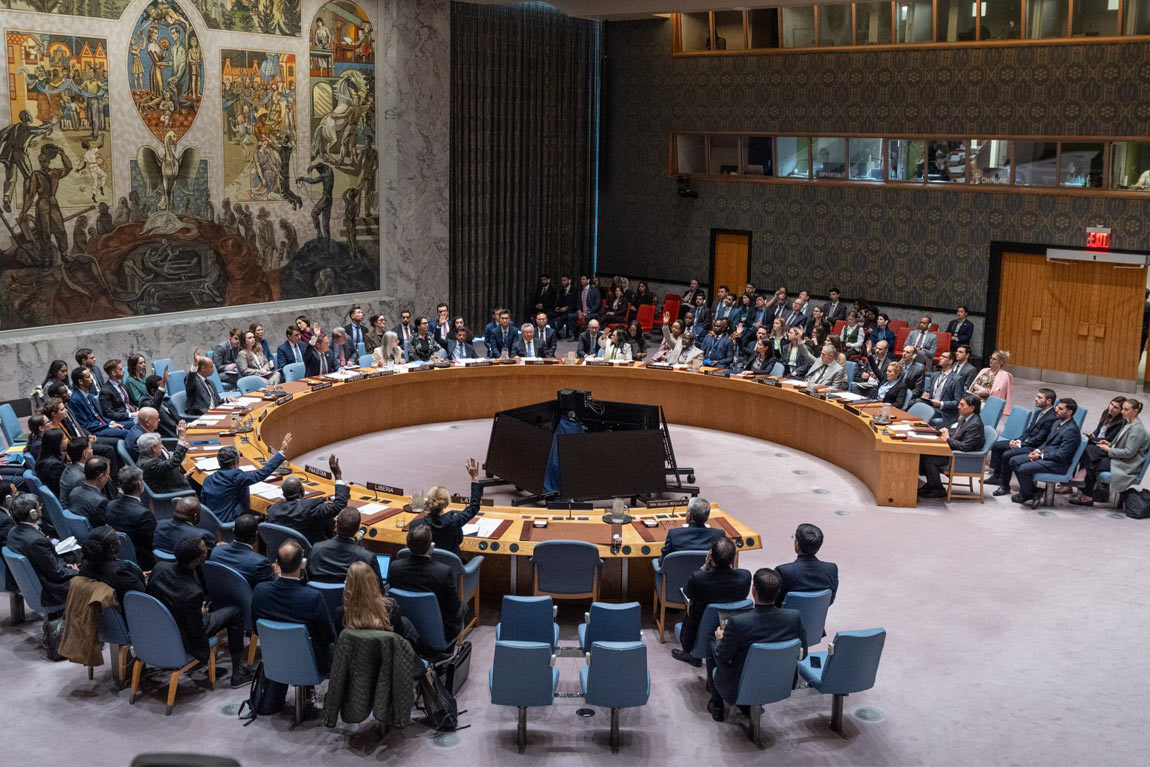
Commentaries | 03 June, 2026
Multilateral Platforms as a New Gulf-Iran Battleground
As tensions with Iran escalate, Gulf states are leveraging multilateral institutions to document Iranian actions, mobilize global support, and sustain long-term diplomatic pressure against Tehran.
As the regional conflict intensifies, multilateral institutions such as the United Nations (UN) have become an increasingly important arena in the confrontation between Iran and the Gulf states. Despite mounting international criticism of its regional conduct, Iran continues to attempt to project a positive image of itself within these institutions, even as it carries out indiscriminate attacks on Gulf civilian and energy infrastructure. In response, Gulf states have used the UN to document Iranian actions, rally international resolutions, and organize closed-door discussions aimed at countering Iranian narratives and challenging Tehran’s global standing.
The latest example is Bahrain’s ongoing effort to build broad international backing for a new resolution condemning Iran’s actions. This latest draft, co-sponsored by the United States and supported by American diplomatic backing and expertise, reportedly has the support of 138 countries. The resolution calls on Iran to “immediately cease all attacks and threats against merchant and commercial vessels in the Strait of Hormuz,” while also addressing “the placement of mines and illegal tolling in the critical maritime channel.” The initiative appears to have heightened Tehran’s concerns, with Iranian Foreign Minister Abbas Araghchi accusing both Bahrain and the United States of exploiting the UN Security Council (UNSC). While the resolution is unlikely to draw support from China or Russia, the breadth of international backing may complicate their willingness to veto the draft once it formally comes to a vote, reflecting the Gulf’s growing success in internationalizing its confrontation with Iran.
Building a Legal and Diplomatic Record
The Gulf Cooperation Council (GCC) countries have displayed a commitment to documenting the crimes of Iranian aggression. The United Arab Emirates (UAE), for example, established a committee by Sheikh Mansour bin Zayed, Vice President, Deputy Prime Minister, and Chairman of the Presidential Court, to record and monitor such crimes. Chaired by the Attorney General, the committee includes representatives from security, judicial, technical, and economic authorities.
The creation of a legal archive has become an immediate priority for Gulf states. Evidence of these efforts can be seen in the numerous letters submitted by Bahrain, Kuwait, Qatar, and others to the UN Secretary-General and the President of the UNSC, detailing incidents and providing updated statistics on attacks against their respective countries. Several joint letters have also been sent by the GCC states through Bahrain, which holds a seat as a non-permanent member of the UNSC for the 2026–2027 term. These letters have additionally highlighted the uncovering of Iranian proxy networks across the Gulf. Beyond immediate diplomacy, these documentation efforts serve a longer-term strategic purpose. By building a formal evidentiary record through UN mechanisms, Gulf states are laying the groundwork for future sanctions efforts, international legal claims, and broader reputational costs for Iran.
These initiatives appear to have yielded some diplomatic results. In March, UN Secretary-General Antonio Guterres held a phone conversation with Araghchi, expressing “deep concern over the regional spill-over” and calling for restraint, including refraining from “any attacks against civilians and civilian infrastructure.” For Iran, which may have hoped that the non-UN-mandated attacks carried out against it by the United States and Israel would generate broader international sympathy, its attacks on all GCC states undermine efforts to rally diplomatic support and legitimacy. For GCC states, these statements represent an important diplomatic outcome, signaling that concerns over attacks on civilian infrastructure and regional escalation are gaining greater institutional recognition within the UN system.
Turning International Consensus into Strategic Pressure
The Gulf states’ diplomatic success at the UN has been most evident in the resolutions advanced since the onset of Iranian aggression. On March 11, the UNSC Resolution 2817 was adopted with 135 co-sponsors. The resolution invokes Article 51 of the UN Charter, affirming the “inherent right of individual or collective self-defense” in response to Iran’s attacks on the Gulf states and Jordan. Drafted by Bahrain and initially co-sponsored by the affected states, the resolution relied on broad international backing to avoid a veto by Russia and China, despite Moscow advancing a competing resolution on the crisis. Iran, unsurprisingly, rejected the resolution and simultaneously called for compensation from the Gulf states. For the GCC, this episode demonstrated how overwhelming international backing can partially offset the structural constraints of the UNSC, particularly the veto power exercised by Russia and China.
While Gulf states succeeded in placing maritime security concerns at the center of international debate, the vetoes underscored how great-power competition continues to constrain collective security responses within the UN framework.
On April 7, another UNSC resolution submitted by Bahrain, this time concerning the Strait of Hormuz, was vetoed by both China and Russia. In response, Bahrain’s Foreign Minister, Dr. Abdullatif bin Rashid Al Zayani, criticized the Council for having “failed to shoulder its responsibility in relation to an illegal conduct that requires decisive action with no delay,” adding that “failing to adopt this resolution sends the wrong signal to the world” by reinforcing that threats to international waterways can proceed without meaningful international action.
Unlike Resolution 2817, consensus around the Hormuz resolution was far more limited. Negotiations ahead of the vote went through five revisions, two silence breaks, and multiple closed consultations. The initial draft invoked Chapter VII of the UN Charter and would have authorized member states to use “all necessary means in and around the Strait of Hormuz to secure transit passage and repress, neutralize, and deter attempts to close, obstruct, or otherwise interfere with international navigation through the Strait.” The text also expressed the Council’s readiness to impose measures, including targeted sanctions, against actors undermining the “freedom of navigation in and around the Strait of Hormuz.”
While these provisions were ultimately removed from the final draft, the original text and scheduled vote had already prompted Russia and China to publicly oppose the resolution. The episode highlighted both the possibilities and limitations of Gulf multilateral diplomacy. While Gulf states succeeded in placing maritime security concerns at the center of international debate, the vetoes underscored how great-power competition continues to constrain collective security responses within the UN framework. The disappointment surrounding the veto has also prompted Bahrain, speaking on behalf of the Arab Group, to reiterate calls for UN reform.
Expanding the Diplomatic Arena
The Gulf has not simply focused on rallying resolutions or sending letters. Bahrain, in its role as President of the UNSC in April, organized a high-level open debate titled “The Safety and Protection of Waterways in the Maritime Domain” under the agenda item “Maintenance of international peace and security.” The debate focused on the disruptions in the Strait of Hormuz, prompting the UN Secretary-General to state that “safe, unimpeded passage [in the Strait of Hormuz] is an economic and humanitarian imperative.”
The Human Rights Council adopted a resolution addressing Iran’s attacks on the Gulf, while the International Maritime Organization’s Legal Committee issued a decision condemning Iran’s Hormuz blockade and reaffirming the right of safe international transit.
At the same time, the Gulf has worked to mobilize international support across a broader range of multilateral platforms. The World Health Assembly condemned Iran’s strikes on Gulf nations and the blockade of the Strait of Hormuz. The Human Rights Council adopted a resolution addressing Iran’s attacks on the Gulf, while the International Maritime Organization’s Legal Committee issued a decision condemning Iran’s Hormuz blockade and reaffirming the right of safe international transit. Even the UN’s telecoms agency moved to condemn, monitor, and report on the impact of Iranian attacks on telecommunications infrastructure.
Most of these initiatives would not have been possible without Gulf lobbying. The UAE, for example, rejected Iran’s nomination for a vice-presidential role at the latest review conference of the Nuclear Non-Proliferation Treaty. Abu Dhabi also rejected and publicly refuted Iranian allegations during a BRICS meeting. Rather than concentrating solely on the UNSC, Gulf states appear to be pursuing a strategy of institutional saturation: raising concerns over Iranian conduct simultaneously across security, maritime, telecommunications, and human rights bodies to maximize cumulative diplomatic pressure on Tehran.
Keeping the Iran File Internationalized
Across multiple fronts, Gulf states are working to deepen Iran’s international isolation. Although divisions among great powers continue to limit decisive action within the UNSC, the Gulf’s broader diplomatic strategy has demonstrated a growing capacity to mobilize international consensus and elevate its security concerns onto the global stage. Bahrain’s continued presence on the UNSC through the end of 2027 gives the Gulf a stable and consensus-building voice within the Council, one that will likely play an increasingly important role in advancing the Gulf’s diplomatic goals vis-à-vis Iran. Only this week, the Kingdom joined all members of the UNSC to condemn attacks on the UAE’s nuclear power plant. Bahrain’s effectiveness, however, will continue to depend on support from neighboring countries, the United States, and other international partners. At the same time, the UNSC is not the only multilateral platform. Gulf foreign policy is becoming increasingly coordinated and proactive across a wider range of multilateral institutions.
These dynamics are unlikely to disappear in the event of a future agreement between the United States and Iran. Gulf states continue to harbor significant grievances toward their regional adversary, and any meaningful rapprochement would require considerable time and political investment. Even under such circumstances, Gulf states are unlikely to abandon their previous condemnation of the Islamic Republic or their pursuit of legal accountability and compensation mechanisms. To this end, the GCC’s legal and diplomatic apparatus will likely remain focused on the Iran file for the foreseeable future.
This commentary originally appeared in Gulf International Forum.