 Global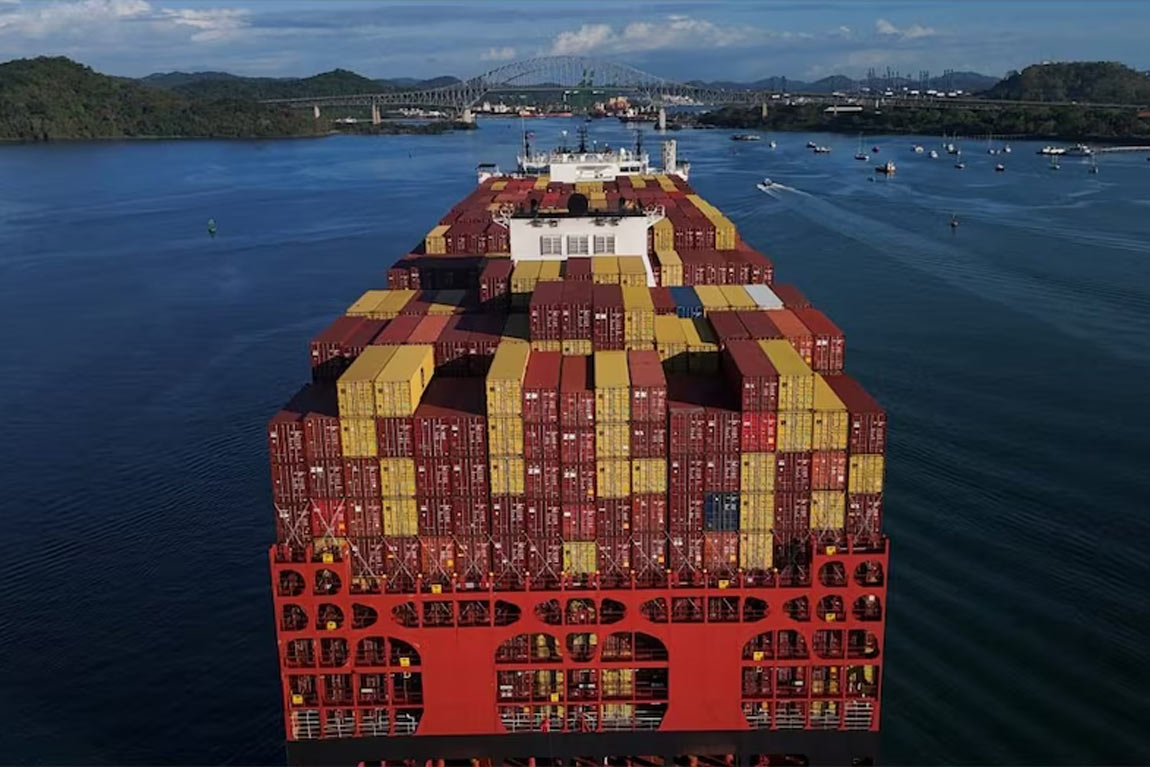
Expert Speak | 23 April, 2026
Double Chokepoint: Impact of a Hormuz and Bab al-Mandeb Closure
Spotlight:
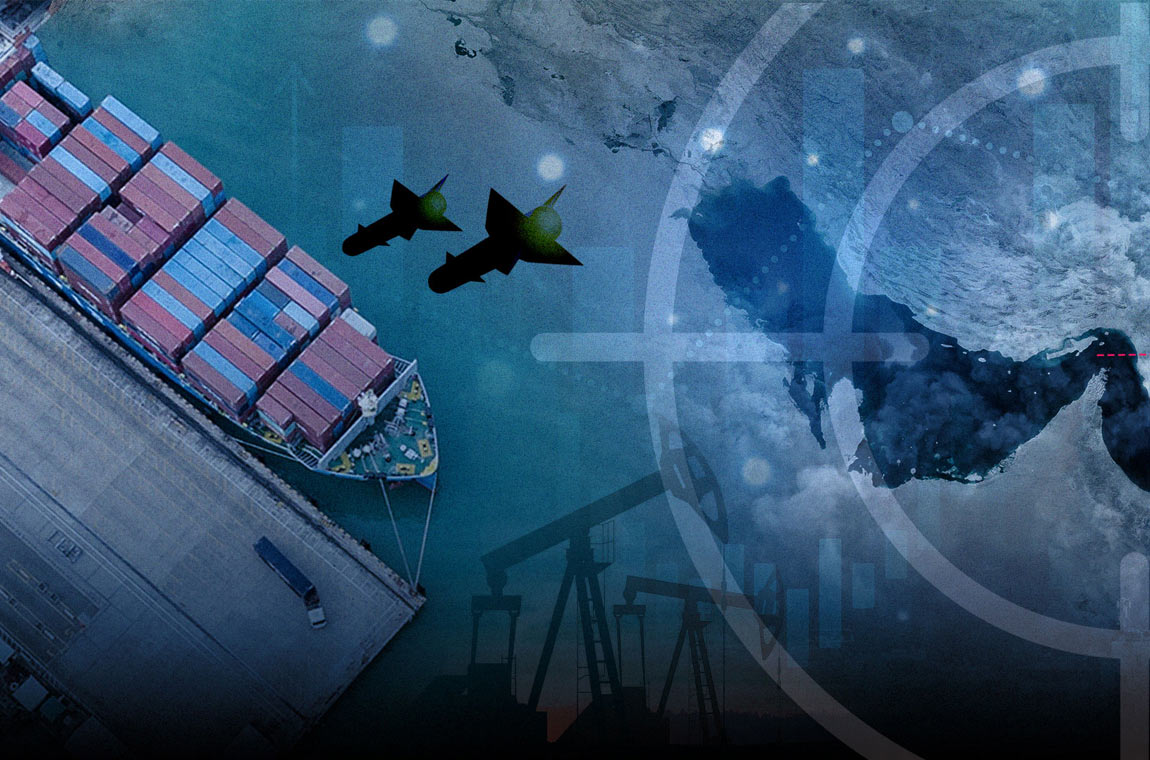
- A simultaneous disruption of Strait of Hormuz and Bab al-Mandeb could threaten up to 30 percent of global container shipper and 25 percent of gas and oil supply.
- The crisis extends beyond energy: impacting food security, fertilisers, shipping costs and global manufacturing supply chains.
- The burden will be spread across geographies: Asia faces energy shocks, Africa food crises, the Horn of Africa survival risks, and Europe industrial disruption.
The world is inside a crisis that a ceasefire has paused but not resolved, and markets have yet to price the risks of escalation. A fragile two-week ceasefire between Iran and the United States(US) briefly lowered tensions but the Islamabad talks between the two nations collapsed without a deal, followed immediately by a US naval blockade of Iranian ports. The Strait of Hormuz, through which 20 percent of global oil transited in peacetime, remains largely disrupted. The threat has not eased; it has rather intensified. A second, compounding shock now looms at the Bab el-Mandeb, the 18-mile-wide passage between Houthi-controlled Yemen and the Horn of Africa. The International Energy Agency (IEA) has already called the Hormuz disruption the largest supply disruption in the history of the global oil market. A double chokepoint would be categorically worse, with consequences extending beyond the region to the global economy. . In this context, assessing the extra‑regional economic impact of simultaneous closures is essential.
Why the Threat is Real and Imminent
The threat of the dual closure is declared, not speculative. The Houthis are a part of Iran’s Axis of Resistance, a regional network of armed groups that coordinate attacks in solidarity. Iran’s former Foreign Minister, posted explicitly on X that “the unified command of the Resistance front views Bab al-Mandeb as it does Hormuz. If the White House dares to repeat its foolish mistakes, it will soon realize that the flow of global energy and trade can be disrupted with a single move.” The Houthi deputy information minister confirmed, Bab al-Mandeb “will be among the options” for leverage in the ongoing war. The Houthis already entered the conflict on March 28, when they launched ballistic missiles at Israel. This is not idle rhetoric. Since the 2023 Gaza war, Houthi forces have attacked more than 130 commercial ships, demonstating both intent and capability Therefore, infrastructure for a blockade is already in place. The Houthis possess the capacity to act but have exercised strategic restraint, holding the Red Sea as a deterrent of last resort while their fragile domestic economy and ties with Saudi Arabia impose limits on escalation. Should that calculus shift, the Bab al-Mandeb could become the next casualty.
The threat of the dual closure is declared, not speculated.
The fragile ceasefire is explicitly contested as Israel refused to halt attacks against Hezbollah (member of Iran’s Axis of Resistance), contradicting Iran’s demands. Despite the Israel-Lebanon temporary ceasefire, Israel is committed to disarming Hezbollah, a move that could further incentivise the Axis to unite and leverage global trade as a tool of war. Critically, the ceasefire has not explicitly imposed any obligations on the Houthis and set no conditions on Yemen. In practice, the Houthis have begun screening ships transiting the Red Sea by political identity, applying the same pressure formula Iran used in the Strait of Hormuz.
Economic Impact of a Double Closure
The Hormuz closure makes the Bab al-Mandeb threat even more urgent. A combined Hormuz and Bab al-Mandeb disruption places an estimated US$10 billion per day of global trade at risk, blocking approximately 30 percent of global container shipping from normal routing and threatening roughly 22 percent of global oil supply. When Hormuz closed, Riyadh activated its East-West Pipeline at full 7 million barrels per day capacity. This bypass has been a key reason oil prices have not yet breached the US$200 mark threatened by Iran.
The pipeline does not solve the chokepoint problem; it merely relocates it. Every tanker leaving Saudi Arabia’s western Yanbu Port for Asia must transit Bab al-Mandeb, leaving an estimated 70–75 percent of Yanbu’s exports directly exposed to Houthi disruption. This pipeline now sits inside the next threat zone, with clear implications for oil prices. If Bab al-Mandeb and the Strait of Hormuz were closed simultaneously, roughly 25 percent of the world’s oil and gas supply would be blocked.
Framing a dual closure as primarily an energy crisis fundamentally underestimates its scale. Bab al-Mandeb is not just an oil corridor, it is the southern gateway to the Suez Canal. Approximately 10–12 percent of all global seaborne trade and a third of European imports transits the strait, linking Asia, Europe and East Africa. This extends to a fifth of the world’s aluminum trade and 13 percent of automobiles or automotive adjacent products. Consumer durables including 40 percent of the world’s vacuum cleaner trade, 25 percent of microwaves and 22 percent of washing machines all transit Bab al-Mandeb. The alternative route, via the Cape of Good Hope, adds 10–14 days and US$1.2-1.8 million in additional fuel costs per round trip, inflating consumer prices worldwide. This damage is already visible: in March 2026, Maersk, CMA CGM and Hapag-Lloyd began rerouting vessels around the Cape of Good Hope, while war-risk insurance premiums have soared more than 1,000% since the conflict began.
A combined Hormuz and Bab al-Mandeb disruption places an estimated $10 billion per day of global trade at risk.
Another dimension with potentially irreversible consequences is food and fertilisers. One-third of global seaborne fertiliser trade transits the Strait of Hormuz, with 46 percent of global urea trade originating from the region. Urea prices have already risen 86 percent from the beginning of this year. The countries bearing the sharpest exposure are India (world’s largest urea importer) and Brazil (imported its entire urea supply in 2025 with 40 percent travelling through Hormuz). Beyond these, Sudan, Sri Lanka and other import-dependent nations in South Asia and Africa face severe food security. Agricultural commodities such as wheat, fertilizers and edible oils move in large volumes through the Bab al-Mandeb. The simultaneous closure of Bab al-Mandeb and the Strait of Hormuz could create a near-complete sea access blockade for regional grain imports.
Who Bears the Heaviest Burden
Four distinct regional clusters face categorically different forms of exposure from a dual closure: Asian industrial economies reliant on oil flows, the Global South food-import dependent states, the fragile economies of the Horn of Africa’s and the advanced industrial economies of Europe.
Asia faces the most immediate energy shock. Asia imported 14.74 million barrels per day of Middle Eastern crude in 2025, nearly 60 percent of the region’s total purchases. A dual closure cuts even the Yanbu bypass that partially sustained these economies through the Hormuz crisis. Countries like Bangladesh entered the crisis with fuel reserves for as little as 9-14 days, they have already implemented varying levels of austerity measures like four-day work weeks and work-from-home.
The second category is in Sub-Saharan Africa and South Asia, through food and fertiliser. 45 million more people could be pushed into acute food insecurity in 2026 if the conflict persists. Projections indicate a 21 percent increase in food-insecure people for West and Central Africa and a 17 percent rise for East and Southern Africa. For example, Sudan imports approximately 80 percent of its wheat and Somalia witnessed a 20 percent rise in essential commodity prices since the conflict began. Further, South Asia remains vulnerable as Bangladesh is in its critical Boro rice season, Sri Lanka is amid the Maha rice harvest and India is facing reduced domestic fertilizer production ahead of the Kharif planting season. These are hard agricultural deadlines as planting seasons cannot be deferred.
The Horn of Africa presents a third, geographically terminal category. Port of Djibouti and Port of Sudan are critical ports on the Red Sea that serve the Horn of Africa. Blocking ships from docking at these ports would prevent the delivery of food, medicine or fuel to the people of the Horn. For example, the land-locked nation of Ethiopia relies almost entirely on the port of Djibouti for its imports and exports, making any disruption to the Djibouti corridor is an immediate threat to both its economy and political stability. Unlike countries below the Horn of Africa or African states with Atlantic access, most Horn nations have no viable commercial bypass.
The geopolitics of a dual closure are concentrated in a few capitals and military commands but the human consequences are distributed across a much wider geography and they do not fall evenly.
Europe remains exposed through manufacturing and LNG dependency. European carmakers source majority of their parts from Asia and 61 percent of China’s vehicle imports arrive via the Bab al-Mandeb. European automotive suppliers observed disruption of aluminum, chemicals and plastics supplies. Due to stringent specifications, finding new suppliers can take up to 18 months, reducing near-term alternatives. The continent is also simultaneously losing Gulf LNG. Europe was already vulnerable due to depleted gas storage after high winter demand and increased exports to Ukraine. This is critical ahead of the winter. European storage levels are currently below 30 percent but under EU regulations these levels must reach at least 90 percent capacity by December. The dual closure could hit the continent through energy costs, raw material shortages and the breakdown of just-in-time supply chains.
Conclusion
The geopolitics of a dual closure are concentrated in a few capitals and military commands but the human consequences are distributed across a much wider geography and unevenly. What divides these four categories is the asymmetry of their fallback options and the clarity with which those options are distributed along existing fault lines of wealth, geography and state capacity. While countries like Japan hold substantial oil reserves, Bangladesh possesses almost none. Similarly, while European economies have some latitude to diversify its supply chain, Ethiopia cannot build a port and Sri Lanka cannot change its harvest calendar. Therefore, while the crisis transcends borders, the capacity to withstand it does not. A partial Hormuz closure could reduce global GDP growth by 2.9 percentage points annualised. A full dual closure, sustained beyond weeks, could trigger a deeper economic crisis.
Samriddhi Vij is an Associate Fellow, Geopolitics, at ORF Middle East.