 Global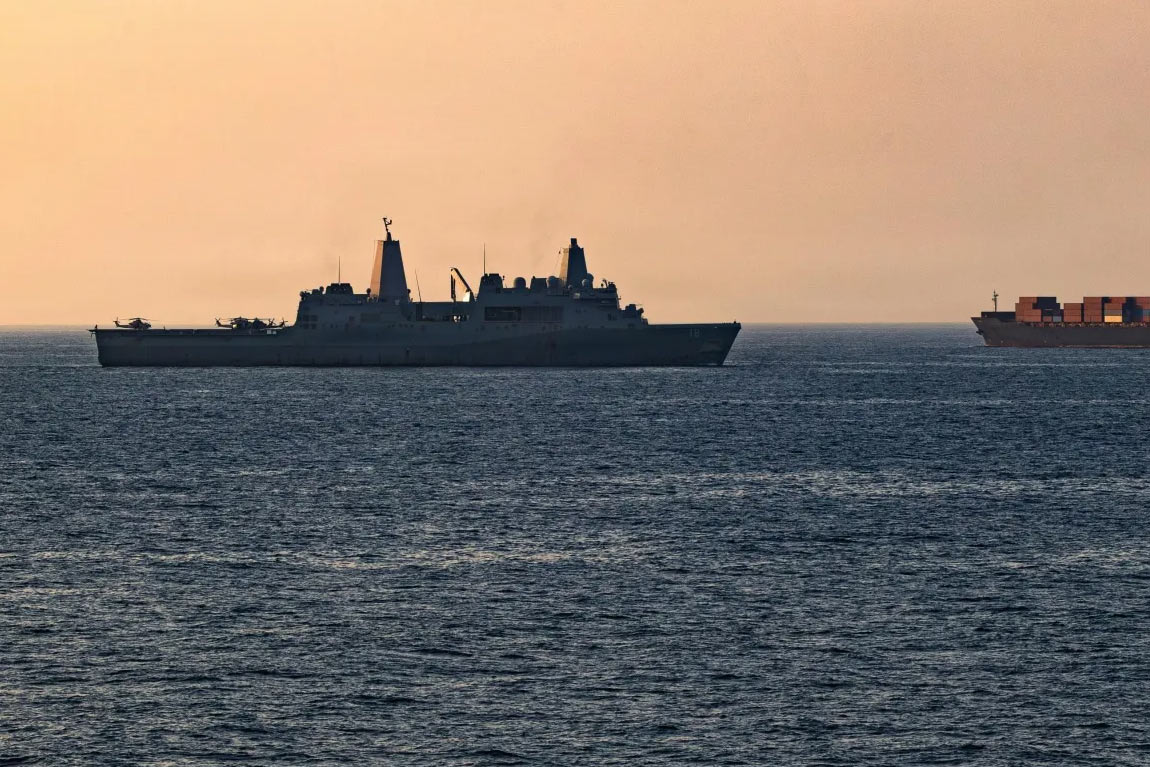
Expert Speak | 18 May, 2026
Force Without Freedom: The Long Game in the Strait
Spotlight
- Project Freedom’s one-day arc exposed the structural limits of military coercion, while the operation’s “defensive” framing functioned as much as a War Powers Resolution workaround as an operational doctrine.
- Despite Washington’s naval blockade, Tehran’s low-cost asymmetric arsenal is sufficient to sustain maximum disruption for months to come.
- Coercion and diplomacy must move in tandem: the emerging multilateral coalition and Bahrain-US UN resolution offer a path forward, but success hinges on variables outside Washington’s control — including Chinese buy-in.
Since the tenuous ceasefire of April 8 took place between the United States (US), Israel, and Iran, the central unresolved issue has remained the reopening of the Strait of Hormuz. Nearly a month later, on May 4, US President Donald Trump announced Project Freedom, an operation designed to “guide” stranded vessels out of the waterway closed by Iran. The rhetoric was direct. At a White House briefing that same day, Secretary of State Marco Rubio declared the operation’s purpose was to “rescue almost 23,000 civilians from 87 different countries who are trapped inside the Gulf and left for dead in the Persian Gulf by this Iranian regime.”
By May 5, Project Freedom was paused — reportedly at the urging of Pakistani mediators’, with a deal seemingly within reach. Only two American-flagged merchant ships had crossed. Iran dismissed the initiative as “Project Deadlock,” insisting that no military solution could resolve a political crisis — an ironic stance given Tehran’s continued threats to attack any vessel attempting to leave the waterway.
The one‑day arc of Project Freedom illustrates more than a failed tactical operation. In normal times, approximately 120 vessels transit the Strait daily; on the first day of Trump’s initiative, only two did. Beyond the numbers, the episode highlights the political constraints shaping Washington’s strategy, the structural limits of military coercion at sea, and the enduring uncertainty that will define the Strait long after any ceasefire is signed. For Iran, meanwhile, time remains on its side.
Political Cover for Trump
The framing of Project Freedom as a “defensive” operation — distinct from Operation Epic Fury — was not merely semantic. It represented a constitutional manoeuvre designed to create political space for President Trump. At the May 5 briefing, Secretary of state Marco Rubio emphasised: “The operation is over. Epic Fury is — the president notified Congress we’re done with that stage of it. We’re now on to this Project of Freedom. […] This is a defensive operation. There’s no shooting unless we’re shot at first.” He further underscored the nuclear dimension, warning that a nuclear-armed Iran “could do whatever the hell they want with the Straits and there’s nothing anyone would be able to do about it.”
By framing Project Freedom as distinct from Operation Epic Fury — temporary, defensive, and not subject to the same timeline — the administration was constructing its legal architecture in real time.
The political subtext was the War Powers Resolution. The Trump administration notified Congress of the beginning of hostilities on March 2, starting a 60-day countdown that expired on May 1. Rather than seek congressional authorisation, the White House argued the ceasefire had “paused” the clock — a claim flatly rejected by Republican Senator Susan Collins, who insisted the 60-day deadline is “not a suggestion,” but “a requirement.” By framing Project Freedom as distinct from Operation Epic Fury — temporary, defensive, and not subject to the same timeline — the administration was constructing its legal architecture in real time.
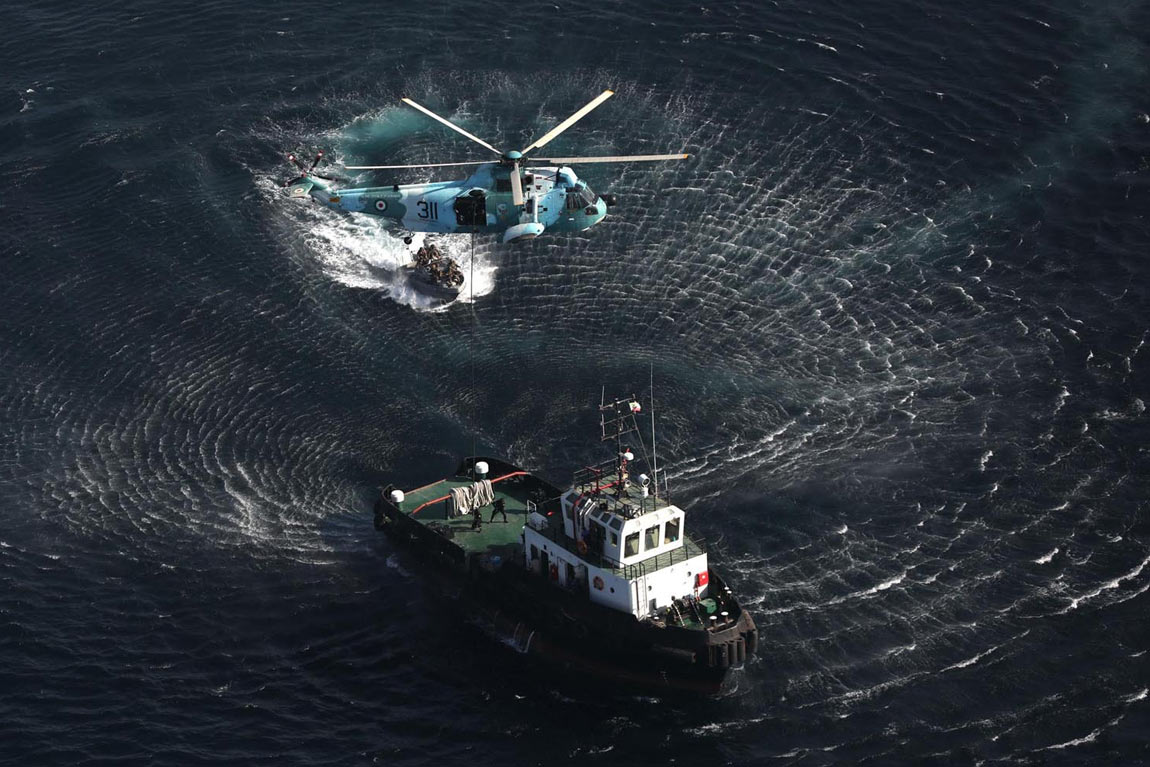
Nevertheless, the operational result was sobering. Iran launched missiles and drones at American naval vessels; Trump stated that US forces sank seven small Iranian boats; a French cargo ship was struck injuring its crew as it attempted to cross without Iranian approval. What emerged was not liberation but a low-intensity confrontation that neither side could fully contain. As Rubio acknowledged, Iran has “a high pain threshold, but not an unlimited one” — a formulation that concedes the standoff may endure longer than Washington would prefer.
The Limits of Naval Pressure
If the naval blockade imposed on April 13 was intended as a precursor to Project Freedom — tightening Iran economically before forcing the Strait open — its results have been mixed. The two measures represent contradictory impulses: one seeks to prevent vessels from entering Iranian waters, while the other attempts to establish an American-managed safe corridor through those same waters, mirroring Iran’s own Islamic Revolutionary Guard Corps (IRGC) controlled passage.
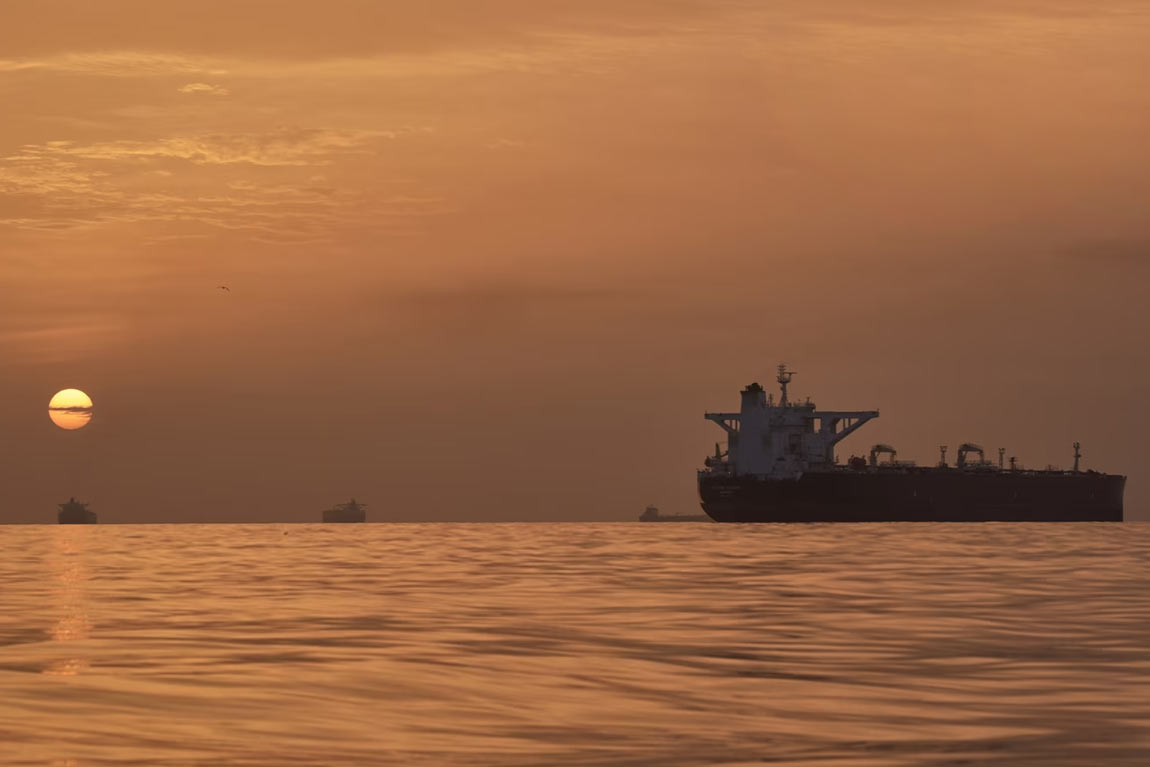
Operators and analysts have noted these developments, yet the underlying problem of uncertainty persists. Until the core disputes between Washington and Tehran are resolved, industry stakeholders will continue to treat Hormuz transit as an extreme-risk procedure. Some vessels have attempted to transit by going dark — switching off their Automatic Identification System (AIS) transponders — with mixed results. Three crude tankers carrying a combined six million barrels successfully exited, as did the Japan-bound Eneos Endeavour. Others were less fortunate, including the French vessel struck and its crew injured during an unauthorised crossing.
Low-cost asymmetric options — mines, drones, mosquito fleet harassment — require minimal expenditure yet sustain maximum disruption.
Treasury Secretary Bessent has argued that Iran’s storage is “full” and that the naval blockade will force Tehran to shut down production. Yet Iran appears to retain significant waterborne storage capacity — evidenced by the recent loading of a tanker at Kharg Island, the first since May 7. A CIA assessment further tempers Washington’s optimism, concluding that Iran would not face severe economic pressure for another four months. Meanwhile, Tehran’s low-cost asymmetric options — mines, drones, mosquito fleet harassment — require minimal expenditure yet sustain maximum disruption. Washington, by contrast, is deploying carrier strike groups and expansive personnel. Tehran is betting that this asymmetry will hold in a prolonged standoff.
An Iranian Recovery
The most consequential development largely absent from public discourse is what Iran has been doing since the ceasefire. Classified US intelligence assessments indicate that Iran had regained operational access to 30 out of 33 missile sites along the Strait, retaining approximately 70 percent of its pre-war missile stockpile and mobile launchers. Commercial satellite imagery confirmed engineering teams clearing debris from tunnel entrances at underground missile bases struck during Operation Epic Fury. Hegseth acknowledged as much, warning Iran that “you are digging out your remaining launchers” — but the intelligence suggests the recovery has been more successful than Washington anticipated.
At sea, Iran’s asymmetric advantage endures. Intelligence analysis concludes that Iran can survive the naval blockade for at least three to four months. It does not need to win the naval confrontation — it only needs to sustain uncertainty. Its arsenal spans mines, drones, and mosquito fleet harassment, and now extends to Ghadir-class mini-submarines — described by Tehran as the “invisible guardians” of the waterway. While analysts assess their endurance as limited and their detection vulnerability as significant, their presence adds another layer of uncertainty to an already hostile environment.
The diplomatic dimension shifted with Trump’s visit to Beijing. President Xi Jinping agreed that the Strait “must remain open to support the free flow of energy,” opposing both its militarisation and Iran’s tolling system. Treasury Secretary Bessent said Beijing would “do what they can“ behind the scenes, describing it as “very much in their interest” to see the waterway reopened. Tehran’s willingness to allow some Chinese vessels to transit under special arrangements suggests Chinese back-channel pressure carries operational weight that American military posture alone does not.
Diplomacy Must Run in Tandem with Muscle
Washington’s deployment of guided-missile destroyers and over 100 aircraft alongside Project Freedom was a deliberate display of coercive capability — underscored further on May 10, when the US Navy surfaced an Ohio-class nuclear ballistic missile submarine at Gibraltar as a visible counter-signal to Iran’s own Ghadir deployment. Yet the stalemate since April 8 has demonstrated that coercion alone cannot reopen a waterway defended by mines, drones, and asymmetric tactics. Force and diplomacy must move together.
The Bahrain-US resolution, if it secures Chinese support at the Security Council, could provide the multilateral legitimacy that unilateral American pressure has thus far failed to generate.
The multilateral architecture is taking shape. A draft UN Security Council resolution co-tabled by Bahrain and the US — with more than 110 co-sponsors — demands that Iran cease attacks on commercial vessels, remove its mines, and end its illegal tolling regime. The physical coalition is also assembling: under joint UK and French leadership, British Defence Secretary John Healey co-chaired a meeting of over 40 nations, as HMS Dragon forward-deployed to the Middle East and France moved its Charles de Gaulle to the Red Sea. It is within this coalition context that Trump has signaled a willingness to restart Project Freedom — this time as part of a larger military operation, with vessel escorts forming only one component. Asian countries most exposed to the supply shock must also step up.
Iran’s Strait closure remains its primary bargaining chip — and Tehran shows no sign of relinquishing it cheaply. The Bahrain-US resolution, if it secures Chinese support at the Security Council, could provide the multilateral legitimacy that unilateral American pressure has thus far failed to generate. As Rubio observed, Iran’s pain threshold is high — but not unlimited. The central question is whether Washington can assemble the coalition, the legal cover, and diplomatic architecture necessary to reach that threshold before Tehran’s missile sites are fully restored, its endurance exhausted, or the low-intensity conflict escalates into a confrontation neither side can reverse.
Clemens Chay is Senior Fellow, Geopolitics, ORF Middle East.