 Global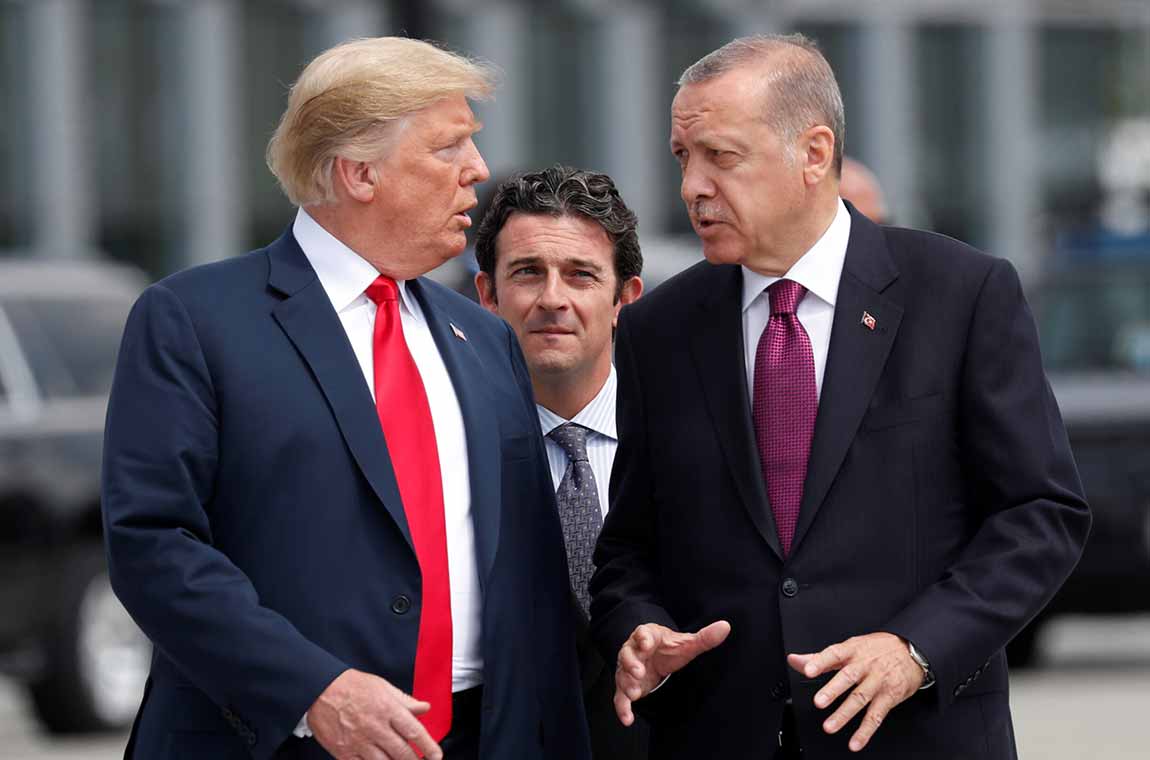
Expert Speak | 07 August, 2026
The Türkiye NATO Summit and Turkish–US Relations under Trump 2.0
Spotlight
- The North Atlantic Treaty Organization (NATO) Summit in Ankara created a new momentum for Turkish–US relations, deepening security cooperation in the region.
- Long-standing disputes, including over Türkiye’s removal from the F-35 programme and CATSAA sanctions against it, are apparently moving towards resolution.
- The Iran conflict and US midterm elections could, however, disrupt the current rapprochement.
On 7–8 July 2026, Türkiye hosted its first North Atlantic Treaty Organization (NATO) Summit in 22 years against the backdrop of the war in Ukraine, the Iran conflict, and Alliance-related budgetary disputes driven by United States (US) President Donald Trump. While burden-sharing debates and political divisions between members intensified, Ankara viewed the Summit as an opportunity to showcase its diplomatic influence and defence industry capabilities while consolidating its once-strained relationship with the US. As the Summit concluded on a positive note, with discussions on Türkiye’s possible return to the F-35 programme and the potential lifting of the Countering America’s Adversaries Through Sanctions Act (CAATSA) sanctions, Türkiye–US bilateral relations entered the most promising period in nearly a decade.
The NATO Summit and Türkiye’s Role
Holding the NATO Summit in Ankara amid an increasingly volatile regional security environment underscored Türkiye’s growing strategic importance within the Alliance. As an immediate neighbour to Syria and Iran, Türkiye has repeatedly faced the spillover effects of regional instability while simultaneously positioning itself as a regional mediator and enhancing its diplomatic and security relevance within NATO. While the Summit took place during renewed uncertainty over the Alliance, fuelled by President Trump’s criticism of European allies and questions surrounding Washington’s long-term commitment towards Türkiye, the Ankara Declaration ultimately reaffirmed Article 5, pledged greater defence spending and industrial cooperation, and signalled NATO’s determination to strengthen its eastern flank.
The Summit also translated Türkiye’s strategic significance into tangible institutional and defence initiatives. Reflecting Türkiye’s status as the Alliance’s second-largest military force after the US, NATO agreed to establish a multinational corps headquarters in the country, reinforcing its role in the bloc. Concurrent renewed discussions over Türkiye’s potential return to the US’s F-35 aircraft development programme signalled a broader effort to deepen defence cooperation with Türkiye and strengthen NATO’s eastern flank amid mounting regional uncertainty. This evolving strategic environment also gave new momentum to Turkish–US relations. President Trump repeatedly praised President Recep Tayyip Erdoğan, even remarking that he had attended the Summit largely out of respect for the Turkish president. This reinforced the warmer tone between Ankara and Washington and raised expectations of a broader reset in bilateral relations. Presidents Trump and Erdoğan have not always enjoyed such cordial equations, but the former’s acknowledgment of the challenges that shaped bilateral ties during his first term demonstrates his intent to address them, while reflecting a degree of honesty.
Turkish–US Relations During President Trump’s Terms
Most of the challenges shaping Turkish–US bilateral relations can be traced back to US President Barack Obama’s second term, when strategic trust gradually eroded over certain disagreements.
The growing mistrust became increasingly evident as the two allies clashed over Washington’s deepened backing of Kurdish forces in 2014, despite Ankara’s persistent objections. The withdrawal of US and German Patriot missile battery units in 2015 from Türkiye, officially due to changing security assessments and modernisation requirements, was widely interpreted in Türkiye as a sign of declining Allied commitment at a time of mounting regional insecurity. As negotiations between Türkiye and the US over the Patriot air defence system acquisition stalled and Washington refused Ankara’s repeated requests to extradite Fethullahist Terrorist Organization (FTO) leader Fethullah Gülen following his 2016 attempt to overthrow the Turkish government, Turkish policymakers increasingly questioned the reliability of their traditional security partners. Türkiye’s relations with Russia had also deteriorated sharply after the downing of a Russian Su-24 and the assassination of Russian Ambassador to Türkiye Andrei Karlov; however, Ankara turned to Moscow to seek an alternative air defence capability. Strategic necessity increasingly outweighed political considerations.
Against this setting, Donald Trump’s election initially raised expectations of a reset in Turkish–US relations. Although the first year of his presidency witnessed a modest improvement, the relationship soon reverted to crisis management. Türkiye’s detention of Pastor Andrew Brunson triggered US sanctions and tariff increase against it which, combined with existing macroeconomic vulnerabilities, contributed to the Turkish lira’s sharp depreciation in 2018. While tensions eased following Brunson’s release and Washington’s approval of a possible Patriot sale, the positive momentum proved short-lived. Türkiye’s acquisition of the Russian-made S-400 air defence system prompted the Trump administration to withdraw the Patriot offer, impose CAATSA sanctions on the Presidency of Defence Industries (SSB), and remove Türkiye from the F-35 programme. By the end of President Trump’s first term, accumulated disputes over defence procurement, Syria, and eroding strategic trust reduced bilateral relations to one of their lowest points in decades.
Trump’s second term began under a markedly different strategic environment, characterised by renewed defence cooperation. Ankara and Washington found their interests converging as the regional balance of power shifted. The easing of key regional conflicts, notably in Syria, alongside Trump’s bid on Erdoğan’s capability in reaching a deal between Hamas and Israel, positioning Ankara as a key negotiator between the factions, helped reduce longstanding points of tension and opened new avenues for cooperation.
Ankara’s joining of President Trump’s Board of Peace (BoP) and the Canada-backed Defence Security and Resilience Bank as a founding member, exemplify how the improved bilateral relations translated into institutional cooperation. At the NATO Summit, the longstanding S-400 and F-35 disputes also appeared to move towards resolution, as President Trump pledged to lift the CAATSA sanctions. Additionally, the long-awaited sale of F110 engines intended to power Türkiye’s KAAN fighter jets cleared the US congressional review process after lawmakers declined to block the deal.
At the NATO Summit, the longstanding S-400 and F-35 disputes also appeared to move towards resolution, as President Trump pledged to lift the CAATSA sanctions. Additionally, the long-awaited sale of F110 engines intended to power Türkiye’s KAAN fighter jets cleared the US congressional review process after lawmakers declined to block the deal.
The contrast between the two presidencies, however, reflects more than a change in Washington’s approach. The second term coincided with a broader reorientation of Turkish foreign policy. The “ değerli yalnızlık” (precious loneliness) doctrine, a term introduced by Turkish academic İbrahim Kalın to describe Türkiye’s willingness to endure diplomatic isolation in pursuit of its regional objectives, has gradually given way to a more pragmatic strategy centred on restoring ties with regional and Western partners. This recalibration amid a rapidly changing Middle East strengthened the foundations of renewed Turkish–US cooperation.
Syria: The Conduit for the Rapprochement
As Turkish–US relations enter their most constructive phase in years, it is worth examining Syria’s role. For long the principal source of disagreement between the two nations, it is increasingly turning into the platform on which bilateral cooperation is being rebuilt.
As of December 2024, following former President Bashar al-Assad’s flight from Syria and the assumption of power by the Hay’at Tahrir al-Sham (HTS)-led transitional authorities, several long-standing points of contention between Ankara and Washington began to resolve. The emergence of a new government in Syria under Ahmad al-Sharaa fundamentally reshaped both countries’ approach, as they converged on the need to stabilise the transitional authorities, prevent renewed fragmentation, and support reconstruction. The new government sought to consolidate state authority and the Kurdish-led Syrian Democratic Forces (SDF) agreed in principle to integrate into the Syrian government’s armed forces, addressing one of the key security divergences between Türkiye and the US. Simultaneously, Türkiye launched a renewed peace process with the Kurdistan Workers Party (PKK), aimed at ending more than four decades of armed conflict, addressing another long-term source of bilateral tension.
As Turkish–US relations enter their most constructive phase in years, it is worth examining Syria’s role. For long the principal source of disagreement between the two nations, it is increasingly turning into the platform on which bilateral cooperation is being rebuilt.
With enduring security concerns and competing interests in Syria giving way to a more cooperative regional environment, Turkish–US engagement expanded beyond defence policy into energy, infrastructure, and regional connectivity. As Turkish energy and construction companies increased their involvement in Syria’s post-war reconstruction, Washington increasingly portrayed Türkiye as an indispensable partner in reshaping Syria’s regional transport and energy networks. US Ambassador to Ankara Tom Barrack argued that together with Syria, Türkiye could shape the future of regional energy routes. Proposals for new transport and energy corridors connecting the Gulf to Türkiye through Syria have also gained attention, with the revival of the Hejaz Railway emerging as part of broader efforts to develop alternative regional transit routes. Syria has now ceased to function primarily as a point of strategic divergence; rather, it is the conduit for Ankara and Washington to institutionalise a broader political, economic, and strategic partnership.
A New Phase in the US–Turkish Relations?
Over the past decade, US–Türkiye relations have witnessed repeated periods of tension and rapprochement as their regional interests frequently diverged, resulting in an increasingly uncertain and at times uncoordinated bilateral relationship. While the July 2026 NATO Summit recalled former points of contention, it also showcased how Ankara and Washington have moved closer through easing tensions and finding ways to mend their strained ties.
Renewed escalation between the US and Iran could expose differences in Washington’s and Ankara’s regional approaches, given Türkiye’s continued preference for balancing relations rather than becoming directly involved in a broader confrontation.
Although bilateral cooperation has expanded in several contested areas, whether this momentum can be sustained remains uncertain. Renewed escalation between the US and Iran could expose differences in Washington’s and Ankara’s regional approaches, given Türkiye’s continued preference for balancing relations rather than becoming directly involved in a broader confrontation. Moreover, much of the recent improvement is due to close personal ties between Presidents Erdoğan and Trump. If the US domestic political landscape changes after the midterm elections, the absence of deeper institutional alignment could affect the durability of the current rapprochement.
Ekin Keleş is a policy analyst and content editor at Daktilo1984.