 Global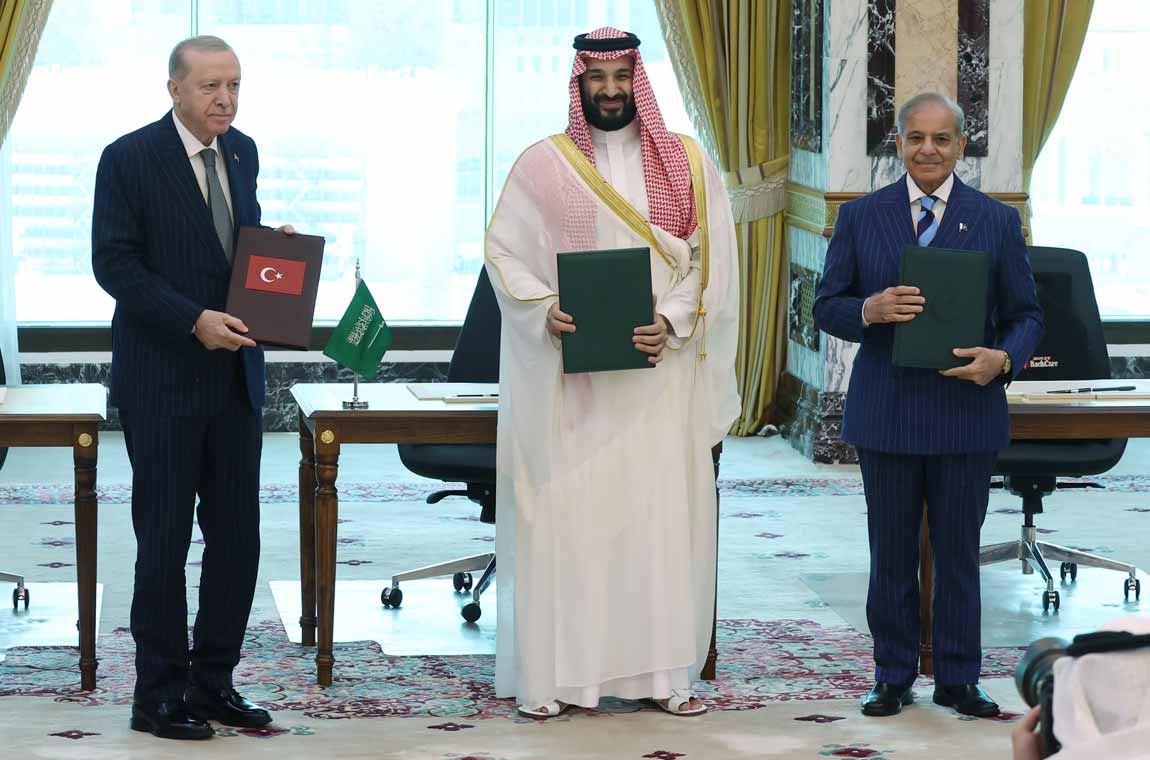
Expert Speak | 14 August, 2026
The Mecca Joint Defence Agreement’s Impact on Middle East Security Strategies
Spotlight
- The Mecca Agreement is an indication of the US’s waning power in the Gulf and the wider Middle East.
- Capital, nuclear weapons, and a rapidly growing defence industrial and technology base are the three important variables Saudi Arabia, Pakistan, and Türkiye have on offer.
- Going forward, risk management, not conflict resolution, is the game to be played in the Middle East.
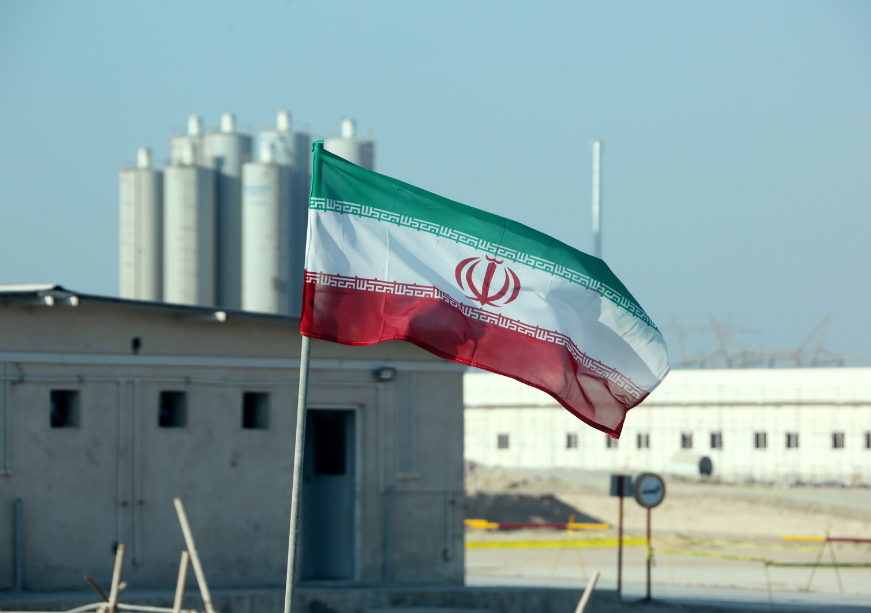
On 7 August 2026, Saudi Crown Prince Mohamed Bin Salman, Turkish President Recep Tayyip Erdoğan, and Pakistan Prime Minister Shehbaz Sharif signed what is being called “the Mecca Joint Defence Agreement” in Riyadh. Coming on the heels of the Saudi–Pakistan defence agreement signed in September 2025, this Agreement adds a new regionally owned strategic layer to security, anchored by an idea of collective defence. Meanwhile, the Iran–United States (US)–Israel war has extended into its sixth month, currently characterised by a withering American willingness to keep militarily striking Iran versus Tehran’s increased appetite to incur damage in a bid to exhaust President Donald Trump’s administration from the region.
A demand for Middle Eastern countries to stake claim for their own security has been long in the making. However, the economics of energy over the decades justified the US military postures across the wider region. Today, as Washington itself becomes both energy independent and a leading exporter of oil and gas, the old foreign policy formulas are not finding favour. Recent deaths of US soldiers in July 2026, during Iranian strikes against Jordan, have further escalated costs of the war for President Trump, who first came to power as a voracious critic of American adventurism abroad. He now finds himself bogged down in the Middle East region.
As Washington itself becomes both energy independent and a leading exporter of oil and gas, the old foreign policy formulas are not finding favour.
In essence, the Mecca Agreement is an indication of waning US power in the Gulf and the wider Middle East. The Iranian response to US and Israeli strikes since 2025, including Ayatollah Ali Khamenei’s assassination in February 2026, was initially of a state in an existential crisis, but now it seems more confident that this may be a rare opportunity to mobilise the escalation ladder across the Persian Gulf if necessary. An end goal would be to attempt to eject the US from this region for good.
This alliance between Saudi Arabia, Pakistan, and Türkiye is, therefore, not seen as a threat by Iran. Instead, it has argued that the trilateral defence agreement shows a “change in perception” towards the US.
Why Riyadh, Islamabad, and Ankara?
Capital, nuclear weapons, and a rapidly growing defence industrial and technology base (largely led by Türkiye’s successes with its home-grown defence manufacturing) are the three important variables on offer. After the Iran–Israel–US war started in February 2026, the Saudis maintained a balanced approach for quite some time. They did not mobilise against Iran, looked to preserve the Tehran–Riyadh normalisation brokered by China in 2023, and tried to package the conflict as one started by the US and Israel. These modalities are unlikely to change, despite the language used in the Mecca Agreement, which says that an attack on one of the signatories will be considered an attack on the others as well.
This trilateral agreement has already been bracketed under several variations—an “Islamic North Atlantic Treaty Organization (NATO)” and a “Sunni alliance,” amongst others. Similar language was used in the 2025 Saudi–Pakistan defence agreement as well. The addition of Türkiye into the mix seems to be an extension to the Riyadh–Islamabad pact. This argument is further strengthened by Türkiye suggesting that Egypt may join this consortium. This advent of ‘bloc politics’ in the Middle East is actively shaped by current geopolitical events, putting aside the historical, ideological, and sectarian baggage of the past. Nonetheless, these new strategic Venn diagrams will have to pass their own stress tests in the coming days, such as a lack of shared state enemies and a disparate group of non-state (as well as some with state patronage) enemies.
Türkiye in all likelihood played an important role in defusing a bubbling strategy in Washington some time ago, which relied on arming Kurdish militias inside Iran.
To look at the Mecca pact solely as one aimed against Iran would be myopic. It is highly unlikely that Pakistan or Türkiye would get embroiled in a conflict with Iran. In fact, Türkiye in all likelihood played an important role in defusing a bubbling strategy in Washington some time ago, which relied on arming Kurdish militias inside Iran. There are around 16 million Kurds residing in Türkiye who have been highly politicised under the presidency of Recep Tayyip Erdoğan. For Islamabad, which now also enjoys a budding relationship with the Trump administration and is playing the role of mediator between Tehran and Washington, this presents an opportunity to reinstate itself as an Islamic power after spending a few years on the sidelines due to its continuing economic turmoil.
These intricacies raise important questions, such as how will this trilateral defence pact function? Saudi Arabia’s energy facilities have been targeted by the Houthis in Yemen and pro-Iranian militia in Iraq since the 2025 deal with Pakistan; however, no public evidence is available that Pakistani troops and fighter aircraft stationed in Saudi Arabia have taken part in retaliatory response. It is unlikely that any such regional formation will deter militia such as the Yemeni Houthis or Iraq’s Shia-centric Popular Mobilisation Forces (PMF) and curtail the ongoing conflict.
The architecture of this agreement pre-dates the current war. Türkiye’s Foreign Minister Hakan Fidan has said that efforts to close this pact had been underway for “two years and eight months” in an effort to mitigate the agreement’s direct association with the US war against Iran and Tehran’s attacks against the Gulf states as retaliation.
Expectations Versus Reality
Deploying armies and risking casualties are not decisions taken lightly by any state. It only took a few hours for the Mecca Agreement to be tested as the Houthis targeted infrastructure across from their border soon after the agreement was signed. Fidan also mentioned that this alliance is not targeted against any country or other similar regional structure (such as the India, Israel, United Arab Emirates [UAE], and the US [I2U2] or the Abraham Accords) and is just a “general pledge to support the three allies’ security.” Yet, the language used for collective defence cannot be seen as detached from such statements.
The convoluted messaging from the participating members adds a layer of uncertainty on how the ‘collective’ part of the defence will function. The term ‘defence’ may be doing a lot of the heavy lifting here. Military mobilisation may be the absolute last resort; diplomacy, a collaborative approach to multilateral institutions such as the United Nations (UN), and building newer and more holistic ecosystems such as the Saudi-promoted Defence Maritime Coalition to manage security in the Red Sea will be prioritised. The “offence” clause, compared to NATO’s Article 5, will also be accepted as one for the rarest-of-rare events. NATO’s Article 5, constituted in 1949, has been invoked only once in the alliance’s history, in the aftermath of the 9/11 attacks in the US in 2001. NATO continues to pay the price for the wars in Afghanistan and Iraq even today.
One challenging arena for this new alliance could be against the non-state militant actors where stakes are relatively low.
One challenging arena for this new alliance could be against the non-state militant actors where stakes are relatively low. While expectation from them is of mobilising against the Houthis, targeting the militia in Iraq may be an easier ask. The Saudis have already struck targets inside Iraq along with the US, and technical backing by Ankara and Islamabad may be a realistic application of the Agreement. However, any expectation of Saudi F-15s and Turkish and Pakistani F-16s doing cooperative bombing runs in the region remains more likely in a Hollywood film.
Conclusion
The Mecca Agreement is indeed a transformative one. Countries in the region, including Saudi Arabia and Türkiye that also continue to be regional rivals, are restructuring risk away from the American security umbrella. This does not mean that regional rivalries and fissures will disappear; it suggests that strategic interests have been realigned more realistically, based on geographic and economic realities, rather than ideological, theological, or sectarian fissures. Moving forward, risk management, not conflict resolution, is the game to be played.
Kabir Taneja is Executive Director, ORF Middle East.