 Global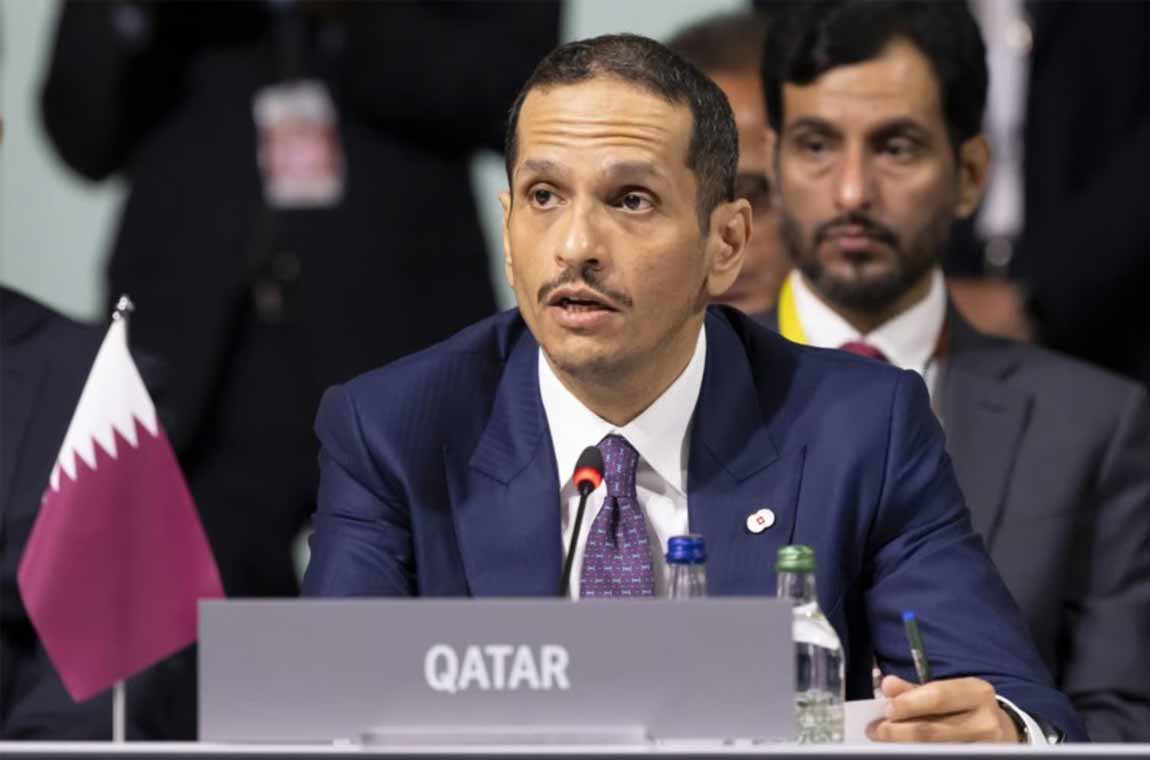
Expert Speak | 13 July, 2026
Qatar’s Board Calculus: From Independent Mediator to Risk- Sharing Participant
The following excerpt is from Chapter 4 — Whither the Board of Peace? Perspectives from Washington and the Gulf.
Qatar’s involvement in the Board of Peace appears to be part of a recalibration of its foreign policy toward the Gaza file. The recalibration is aimed at reducing the political exposure that accompanied its previously more independent stance, while still maintaining a stake in the Israeli–Palestinian conflict. Since the 1990s, the Gaza file has constituted an important arena through which Qatar’s foreign policy has been exercised, enabling it to generate political capital, project international influence on various audiences—including states that have historically played a role in this politically sensitive file such as the United States (US) and the ‘Arab World’—and serve as an important dimension of Qatar–US ties.
The aftermath of the 7 October 2023 Hamas attacks on Israel heightened political and security risks for Qatar’s mediation strategy, including intensified efforts by Israeli and American officials to undermine Qatar’s role in Gaza and direct security threats against Qatari territory that manifested through a missile attack. While such pressures are not entirely new, their increased scale and intensity are forcing Qatar to adopt a new approach to the Gaza file. Within this context, Qatar’s engagement with the Board of Peace represents an adaptation to these evolving constraints. To understand Qatar’s rationale behind its decision to enroll and engage with the Board of Peace, a brief history of how Doha has approached the Israel–Palestine file would be useful.
The Evolution of Qatar’s Mediation in Gaza
Qatar’s mediation strategy has been centred for decades on its role in establishing channels of communication with Israel and Hamas. Following the rise to power of Sheikh Hamad bin Khalifa Al-Thani in 1995, Qatar increasingly leveraged its foreign policy as a means to project power and carve a niche for itself regionally and in the broader international system.[1] Although engaging in mediation efforts existed well before Qatar declared independence from the British in 1971, it was in the post-1995 political environment that mediation was actively used as a tool to exercise influence, and as part of a deterrent effect. This was achieved by establishing Qatar’s indispensability to the international system, with the Israel–Palestine file being a central area of such diplomatic investment.[2]
An important episode that established Qatar’s commitment to the file occurred in 1999, when Qatar agreed to temporarily host the Hamas leadership following a disagreement with Jordan that resulted in their temporary expulsion to Doha. This was followed by Qatar hosting the Hamas political bureau permanently in Doha from 2012 onward.[3] Since then, a number of corollary developments have occurred—including the opening of an Israeli trade office from 1996 to 2009, marking the first time a Gulf state had established such ties with Israel—alongside consistent financial aid to Gaza and other territories.[4] Qatar’s approach is rooted in the understanding that as long as Israel and Hamas demonstrate a willingness to negotiate, Qatar will always provide space for such interactions to occur.[5]
After the Hamas-led attack on 7 October 2023, Qatar has been heavily involved, and often in a leading role, in mediating the conflict. In November 2023, Qatar, alongside Egypt, became a key mediator in successfully establishing a temporary ceasefire that led to the largest release of living Israeli hostages since the beginning of the 7 October conflict, as well as the provision of much-needed humanitarian aid to Gaza.[6]
Challenges of Mediation
Following this temporary ceasefire, Qatar’s involvement in the Gaza file was increasingly fraught with challenges that pushed its foreign policy to its extremes and effectively questioned the sustainability of its approach. In April 2024, Qatar’s foreign minister announced that Doha was re-evaluating its role as a mediator following a barrage of attacks by various actors—including members of the US Congress—that sought to undermine and mischaracterise Qatar’s mediatory role.[7]
This was also followed by a physical attack on 9 September 2025, when the Israeli Air Force launched Operation Summit of Fire that resulted in ten missiles targeting a residential compound in Doha that was hosting Hamas negotiators.[8] In response, Qatar immediately scaled back its mediating efforts, with fewer clandestine meetings in Doha, while a growing Egyptian and Turkish role was observed.
The Israeli attack on Doha was followed by an intensification in mediatory efforts under the leadership of the US, culminating in President Donald Trump announcing the 20-point peace proposal for Gaza that envisioned the establishment of a Board of Peace.[9] In November 2025, the United Nations Security Council passed Resolution 2803 that endorsed the Board of Peace. The charter was formally ratified almost two months later in Davos, with Qatar as a signatory.[10],[11],[12]
That Qatar was an early signatory is in line with its realisation that continuing its mediatory approach in the existing form would be futile. Qatar had already been attacked by Israel— one of the parties it was actively working with in the mediation process. Given the continued deterioration of the situation in Gaza, the previous mediation model offered Qatar diminishing strategic value, while increasing its exposure to risks that it was not willing to absorb. Qatar’s involvement within the Board of Peace can therefore be interpreted as a response to these constraints.
Qatar’s Approach to the Board of Peace
Regardless of whether Qatari officials view the more ambitious reconstruction proposal embedded within the Board of Peace as attainable or not, this initiative is the only option currently on the table. Qatar is adopting a risk-averse approach that seeks to share the burden of the Gaza file with regional and international players. In doing so, it has removed a substantial strain on itself, while remaining politically active in the file in the hope that the Board of Peace could muster sufficient support to lead to a positive outcome in Gaza.
Qatar, alongside other states, has witnessed the limitations of the UN in bringing about meaningful change in the conflict. In contrast, with President Trump leading the Board of Peace, there is a perceived possibility that his ability to exert pressure on Israeli Prime Minister Benjamin Netanyahu could make the initiative more effective, at least in curtailing further escalations, and not necessarily in bringing about lasting peace and prosperity.
This is critical for Qatar, considering the spillover effects of 7 October—including the risk of a broader confrontation involving the US and Iran, which would have massive implications for regional security. These risks have since materialised as the US and Israel—allegedly on the behest of the latter—launched an intensive military campaign against Iran on 28 February 2026. Before these attacks, Qatar was arguably hit the hardest among the Gulf Cooperation Council (GCC) states as it was attacked by both Iran and Israel within a span of a few months—a direct result of the escalations starting from 7 October 2023.
Qatar’s Commitments to the Board of Peace
Qatar’s engagement with the Board of Peace reflects a strategy of selective commitment, where financial contributions are used to sustain influence while avoiding deeper security entanglements. The prime minister of Qatar announced during the inaugural meeting of the Board of Peace that Qatar would commit US$1 billion, while affirming that Doha would continue providing humanitarian assistance to Gaza through both the UN and the Board of Peace.[13]
Such financial investment is partly influenced by the transactional nature that has characterised the US presidency under Trump. Over the years, Qatar has skillfully leveraged its wealth as part of a broader projection of soft power. Given that Qatar still views the US as a primary security partner, not contributing financially would risk a negative reaction from the US presidency. Yet, unlike previous instances of post-conflict reconstruction in Gaza, Qatar did not ‘over-contribute’; its financial commitment, at least on paper, was matched by Kuwait, Saudi Arabia, and the UAE.
Qatar appeared to reap the fruits of its approach almost instantaneously when President Trump stated that Qatar has supported the US on numerous occasions, while also stating that Qatar was not an evil state but an ally.[14] This was particularly important, given the aforementioned slew of negative campaigns aimed at undermining US–Qatari ties.
What Qatar did not do was commit law enforcement and military forces to Gaza as part of the International Stabilization Force (ISF). This was expected, as not only were some Israeli officials highly critical of Qatar’s potential involvement in the Board of Peace, to begin with, but also of prospects of Qatari boots on the ground. Following the Israeli attack on Qatar that had resulted in the death of a member of the Qatari Internal Security Force (Lekhwiya), this would have been unpalatable for Qatari officials and the broader domestic population, while also being possibly counterproductive for Israel.[15]
Dealing with a US-Dominated Framework
Looking ahead, Qatar appears to be hunkering down as the Trump presidency unfolds, while positioning itself for the day after the MAGA administration ends. Whether a Republican or Democratic administration takes over, Qatar’s approach to the Gaza file—along with further reinforcing its successful mediating efforts elsewhere, such as in Afghanistan—should render it politically relevant to the US, while also securing Qatar’s own foreign policy objectives.
At the same time, the ongoing war in the Gulf, following the US and Israeli-led aggression on Iran, has pushed discussions around the Board of Peace into the background. For Qatar, the continuation of the war in Gaza, alongside the war on Iran and its regional implications, has reinforced a longstanding perception that US policy in the region is shaped by Israeli priorities—even when this comes at the expense of Gulf security concerns. Yet, the irony is that Qatar recognises that any meaningful progress on the Gaza file is unlikely to manifest without direct US involvement and its ability to exert influence over Israeli decision-making.
At the current juncture, adopting a foreign policy approach that embraces a multilateraldriven framework gives Qatar the flexibility it needs to continue its involvement in Gaza. Indeed, Qatar’s foreign minister had highlighted the potential combined role of the UN and the Board of Peace at the inaugural session of the latter framework. This highlights that Qatar does not view this initiative as an immediate replacement for the established role of the UN. As a small state, Qatar has often leveraged the UN as a force multiplier in the past. Adding the Board of Peace to this layered leverage approach is beneficial, as it further enhances Qatar’s forcemultiplier effect.
Saoud Al-Eshaq is an independent researcher based in Qatar
[1] Saoud Al-Eshaq and Amjed Rasheed, “The ‘David’ in a Divided Gulf: Qatar’s Foreign Policy and the 2017 Gulf Crisis,” Middle East Policy 29, no. 2 (2022): 30–45.
[2] Mirdef Alqashouti, “Qatar Mediation: From Soft Diplomacy to Foreign Policy,” in Contemporary Qatar: Examining State and Society, ed. Mahjoob Zweiri and Farah Al Qawasmi (Singapore: Springer Singapore, 2021), 73–92.
[3] Bülent Aras and Majed Al Ansari, “Standing Tall Like Caesar? Qatar’s Unwavering Voice for Palestine at the United Nations,” Third World Quarterly 45, no. 9 (2024): 1458–1475.
[4] Uzi Rabi, “Qatar’s Relations with Israel: Challenging Arab and Gulf Norms,” Middle East Journal 63, no. 3 (2009): 443–459.
[5] Saoud Al-Eshaq, “Why Israel Should Welcome Qatar’s Rejection of Normalization,” Amwaj Media, October 10, 2023, https://amwaj.media/en/article/why-israel-shouldwelcome- qatar-s-rejection-of-normalization.
[6] “Timeline: The Path to the Israel-Hamas Ceasefire Deal in Gaza,” Al Jazeera, January 19, 2025, https://www. aljazeera.com/features/2025/1/19/timeline-the-path-tothe- israel-hamas-ceasefire-deal-in-gaza.
[7] “Qatar Re-Evaluating Its Role as Mediator in Gaza Ceasefire Talks,” Reuters, April 17, 2024, https://www. reuters.com/world/middle-east/qatar-says-gaza-ceasefiretalks- delicate-phase-2024-04-17/.
[8] “How Israel’s Mysterious Air-Launched Ballistic Missile Reached Qatar via Space,” Ynetnews, September 5, 2025, https://www.ynetnews.com/article/hjfgu7migg.
[9] “Trump Peace Plan Envisions New Gaza ‘Trump-Led Board of Peace,’” Reuters, September 29, 2025, https:// www.reuters.com/world/middle-east/trump-peace-planenvisions- new-gaza-trump-led-board-peace-2025-09-29/.
[10] “President Trump Ratifies Board of Peace in Historic Ceremony, Opening Path to Hope and Dignity for Gazans,” The White House, January 22, 2026, https:// www.whitehouse.gov/articles/2026/01/president-trumpratifies- board-of-peace-in-historic-ceremony-openingpath- to-hope-and-dignity-for-gazans/.
[11] United Nations Security Council, Resolution 2803 (2025) (adopted November 17, 2025), https://undocs.org/S/ RES/2803(2025).
[12] Ministry of Foreign Affairs, State of Qatar, “Prime Minister and Minister of Foreign Affairs Signs Document on Qatar’s Joining Board of Peace,” Ministry of Foreign Affairs, State of Qatar, January 22, 2026, https://mofa.gov. qa/en/qatar/latest-articles/latest-news/details/2026/01/22/ prime-minister-and-minister-of-foreign-affairs-signsdocument- on-qatar’s-joining-board-of-peace.
[13] “Qatar Joins First Peace Council Meeting, Pledges $1bn to Back Settlement Efforts,” Qatar News Agency, February 20, 2026, https://qna.org.qa/en/news/news-details?id=qatarjoins- first-peace-council-meeting-pledges-1bn-to-backsettlement- efforts&date=20/02/2026.
[14] “You’re Not Evil’: Trump Unveils Board of Peace’s Billions,” The Times, February 19, 2026, https://www. thetimes.com/us/news-today/article/board-of-peacetrump- washington-96z0gmdr0.
[15] Keshet Neev, “Netanyahu: There Won’t Be Turkish or Qatari Soldiers in Gaza, Amid ‘Dispute’ with US,” Jerusalem Post, January 19, 2026, https://www.jpost.com/ israel-news/article-883875.