 Global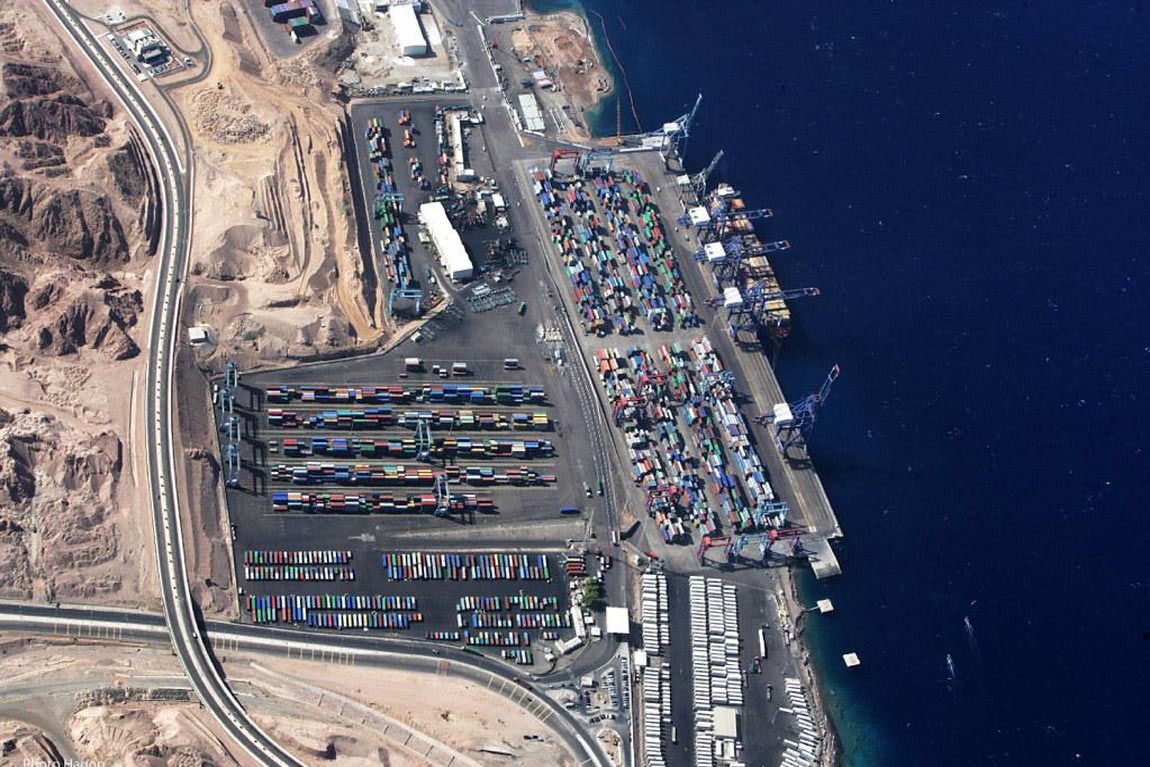
Expert Speak | 03 September, 2026
Can Jordan Capitalise on the Port of Aqaba?
Spotlight
- The Port of Aqaba handles approximately 80 percent of Jordan’s exports and 65 percent of its imports, making its security central to the Jordanian economy. The Strait of Hormuz disruption has increased its strategic value.
- While the war makes Aqaba more valuable and harder to invest in, missile threats raise insurance and financing costs precisely when Jordan has an opportunity to attract capital.
- Jordan needs to make Aqaba investable and create durable economic value with war-risk insurance, blended finance, expanded storage, and ship repair.
In July 2026, Jordan intercepted Iranian missiles over the port city of Aqaba and its adjacent airport after a United States (US) embassy in Amman warning of a “specific and credible” threat to the area. Aqaba is not one port among many; it is Jordan’s only seaport, the terminus of the Kingdom’s short Red Sea coastline and the hub for roughly 80 percent of its exports and 65 percent of its imports. It also captures the central predicament of the Hashemite Kingdom during the ongoing Middle East war—its greatest opportunity and its gravest exposure occupy the same coordinates.
For a resource-constrained state like Jordan that imports most of its consumables, Aqaba is the maritime artery powering its economy.
For a resource-constrained state like Jordan that imports most of its consumables, Aqaba is the maritime artery powering its economy. When the 2026 Iran war led to a closure of the Strait of Hormuz, through which about a fifth of the world’s seaborne oil normally passes, Aqaba acquired greater regional strategic value—the Gulf’s exporters scrambled to find overland and Red Sea alternatives, making the port an invaluable asset. For example, Iraq and Jordan proposed to revive the long-dormant Basra–Aqaba oil pipeline, a plan first floated in the 1980s and approved in principle in 2022, to bypass Hormuz. After 15 years of stagnation, Jordan appeared to have been handed the most valuable geographic dividend.
Yet, this dividend cannot be reliably banked. The same conflict that adds relevance to Aqaba endangers the security conditions required to monetise it. A port under credible missile threat cannot underwrite the investor confidence that corridors and pipelines demand. One Jordanian contractor has already reported that big-ticket projects are stalling due to the perception of war risk. Amman had built a land-based gas reservoir at Aqaba to stockpile energy and weather regional shocks, but this could end up being under threat as Aqaba becomes a target. Such is the paradox: strategic-position rent cannot be collected when the position itself is under attack. Further, the opportunity window is quickly closing. The United Arab Emirates (UAE) is expanding the West–East pipeline that bypasses Hormuz without crossing a single border, while Saudi Arabia, Egypt, and Syria are creating rival routes. The longer Aqaba sits under threat, the more ground a competitor gains.
Geography sharpens this disadvantage. The Aqaba port sits at the head of the Gulf of Aqaba, directly beside Israel’s Port of Eilat, the two harbours separated by a few kilometres of water. When Iranian attacks fell near Aqaba on 22 July, the smoke was seen from Eilat. This means that Aqaba cannot be insulated from a war waged against Israel.
The same conflict that adds relevance to Aqaba endangers the security conditions required to monetise it.
Corridor economics compound the problem. A trade route is worth only its predictability: shippers, insurers, and sovereign lenders underwrite throughput and discount any asset the instant its reliability depends on a ceasefire. A pipeline or a rail spine is a multi-decade bet on stability and a single credible threat to its terminus raises the stakes. The outcome is a market that concedes Aqaba’s importance in principle and withholds commitment in practice, leaving the kingdom with the reputation of a connectivity hub and the cash flows of a military frontier.
Can Aqaba Become an Asset?
To turn Aqaba from a threat into an opportunity, Jordan needs to take various steps. The first is to swiftly develop Aqaba as a viable alternative to the Hormuz Strait. The Iraqi crude Aqaba hopes to carry has alternatives: the pipeline routes now advancing through Türkiye (Kirkuk to Ceyhan) and Syria (Kirkuk–Baniyas) reach the Mediterranean without a second maritime chokepoint. Meanwhile, oil leaving Aqaba must still run through the Red Sea and exports headed to Asia need to cross the Houthi-threatened Bal el-Mandeb. Shipping and energy trade routes tend to exhibit a certain degree of path dependence: once infrastructure, logistics networks, and long-term commercial contracts become organised around a particular corridor, switching to an alternative becomes progressively more expensive and difficult. If the Turkish or Syrian routes achieve scale first, Aqaba may find itself competing against already entrenched supply chains.
Consequently, Aqaba needs to reliably position itself as a dependable port in a volatile region and differentiate itself from alternative routes accordingly. Jordan’s task is to convert this advantage into commitments that are signed, dated, and long term: contracts that cannot be revoked every time a missile flies. The AD Ports Group’s 30-year agreement to run the Aqaba multipurpose port, signed weeks before the war, is an example of the durable capital needed.
Aqaba needs to reliably position itself as a dependable port in a volatile region and differentiate itself from alternative routes accordingly.
The second task is to change the price of risk rather than wait for the danger to recede. A missile threat raises the price of capital because private lenders and shippers must absorb the full cost of a risk. The remedy is to move that cost to balance sheets better able to absorb it, such as war-risk insurance for cargo and hulls, which caps an operator’s exposure to a disruption at a known premium. First-loss blended finance does the same for construction: public or concessional funds absorb the initial losses, protecting private investors. Neither solution will make Aqaba safer, but both will make it financeable at a rate that can stimulate capital.
The third task is to widen Aqaba’s value. An asset with one function inherits all the functional risks, but an asset with several functions is more insulated. Storage can be one addition: unlike transit, this capacity gains value during wartime. Jordan is already capitalising on Aqaba’s positioning, as it is fed by a supply line from Yanbu that never touches Hormuz. In July 2026, Amman tendered a strategy to increase Aqaba’s oil storage capacity, turning it into a regional storage hub. However, such a storage facility can be classified as critical infrastructure and therefore would be more prone to being attacked. As a result, it is necessary to de-risk the facility by holding the reserves deep underground and building them in modularity with several spaced and bunded smaller tanks, so that a strike will not impact the whole facility.
Further, while Jordan does not operate any shipyards offering drydocking, rerouting around Hormuz lengthens voyages and raises repair demand. An investment in a ship repair facility, therefore, might be worth considering. Diversification within Aqaba is important as, unlike its regional peers like Saudi Arabia, Egypt and the UAE, Jordan does not hold multiple coasts and ports. It has one port on one short coastline and cannot spread risk across facilities, only within its single entity. Therefore, layering Aqaba with multiple-use cases is the only form of redundancy available, which is why its engineering is vital.
Until the global risk perceptions around Aqaba are not actively managed, Jordan will be unable to capitalise on its strategic importance.
One gap none of these moves can fully close is the distance between port performance and external perception. The director general of Aqaba Company for Ports confirmed that the port was operating normally, even there were reports of missiles being intercepted in the area and US embassy claiming that the seaport had been evacuated. The International Monetary Fund (IMF)’s fifth review analysed that Jordan’s economy maintained macro-economic stability, although tourism revenue fell by 23 per cent in March, Petra’s hotels had 4 percent occupancy, and European regulators advised airlines to avoid Jordanian airspace into late summer. Until the global risk perceptions around Aqaba are not actively managed, Jordan will be unable to capitalise on its strategic importance. The Gulf Cooperation Council (GCC) economies have made substantial efforts in this regard to project normalcy and inspire investor confidence. The UAE closed the stock exchanges following the first US-Israel attack on Iran, while Dubai announced an AED 1 billion economic support package and is offering rewards to residents who host tourists. These initiatives are important to stimulate demand and instil confidence in the local economy. While Jordan has limited fiscal capacity compared to the GCC, it could implement initiatives such as waiving tourism or marine operator fees and providing rent deferrals. Such initiatives could insulate its port against economically detrimental global perceptions.
The realistic ambition is, therefore, neither transformation nor surrender. Aqaba can be converted into a markedly more durable asset, and its downsides can be cushioned. The question is not whether Aqaba is an asset or a liability; it is about which parts of that asset lie within Jordan’s control and how can the leadership fully leverage its value.
Samriddhi Vij is Associate Fellow, Geopolitics, at ORF Middle East.
The author acknowledges the use of Google Gemini 3.1 Pro to conduct research for this article.