 Global
Expert Speak | 17 July, 2026
The Gulf’s Defence Industrial Moment
Spotlight
- While the ambition to build defence industrial ecosystems is not new in the Gulf, the crisis which has engulfed the region since 28 February 2026 has provided a new impetus to its realisation.
- The US will remain central to Gulf defence systems, but stronger industrial ties are likely to emerge with Asian, European, and Middle Eastern partners.
- The successful implementation of these industrial partnerships will require the deft mobilisation of industrial policy tools, a complex endeavour spanning geographies, technologies—and regulatory frameworks.
The February 2026 attack launched by Israel and the United States (US) against Iran did for the Gulf Cooperation Council (GCC) countries what Russia’s 2022 invasion of Ukraine did for Europe: brutally introducing beneficiaries of the peace dividend of yesteryear to an era where major security risks materialise. An era where spending on defence materiel, supply chains, and technologies becomes more central to policymaking.
As GCC countries further embed this imperative within their wider economic diversification agenda, the new phase will bring challenges and opportunities. How the GCC monarchies will navigate them will hinge on the interplay between their national endowments in financial and natural resources, security needs, and fiscal, foreign, industrial, and tech policies.
Beyond localisation, international partnerships and outbound investment could shape value chains feeding into two complementary objectives. The first is to ensure swift access to adequate and cost-effective defence equipment and security solutions to boost deterrence and response capabilities, from air defences to missiles through drones and electronic warfare. The second is to support productivity growth, notably by strengthening tech-driven industrial ecosystems spanning manufacturing and services—that is, charting a Gulf path in the fourth industrial revolution.
A Fresh Impetus for Defence Industrialisation
For GCC countries, the ambition to develop domestic defence ecosystems is not new. The Iranian crisis, however, may well give it a historic impetus.
Domestic defence industrialisation fits in the Gulf agendas of economic transformation, which in part rest on the ambitious expansion of manufacturing. The sector is a core component of Saudi Vision 2030, while the United Arab Emirates (UAE) has adopted Operation 300bn, a national industrial strategy. In Saudi Arabia, manufacturing output has more than doubled and its share in gross domestic product (GDP) has increased from 13 percent to 16 percent between 2017 and 2025. Events such as the Riyadh International Industry Week, the Saudi Industrial Expo, and Make It in the Emirates (MIITE) illustrate the priority placed on manufacturing.
The economic and financial case for investing in national defence industrial and technological bases (DITBs) is compelling. The US provides a case in point where sustained government support has allowed for innovation developed for the military to spill over to the civilian economy. If managed well, defence spending has the potential to boost short‑term demand while accelerating capital accumulation and spurring innovation, thereby raising total factor productivity over the longer term.
However, replicating this success is not straightforward. Poor military spending can chip away at fiscal space, weigh on current accounts, and heighten inflation. Fiscal trade-offs can lead to negative spillovers on human and physical capital accumulation. As the world contemplates a potential new oil glut, high capital formation drives Saudi Arabia’s twin deficits, and some warn of pressure on the balance of payments of GCC countries, which aspire to train their national workforce for a knowledge-based economy, governments across the GCC should heed such warnings.
In 2025, Saudi Arabia and Kuwait respectively dedicated 6.5 percent and 5.9 percent of their GDP to military spending, more than double the global average of 2.5 percent. In 2021-25, GCC countries absorbed 20 percent of international arms exports. Conversely, global military spending has spiked by more than 40 percent in 2016-25, creating new export opportunities.
Given the considerable resources they allocate to military expenditure and arms imports, redirecting public capital towards the smart localisation of production within the GCC is an appealing option. In 2025, Saudi Arabia and Kuwait respectively dedicated 6.5 percent and 5.9 percent of their GDP to military spending, more than double the global average of 2.5 percent. In 2021-25, GCC countries absorbed 20 percent of international arms exports. Conversely, global military spending has spiked by more than 40 percent in 2016-25, creating new export opportunities.
Against this backdrop, defence industrial ecosystems have emerged in the GCC. They typically combine an authority producing regulation and steering national efforts, on the one hand, and a national industrial champion, on the other. In Saudi Arabia, the General Authority for Military Industries supervises Saudi Arabian Military Industries (SAMI), a full subsidiary of the Public Investment Fund. In the UAE, the Tawazun Council for Defence Enablement (TCDE) provides services including managing a specialised industrial park. Established in 2019, the EDGE Group, an Abu Dhabi state-owned enterprise (SOE), claims to manufacture 80 percent of its systems in the UAE and to have reached US$8 billion of order intake in 2025. In May 2026, TCDE and SOE AD Ports announced the creation of the Al Selmiyyah Defence Industrial Free Zone in Abu Dhabi, designed to localise defence production.
Interconnected Theatres
To build capabilities and competitive operations, firms such as EDGE and SAMI were designed to engage in international investment, partnerships, and trade. As geopolitical tensions intensify across the globe, further defence industrial ties will form to bridge expertise gained at the forefront of crises. In the map of partnerships which will tie the Gulf to the rest of the world, four poles warrant attention.
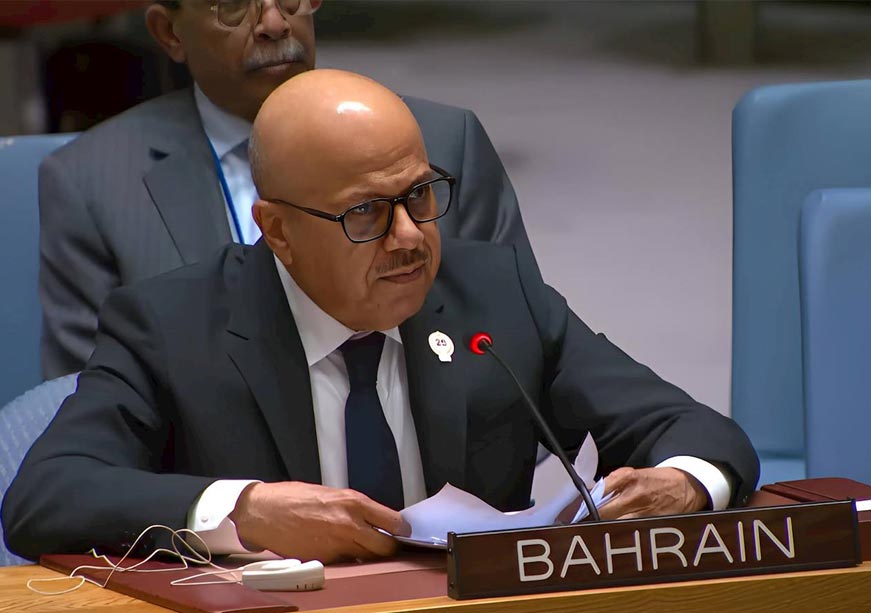
While the lack of confidence in the reliability of the US as a security provider has made a case for further diversification of GCC security partnerships, the US will remain an important player in the foreseeable future—at least as a supplier. Recent GCC commitment to US weaponry provides a stark illustration of this point. In 2021-25, Saudi Arabia was the largest importer of US arms, absorbing an eighth of US total exports, representing over three-quarters of Saudi imports. Over the same period, the US was also the largest foreign supplier of weapons to Bahrain (99 percent), Kuwait (62 percent), Qatar (48 percent), and the UAE (42 percent).
The second pole comprises emerging defence exporters, from Brazil and South Africa to Asia. Saudi Arabia eyes stronger ties with China to onshore drone manufacturing. In South Asia, the deepening of the India-UAE partnership and increased engagement between Pakistan and Qatar and Saudi Arabia point to possible synergies in defence: for example, the UAE has reportedly entered talks with India to procure BrahMos supersonic cruise missiles. The Republic of Korea (ROK) deserves special mention. In addition to being one of the top 10 exporters of arms in the world (9th), the ROK is at the forefront of the AI revolution and an industrial behemoth in heavy industries including shipbuilding (2nd worldwide) and steelmaking (6th). The third-largest supplier of weapons to the UAE in 2021-25, Seoul signed a Comprehensive Economic Partnership Agreement (CEPA) with Abu Dhabi which entered into force in May 2026.
The Republic of Korea (ROK) deserves special mention. In addition to being one of the top 10 exporters of arms in the world (9th), the ROK is at the forefront of the AI revolution and an industrial behemoth in heavy industries including shipbuilding (2nd worldwide) and steelmaking (6th). The third-largest supplier of weapons to the UAE in 2021-25, Seoul signed a Comprehensive Economic Partnership Agreement (CEPA) with Abu Dhabi which entered into force in May 2026.
Despite existing constraints to achieve scale and strengthen its own DITB, Europe remains attractive. In 2021-25, five of the top ten arms exporters globally were European. GCC countries absorbed a significant share of exports: over 40 percent of Italy’s went to Qatar and Kuwait alone; about a third of Britain’s to Qatar; and over a quarter of Spain’s to Saudi Arabia. Like the Gulf, and building on Ukrainian cost-effective expertise in countering Russian drones derived from the Iran-made Shahed, Europe has prioritised anti-drone defence. In Poland, a drone defence ecosystem bringing together Nordic (Danish, Norwegian, and Swedish) and domestic expertise is emerging. As the European Commission, in line with the Draghi report, moves to unlock up to €800 billion in additional defence spending by 2030, GCC capital could help scale up Europe’s most promising defence startups at the frontier of the AI-drone revolution. Tellingly, in June 2026, EDGE opened an office in Paris, establishing joint ventures with Italy’s Leonardo and Spain’s EM&E Group.
The fourth group is formed of regional states. Türkiye’s defence ecosystem is particularly mature, having been at the forefront of the drone revolution, unveiled an intercontinental ballistic missile, and engaged in the development of a domestic stealth fighter program. In a letter sent in January 2026, the King of Jordan has mandated the Chairman of the Army’s Joint Chiefs of Staff to transform the armed forces within three years, including through the enhancement of defence industrial capabilities. In 2021, Morocco adopted a legal framework for its defence industry. In the following years, the kingdom has received investment from Indian, Israeli, Turkish, and US firms for the manufacturing of armoured vehicles and drones.
Whither Gulf Defence Industrialisation?
As they attempt to turn the imperative of reliably sourcing adapted, competitive, and high-quality defence supplies into an industrialisation opportunity, for GCC countries, the partnerships described above will take different shapes. Factories, including AI-powered gigafactories, are likely to emerge, churning drones, anti-drone, and electronic warfare systems. Gulf capitals will attract Arab, Asian, and European defence tech entrepreneurs. And new clusters are likely to flourish at the intersection of four poles.
As for every industrial policy, success will depend on the ability to leave a margin of autonomy to industrial players, to adroitly calibrate public support to them, and to balance between onshoring and foreign output.
The first is made of financial ecosystems building on sovereign wealth and supplying startups with a scarce resource: patient capital. The second will include leading universities with a heavy focus on technology. The third will centre on data infrastructure and associated sovereign entities with a heavy focus on tech. The fourth will comprise the national defence industrial champions mentioned above.
As for every industrial policy, success will depend on the ability to leave a margin of autonomy to industrial players, to adroitly calibrate public support to them, and to balance between onshoring and foreign output. National ecosystems cannot function in isolation, and all production will not be localised. For GCC countries, the complex exercise of dosing support, coordinating strategic guidance, and navigating regulatory barriers for cross-border defence industrial value chains is only beginning.
Akram Zaoui is Associate Fellow, Geopolitics, ORF Middle East.
The author acknowledges the use of Microsoft Copilot for language refinement prior to submission.