 Global
Expert Speak | 29 October, 2026
The Gulf’s Fragile Tourism Recovery
Spotlight
- International tourist arrivals to the GCC have fallen considerably, but the Gulf countries have been proactive in facilitating travel and aviation links.
- While some events such as the Formula 1 race have been cancelled, organisers have rescheduled others, suggesting that the conflict has not necessarily resulted in a fundamental loss of confidence in the Gulf as a destination.
- Saudi Arabia’s Esports World Cup in Paris and Bahrain’s Grand Prix in Malaysia demonstrate how hosting events abroad can maintain visibility, honour commitments, and deepen economic ties with international partners.
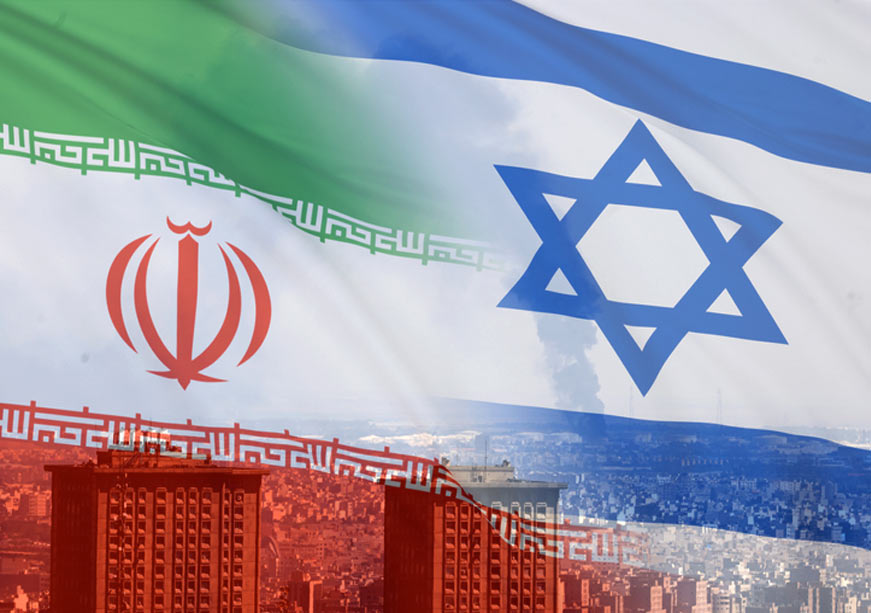
Faced with aggression from Iran, the six Arab Gulf states—the economic powerhouses of the Middle East—have undeniably been negatively impacted in their efforts to attract tourists. To combat this, almost all the Gulf countries have led campaigns of reassurance for tourists and visitors. The dip in tourism mirrors the decline during the COVID-19 pandemic to a certain degree, from which the sector took some time to recover. According to UN Tourism’s Dashboard, international tourist arrivals to the Gulf Cooperation Council (GCC) bloc were down by 30 percent in May 2026, compared to May 2025. On the one hand, the recovery from the pandemic provides a source of confidence for Gulf economic diversification strategies that rely on a growing tourist industry. Event schedules and traveller attractions, specifically, gradually recovered after global pandemic restrictions eased. On the other, the ongoing Middle East conflict is unique to the Gulf states. Therefore, Gulf policymakers need to consider targeted policy interventions that would boost tourist confidence in their countries and wider region. These strategies are currently being played out.
The Weaponisation of Travel
To attract tourists, one needs to facilitate their travel, a risky challenge since 28 February 2026. During the early days of the ongoing conflict, Iran decided to attack Gulf airports and airspace. This led to numerous airlines suspending their flights to Gulf capitals. When the risks were reduced, Gulf carriers continued operating flights globally and some international carriers also returned hesitantly to operate flights in Gulf airports. Gulf carriers are currently operating at about 90 percent of their pre-conflict capacity, even if the estimated number of seats filled has dropped sharply. Airlines such as Emirates have signed seven new tourism deals, covering destinations in different regions.
However, the risks are still not minimal. Bahrain initially evacuated its air carriers to nearby Saudi Arabia. In October, the King Khalid International Airport in Riyadh was being attacked by an Iranian proxy, leading to an even larger number of casualties and a longer airport closure than when Kuwait airport was attacked by Iran in June. Moreover, even if not directly linked to Iran, the Flydubai terror attack is another example of how regional extremism can compound existing issues. Nonetheless, one policy measure adopted across the Gulf is to reopen airports as soon as feasible. While full normalcy is tough to achieve, some regularity is preserved despite the risks.
Confidence in the Gulf’s Convenings
Several events this year have been cancelled since the US-Israel–Iran conflict began on 28 February, amid Iranian aggression towards the Gulf states. These include the Bahrain Airshow, the Saudi Formula 1 race, the Offlimits music festival in Abu Dhabi—which was due to be headlined by Shakira—and, more recently, the Future Investment Initiative (FII) conference in Riyadh. However, some event organisers have simply postponed events until later in the year, allowing for an evaluation period of some weeks to see how the conflict pans out.
This evaluation likely examined the success of minimising risks to people’s lives by the Gulf militaries. The rate of interceptions, the early warning systems, and the general sense of security that the Gulf maintained probably prompted some event organisers to reschedule events within the same year. Event organisers appear to be distinguishing between a temporary security shock and a fundamental loss of confidence in the Gulf as a destination. Some maybe see the Gulf states’ exposure to the conflict as not having reached the critical threshold where all events need to be cancelled outright.
Event organisers appear to be distinguishing between a temporary security shock and a fundamental loss of confidence in the Gulf as a destination.
Policymakers in the Gulf have also been proactive in ensuring that the hospitality sector stands on its own feet financially and is ready for gradual recovery in tourism numbers. For example, Dubai reportedly released a US$400 million economic incentive package to support the affected sectors, on top of some policy measures including suspending the nightly hotel tax and removing a municipal tax added to hotel and restaurant bills. For its part, the Bahrain Tourism & Exhibitions Authority (BTEA) introduced an optional deferral of first-quarter fees for businesses in the industry. This means that the Gulf countries are seeking to support recovery by ensuring continuity of services for tourists. However, these measures are based on the expectation of a relatively short war and may be harder to sustain if the conflict is prolonged.
These policies explain the busy schedule resurfacing in the United Arab Emirates (UAE). The Arabian Travel Market in Dubai drew representatives from 115 countries, not too long before Syrian President Ahmed Al-Sharaa spoke at the Arab Media Summit in September. This would not have been possible without Gulf tourism policymakers reaching out to event organisers to reassure them about rescheduling their events, and the latter reciprocating with confidence in the Gulf ecosystem. Still, most of these positive developments have revolved around the UAE, Saudi Arabia, and Oman, which have been less affected by the attacks so far, although the UAE has sustained the heaviest impact out of these. Bahrain, Kuwait, and Qatar have been hit more severely.
Relocations as a Strategy of Continuity
Perhaps the most telling response in the Gulf has been demonstrating adaptability. Gulf countries are increasingly choosing to host major events abroad while they carry the name of the state that was supposed to host it originally. Aside from the benefit of sticking to contractual commitments, the choice of relocations also deepens economic ties with the government of the new destination.
Saudi Arabia made this move with its Esports World Cup. Launched in 2024 in Riyadh and originally scheduled to hold its third edition in the same capital in 2026, it was moved to Paris for this year alone. The Saudi Telecom Company (STC) maintained its status as a main partner, with the partnership including naming rights for the “STC Arena” zone and the “STC Players Lounge,” in addition to launching a dedicated competitive platform named “STC Contenders.” Moreover, French President Emmanuel Macron hosted Saudi Crown Prince and Prime Minister Mohammed bin Salman in Paris, where they attended the World Cup’s closing ceremony.
What could otherwise have been a lost event became an opportunity for Bahrain to deepen its relationship with Malaysia, while Malaysia gained the economic activity and international visibility associated with hosting a global sporting event.
Another interesting relocation happened with the Bahrain Grand Prix (GP). It was originally supposed to take place at the Bahrain International Circuit in Sakhir from 10 to 12 April, but was hosted at the Sepang International Circuit in Malaysia in October while retaining its name. The tickets were even sold on the Bahrain GP website.
Malaysia was chosen not just for scheduling purposes and the convenience of hosting the GP between the Azerbaijan and Singapore GPs (2-4 October), but also because Malaysia has become an increasingly important economic partner for Bahrain. Malaysian air carrier AirAsia X was scheduled to launch a regional hub in the Kingdom this year, which was postponed to the first quarter of 2027 in light of the conflict. Such engagement makes the resumption of this launch only more likely. What could otherwise have been a lost event became an opportunity for Bahrain to deepen its relationship with Malaysia, while Malaysia gained the economic activity and international visibility associated with hosting a global sporting event.
Conclusion
Looking ahead, the Gulf states understand that in the near future, they will have to focus more on intra-GCC tourism and tourism integration. Oman, for example, saw a surge in Eid reservations from Gulf travellers, with nearly 64,000 guests booking into Omani hotels for this year’s Eid al Fitr, a 60 percent increase over last year. A staggering 70 percent of these visitors came from neighbouring Gulf countries. Moreover, Bahrain’s Minister of Tourism Fatima Al Sairafi has in September called for stronger tourism cooperation and integration among Gulf states, and Jasem Mohamed AlBudaiwi, secretary-general of the GCC, stated that a unified GCC tourist visa will “see the light soon.” Therefore, the Gulf is realising the value of the intra-GCC tourism buffer during a dip in international visitations and recognising that it can turn the six separate tourism markets into one interconnected destination.
Therefore, the biggest challenge to counter this tourism dip is understanding the time horizon and formulating policies accordingly.
Still, the comparison with the COVID-19 situation remains relevant. The pandemic was managed through public health policies, but the Gulf seems to have less agency with the current conflict’s developments. Tourism policies require some degree of foresight, which the Gulf states and the rest of the world hardly have when it comes to the Trump administration and Iran’s proclivities. Therefore, the biggest challenge to counter this tourism dip is understanding the time horizon and formulating policies accordingly.
While the current policies are succeeding, they remain shots in the dark because of time and circumstance. The Gulf states are near strangers to such conflicts. Hopes remain high for 2027, but that will depend on the situation.
Mahdi Ghuloom is Junior Fellow, Geopolitics, ORF Middle East.
The author acknowledges the use of ChatGPT 6 for minor refinements to grammar and phrasing.