 Global
Expert Speak | 23 November, 2026
From Supplier to Partner: South Korea’s Gulf Security Moment
The following excerpt is from the Chapter 1 — Beyond Washington: Gulf Partnerships Under Review
South Korea’s relationship with the Gulf region has deepened over the past two decades, moving well beyond its origins in oil imports and construction contracts into nuclear energy, advanced manufacturing, defence, and technology. The Barakah nuclear power plant—the Arab world’s first, built by a South Korean consortium—stands as the most visible symbol of that transformation. The 2023 Korea-Gulf Cooperation Council (GCC) Free Trade Agreement, the 2026 Korea- UAE Comprehensive Economic Participation Agreement (CEPA), and growing defenceindustrial cooperation with the UAE and Saudi Arabia have further consolidated ties that now span the full range of both sides’ economic and strategic interests.
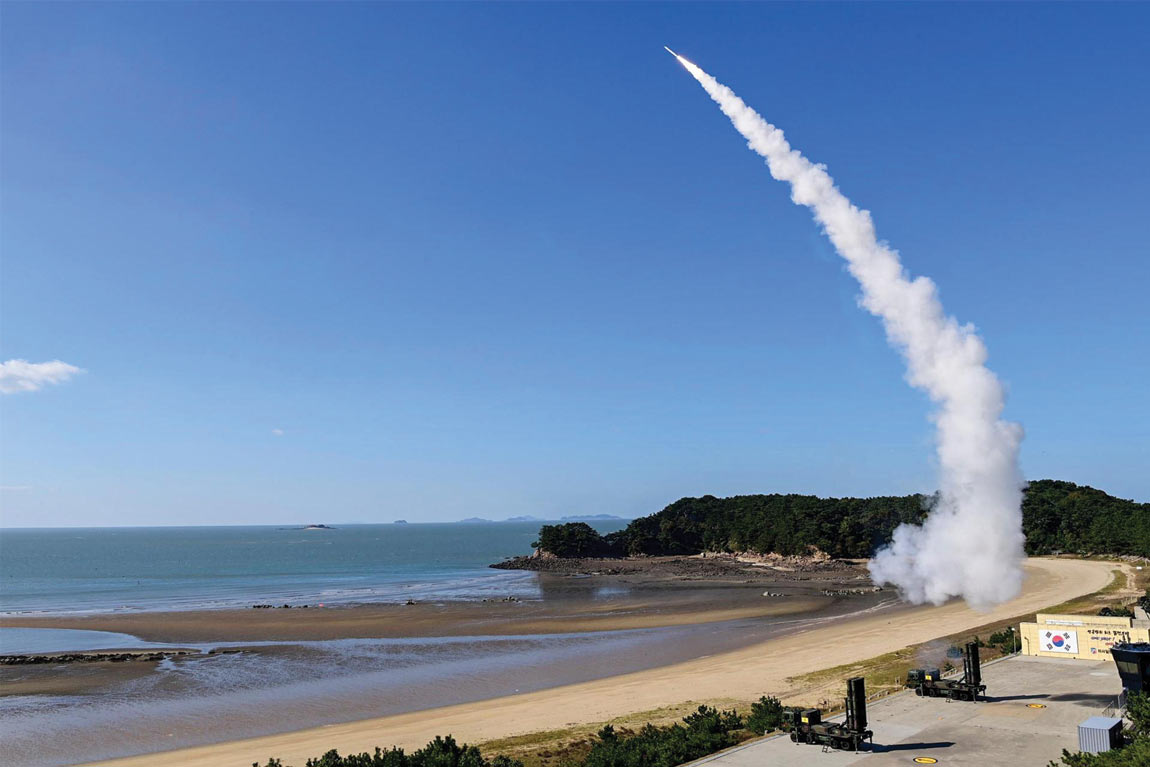
The 2026 Iran war, however, tested those ties in ways Seoul had not anticipated. The UAE deployed South Korea’s Cheongung-II air defence system before the outbreak of hostilities. In its first overseas combat use, the system achieved considerable success against Iranian projectiles and quickly generated new Gulf demand. Seoul’s own response to the crisis, in contrast, was cautious and inward-looking, dominated by domestic concern over Washington’s redeployment of Terminal High-Altitude Area Defence (THAAD) batteries from South Korea to the Gulf. As a result, the country that had suppli[1]ed some of the Gulf ’s most effective air defence hardware struggled to frame Gulf security as a South Korean strategic interest in its own right.
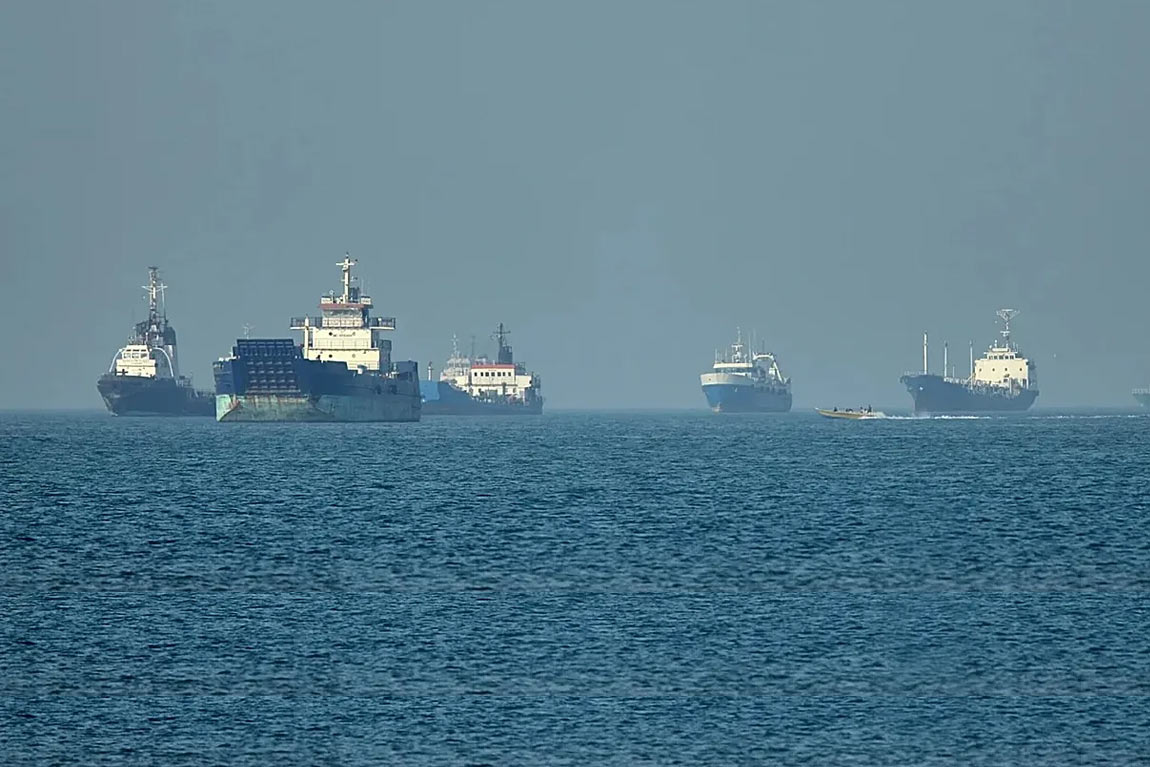
This article argues that South Korea must now make that reframing explicit. Freedom of navigation in the Strait of Hormuz is a direct national interest for Seoul, not a peripheral concern, as South Korea depends on the Gulf for the bulk of its energy imports. Its own vessel, the Namu, came under Iranian attack in May 2026.[2]
The article surveys South Korea-Gulf relations before the war, assesses what the conflict has revealed about the partnership’s limits and opportunities, and sets out the steps Seoul should take to move from arms supplier to security partner in the Gulf.
A Partnership Beyond Energy: South Korea and the Gulf Before the War
Gulf-South Korea cooperation has expanded into healthcare, agriculture, food security, artificial intelligence (AI) and semiconductors, and defence. Defence cooperation has expanded rapidly with the UAE and Saudi Arabia, evolving from arms sales towards broader defence-industrial cooperation as Gulf states seek to strengthen their domestic defence capabilities.[3] The Korea- GCC FTA, concluded in December 2023 but not yet in force at the time of writing, is expected to further deepen these ties.
The UAE is Seoul’s only ‘Special Strategic Partner’ in the region. Since 2011, it has hosted the Republic of Korea (ROK) Army’s Akh Unit, which trains and conducts joint exercises with UAE special forces. The Korea-UAE CEPA, which entered into force in May 2026, has already improved bilateral market access. Elsewhere in the Gulf, South Korea is seeking to participate in Saudi Arabia’s nuclear energy programme, while Qatar remains an important long-term supplier of liquefied natural gas (LNG). Against this backdrop of deepening but still largely transactional ties, the 2026 Iran war proved both a stress test and an unexpected opportunity.
Tested by Fire: The Iran War and the Gulf ’s Air Defence Reckoning
The 2026 Iran War tested the Gulf ’s airdefence architecture and highlighted both its effectiveness and limitations. The integrated systems operated by the United States (US) and its Gulf partners, incorporating layered defences, real-time intelligence sharing, interoperability, reportedly intercepted many missiles and drones.[4] The UAE reported interception rates of approximately 94 percent against drones and 92 percent against missiles during the war.[5] It, however, exposed a challenge: the high cost of using advanced interceptors against many relatively inexpensive drones and missiles.[6] With the US and Europe already under pressure from the wars in Ukraine and the Middle East to supply advanced interceptors,[7] the Gulf region faces growing pressure to increase stocks, develop low-cost counter-drone capabilities, and strengthen regional defence-industrial capacity. South Korea can contribute to addressing this gap. Its Cheongung-II medium-range surfaceto- air missile defence system has demonstrated combat effectiveness and cost advantages over comparable Western systems. The UAE and Saudi Arabia have sought accelerated deliveries as their interceptor stocks come under pressure. Expanding production capacity, however, will be necessary to meet growing regional demand.
Nevertheless, South Korean defence systems were already demonstrating the capabilities the Gulf required. Two batteries of South Korea’s Cheongung-II missile defence system delivered to the UAE before the war reportedly achieved a 96 percent interception rate against Iranian missiles, although the UAE Ministry of Defence has not confirmed this figure.[8] The reported performance nonetheless strengthened the system’s credibility and demonstrated the growing role South Korea can play in Gulf security.[9]
The UAE, which had contracted for 10 batteries in 2022, deployed two by early 2026, alongside Patriot PAC-3 and THAAD systems within its multilayered air-defence architecture.[10] The war, however, pulled Seoul in two directions: outward, towards Gulf partners urgently demanding the capabilities South Korea had just proven, and inward, towards a domestic security debate that left little political space for anything beyond self protection.
Present but Absent: Seoul’s Limited Wartime Response
South Korea’s response to the crisis has remained cautious and limited. Domestic debate are focused primarily on US strategic flexibility and the implications of redeploying American missile defence assets from South Korea to the Gulf.[11]
For South Koreans living under the enduring threat from North Korea, the redeployment of parts of the US air-defence assets raised concerns about whether missile-defence assets on the peninsula could be reassigned to meet Washington’s broader global operational requirements.[12] When the redeployment became public in March, South Korean President Lee Jae-myung sought to ease domestic concerns at a Cabinet meeting, saying that there was “no cause for concern” about national defence.[13]
The episode marked the first practical application of the long-debated concept of strategic flexibility to missile-defense assets based in South Korea. Previously discussed largely in the context of a Taiwan contingency, its unexpected test in the Gulf brought South Korea’s own security concerns to the forefront, leaving limited policy attention for broader security cooperation with Gulf partners.
In contrast, other partners responded more directly to the crisis. Australia, France, the UK, and Italy deployed aircraft, air-defence capabilities, and personnel to support Gulf states and regional maritime security. The UK and France also coled the multinational military mission to restore freedom of navigation in the Strait of Hormuz.[14]
South Korea’s security concerns were understandable, but they do not fully explain the limited scope of its response to the Gulf crisis. Despite extensive energy, nuclear, and defence ties that give Seoul a direct stake in the security of its Gulf partners, policy attention remained focused largely on protecting South Korea from the conflict’s domestic economic fallout. Energy security was the immediate priority. As the Strait of Hormuz neared closure, the government activated emergency monitoring mechanisms, released emergency oil stocks as part of an International Energy Agency (IEA) collective action, explored alternative sources of supply, and coordinated with refiners, energy companies, and public agencies to minimise disruptions.[15]
From Supplier to Partner: Recommendations for Seoul
The war has created a narrow but consequential window. As Gulf states seek to replenish depleted interceptor stocks, diversify suppliers, and strengthen integrated air and missile defences, South Korea’s proven systems, expandable production capacity, and existing partnerships with the UAE and Saudi Arabia give it an established entry point.
Rather than replacing high-end US systems such as Patriot and THAAD, Cheongung-II can complement them within the Gulf ’s multilayered air and missile defence network. Seoul should deepen cooperation in air and missile defence and counter-drone capabilities, combining arms exports with joint production, training, maintenance, technology cooperation, and sustained operational engagement.
South Korea should assume a more active role in regional maritime security. Such engagement would be consistent with Seoul’s Indo-Pacific Strategy, which emphasises a rulesbased international order, comprehensive security cooperation, resilient supply chains, and energy security, while calling for stronger maritime domain awareness and navigational safety. The principle at stake in the Strait of Hormuz extends beyond the Gulf: acquiescing to coercive restrictions on freedom of navigation in one of the world’s most important waterways would weaken the same rules-based maritime order that South Korea seeks to uphold closer to home, including in the South China Sea.[16]
As the US, the UK, and France strengthen mechanisms to protect commercial shipping, counter maritime threats, and restore safe passage through the Strait of Hormuz, South Korea should establish practical avenues for participation. Expanding the Cheonghae Unit’s role in and around the Strait, participating in multinational mine-countermeasure exercises and combined naval training, and strengthening maritime information sharing and coordination with the US Fifth Fleet in Bahrain would be practical first steps.
Ultimately, South Korea must move beyond a transactional defence relationship towards a comprehensive security partnership with the Gulf. The attack on the South Korean vessel Namu on Hormuz demonstrated that threats to Gulf security can directly affect South Korea’s own security and economic interests. As a responsible middle power, Seoul shares strategic interests with its Gulf partners and with G7 and NATO democracies, particularly as cooperation among China, Russia, Iran, and North Korea (CRINK) deepens. Sustained contributions to Gulf security, building on South Korea’s defence-industrial strengths, would therefore help protect its own national interests while supporting the rulesbased international order.
Jang Ji-Hyang is Principal Fellow and Director, Center for Regional Studies, Asan Institute for Policy Studies.
The author acknowledges using ChatGPT 5.6 Sol for research assistance and language refinement prior to submission.
[1] Michael Peel et al., “Iran War Lifts K-Defence Company Offering Cheap Patriot Rival,” Financial Times, March 11, 2026, https://www.ft.com/content/658c8411-df02-4b5ea69d- 2029114e4ca1?syn-25a6b1a6=1.
[2]2 Heejin Kim and Joyce Lee, “Iranian Missile Likely Involved in Attack on Ship in Strait of Hormuz, South Korea Says,” Reuters, May 27, 2026, https://www.reuters.com/world/ asia-pacific/south-korea-says-attack-ship-strait-hormuzlikely- involved-an-iranian-missile-2026-05-27/.
[3] Adel Abdel Ghafar, Ji-Hyang Jang, and Amane Kobayashi, Beyond Competition: Japan, South Korea and the Imperative for Cooperation in the Middle East, Policy Paper, Middle East Council on Global Affairs, August 2025, https://mecouncil. org/publication/beyond-competition-japan-south-koreaand- the-imperative-for-cooperation-in-the-middle-east/.
[4] Albert Vidal Ribe and Jasim Murad, “Cumulative Confirmed Missile, UAV and Fighter-Jet Interceptions by the GCC States,” International Institute for Strategic Studies, March 6, 2026,https://www.iiss.org/onlineanalysis/ data-visualisation/cumulative-confirmed-missileuav- and-fighter-jet-interceptions-by-the-gcc-states/; United States Central Command, “Statement from Adm. Brad Cooper before the House Committee on Armed Services on the Posture of U.S. Central Command,” May 19, 2026, https://www.centcom.mil/ABOUT-US/ POSTURE-STATEMENT/.
[5] “Number of Iranian Missiles and Drones Fired at Gulf Countries,” Reuters, March 10, 2026, https://www.reuters. com/world/middle-east/iranian-missiles-drones-firedgulf- countries-2026-03-10/.
[6] Gulf Cooperation Council, “Statement Issued by the 167th Ministerial Council Meeting,” June 10, 2026, https://www.gcc-sg.org/en/MediaCenter/News/Pages/ news-2026-6-10-1.aspx; Samia Nakhoul, “Gulf States Tell U.S. Ending the War Is Not Enough, Iran’s Capabilities Must Be Degraded,” Reuters, March 27, 2026, https:// www.reuters.com/world/middle-east/gulf-states-tell-usending- war-is-not-enough-irans-capabilities-must-bedegraded- 2026-03-27/.
[7] Kateryna Bondar, “Unpacking Iran’s Drone Campaign in the Gulf: Early Lessons for Future Drone Warfare,” Center for Strategic and International Studies, March 10, 2026,https://www.csis.org/analysis/unpacking-iransdrone- campaign-gulf-early-lessons-future-dronewarfare.
[8] Cho Yong-jun,“Korean Interceptor System Posts 96% Success Rate in UAE Defense Against Iranian Strike,” Korea JoongAng Daily, March 6, 2026, https:// koreajoongangdaily.joins.com/news/2026-03-06/business/ industry/Korean-interceptor-system-posts-96-successrate- in-UAE-defense-against-Iranian-strike/2538861; Thomas Harding, “UAE’s Cheongung-II Missile Defence Achieves 96 Per Cent Interception Success,” The National, April 3, 2026, https://www.thenationalnews.com/news/ mena/2026/04/03/uaes-cheongung-ii-missile-defenceachieves- 96-per-cent-interception-success/.
[9] Troy Stangarone, “Can South Korea Fill the Middle East’s Missile Defense Gap?” Korea Economic Institute of America, May 22, 2026, https://keia.org/analysis/cansouth- korea-fill-the-middle-easts-missile-defense-gap/.
[10] Lami Kim, “Mind the Air-Defence Gap: South Korea’s Burgeoning Role in Air and Missile Defence,” International Institute for Strategic Studies, March 27, 2026; https://www.iiss.org/online-analysis/militarybalance/ 2026/03/mind-the-air-defence-gap-south-koreasburgeoning- role-in-air-and-missile-defence/.
[11] Justin McCurry, “Hasty Redeployment of US Missiles from South Korea to Middle East Leaves Seoul Rattled,” The Guardian, March 11, 2026, https://www.theguardian. com/world/2026/mar/11/redeployment-us-missiles-thaadsouth- korea-middle-east-seoul-iran.
[12] Hyun-soo Kim, “USFK’s Relocation of Military Assets to Middle East Raises Concerns About Seoul’s Capability to Deter N.K. Threats,” Yonhap News Agency, March 10, 2026, https://en.yna.co.kr/view/AEN20260310009800315.
[13] Hoon-sang Park and Hyo-joo Son, “Lee Says Removal of USFK Weapons Poses ‘No Problem for Deterrence against North Korea,’” Dong-A Ilbo, March 11, 2026.
[14] Government of Australia, “Australia to Provide Defensive Military Assistance to the Gulf,” March 10, 2026, https:// www.minister.defence.gov.au/media-releases/2026-03-10/ australia-provide-defensive-military-assistance-gulf; Ministry of Defence, Government of Italy, “Task Force Air Arabia,” 2026, https://www.difesa.it/operazionimilitari/ op-intern-corso/task-force-air-arabia/index/105594. html; “France Deploys Fighter Jets over UAE to Protect Its Military Bases,” Le Monde, March 3, 2026, https:// www.lemonde.fr/en/france/article/2026/03/03/francedeploys- fighter-jets-over-uae-to-protect-its-militarybases_ 6751041_7.html; Makini Brice and Benoit Van Overstraeten, “France Sending Aircraft Carrier to Mediterranean, Macron Says,” Reuters, March 3, 2026,https://www.reuters.com/world/france-sendingaircraft- carrier-mediterranean-macron-says-2026-03-03/; Ministry of Defence, Government of the United Kingdom, “Gulf Air Defences Boosted Further, as Defence Secretary Visits Middle East,” March 31, 2026, https://www.gov.uk/ government/news/gulf-air-defences-boosted-further-asdefence- secretary-visits-middle-east.
[15] Ministry of Trade, Industry and Resources, Republic of Korea, “Korea to Join IEA Collective Action, Release 22.46 Million Barrels of Emergency Oil Stocks,” March 2026, https://english.motir.go.kr/eng/article/ EATCLdfa319ada/2530/view; Ministry of Trade, Industry and Resources, Republic of Korea, “MOTIR Reviews Supply Risks and Response Measures for Naphtha and Crude Oil,” April 2026,https://english.motir.go.kr/eng/ article/EATCLdfa319ada/2573/view.
[16] Republic of Korea, Ministry of Foreign Affairs, Strategy for a Free, Peaceful, and Prosperous Indo-Pacific Region (Seoul: Ministry of Foreign Affairs, December 2022), https://www. mofa.go.kr/cntntsDown.do?path=www&physic=Indo- Pacific_Strategy.pdf&real=Indo-Pacific_Strategy.pdf.