 Global
Expert Speak | 16 June, 2026
Ankara’s Opening: Türkiye Turns Disruption into Leverage
Spotlight:
- Regional instability and the emerging power vacuum have created opportunities for Turkey to attract diverted capital and expand its economic footprint.
- Ankara is leveraging energy policy, defence exports, and investment reforms to capitalise on this opening and strengthen its regional influence.
- Under the persistent economic fragility and domestic political uncertainty, Turkey may operationalise the conflict as an economic breakthrough.
As the spread of conflict across the Middle East constrains capital flows and energy transfers, creating uncertainty that reverberates from Europe to Asia, governments and businesses alike are seeking more resilient trade and transit routes. In this evolving environment, Türkiye is attempting to fill part of the emerging gap. Leveraging its diplomatic outreach, expanding trade volume, growing defence exports, and strategic energy infrastructure, Ankara is positioning itself as a pivotal actor in the reconfiguration of regional economic and logistical networks. As Ankara works to overcome the economic challenges that have mounted over the past decade, opportunities for much-needed capital inflows, deeper trade integration, and export growth appear to be gaining momentum.
Macroeconomic Pressures and Political Uncertainty
The failed coup attempt of 2016 and the wave of authoritarian measures that followed had a profound impact on the Turkish economy. The situation deteriorated further with the arrest of Pastor Andrew Brunson in 2018, which rattled Turkish-US relations and coincided with a sharp depreciation of the Turkish lira, fuelling high inflation. Since then, Ankara has struggled to restore stability to an increasingly brittle economy, as the lira has lost more than 80 percent of its value against the US dollar, while inflation has remained in double digits.
Although recent monetary and fiscal policies have contributed to a notable improvement in economic conditions and helped restore a degree of investor confidence, the government-backed judicial operations launched against the Turkish opposition in March 2025 unsettled markets and placed renewed pressure on an already fragile economy, disrupting the government’s year-end projections. While opposition leaders argue that the investigations targeting the Republican People’s Party (CHP) and its presidential candidate, Istanbul Mayor Ekrem İmamoğlu, imposed an economic cost of as much as US$250 billion, the government has sought to reassure markets and attract much-needed investment inflows.
Although recent monetary and fiscal policies have contributed to a notable improvement in economic conditions and helped restore a degree of investor confidence, the government-backed judicial operations launched against the Turkish opposition in March 2025 unsettled markets and placed renewed pressure on an already fragile economy, disrupting the government’s year-end projections.
The Iranian conflict has compounded the vulnerabilities of an economy already under pressure from domestic political uncertainty. In March, the conflict’s cost recorded a US$22.3 billion decline in a single week in Türkiye’s net international reserves, reducing the total to US$35 billion and leaving reserves excluding swaps at US$20.1 billion. As regional tensions escalated and investors sought safe-haven assets, the Central Bank of the Republic of Türkiye (CBRT) reportedly sold and swapped around 60 tons of gold during the first two weeks of the conflict, underscoring the mounting challenges facing policymakers.
Amid escalating regional instabilities and soaring economic deterioration at home, Türkiye is seeking to position itself as an emerging middle power through leveraging energy policy, a growing defence sector, and investment-friendly regulations to enhance its regional influence and economic competitiveness.
Energy Security and Strategic Connectivity
As the Iran conflict disrupted key energy corridors and heightened concerns over supply security, Energy Minister Alparslan Bayraktar restated Türkiye’s ambition to become a regional energy hub by expanding cross-border infrastructure, diversifying supply routes, and advancing new pipeline projects linking energy producers in the Middle East and Central Asia to European markets, particularly through the transfer of Turkmen gas via Azerbaijan and the potential transportation of Qatari gas through Türkiye. Underlining the “age of uncertainty,” Bayraktar argued that Türkiye could assume an energy hub role as Middle Eastern routes become increasingly susceptible to setbacks. Within this broader strategy, the minister outlined a proposal for a natural gas pipeline linking Türkiye and Northern Cyprus, with the longer-term objective of channelling Eastern Mediterranean gas to European markets per a reverse-flow mechanism.
For a wider energy policy, Turkish Petroleum (TPAO) recently signed cooperation agreements with major international energy companies, including ExxonMobil, Chevron, BP, and Shell, covering joint exploration, production, and infrastructure projects in Türkiye, the Black Sea, the Eastern Mediterranean, and selected international fields. The initiatives reflect a broader effort to expand Türkiye’s offshore capabilities, diversify energy partnerships, and strengthen its position within regional supply chains. Complementing these agreements, Türkiye’s newest ultra-deep sea drilling vessel, Çağrı Bey, embarked on its first overseas mission in Somalia, highlighting Ankara’s growing ambitions in global energy exploration, and making the drill one of the biggest energy projects in recent years.
Defence Industrial Expansion
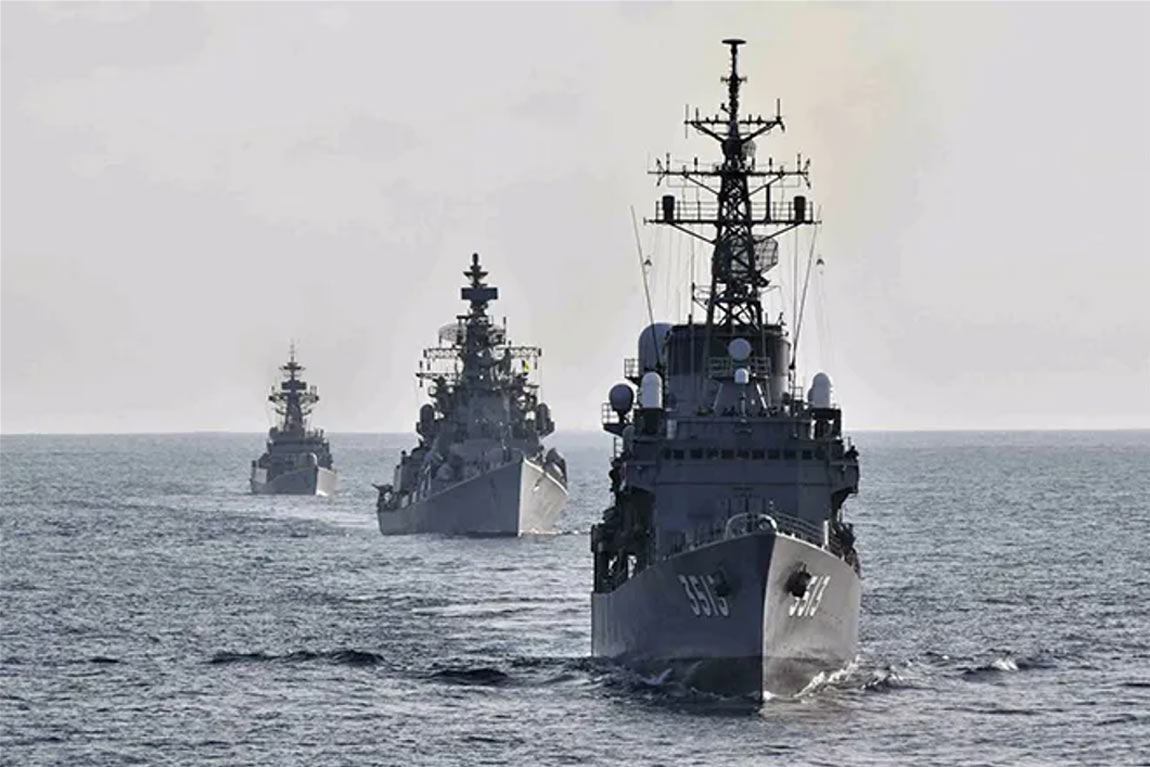
Alongside its ambitious energy agenda, Ankara has increasingly relied on the defence sector as both a strategic instrument and a source of economic growth. According to SIPRI, Türkiye’s military expenditure reached US$30 billion in 2025, a 7.2 percent increase from the previous year, making it the world’s 18th-largest defense spender. With substantial investment in technological know-how and a broader “nationalisation” policy in the defence industry, Türkiye’s defence exports recorded significant growth during this period, rising from approximately US$250 million in 2002 to US$5.5 billion in 2023, per Turkish Exporters Assembly. Defence industry giants such as Baykar have secured multibillion-dollar agreements stretching from the Gulf to Europe, including a US$3.1 billion deal to supply AKINCI drones to Saudi Arabia and a partnership agreement with the Italian defence company Leonardo S.p.A.
As the Iran conflict intensified calls for diversification in arms supplies, Türkiye has sought to position itself as an increasingly important defence partner, especially through trading drones, naval vessels and air defence systems in the Gulf region, pursuing new opportunities to expand its strategic and industrial reach.
As the Iran conflict intensified calls for diversification in arms supplies, Türkiye has sought to position itself as an increasingly important defence partner, especially through trading drones, naval vessels and air defence systems in the Gulf region, pursuing new opportunities to expand its strategic and industrial reach. Since the 1970s, Ankara has sought to develop an indigenous defence industry to lessen its reliance on foreign suppliers and mitigate the risks associated with export restrictions on military and dual-use technologies, which can significantly affect operational capabilities. The recently wrapped SAHA Expo, held in Istanbul, was widely viewed as an important showcase for Turkish defence manufacturers seeking new agreements in weapons systems, technological capabilities, and growing international reach, with Ankara targeting the Expo to generate up to US$8 billion worth of deals. As Türkiye seeks to expand its share of the regional arms market, Gulf specialist Betül Doğan Akkaş argues that despite the rapid growth of the Turkish defence sector, catching up with the US suppliers remains difficult as capacity-expansion efforts are still in its early stages, particularly in Saudi Arabia, where American systems still account for roughly 74 percent of arms imports. She also notes that Türkiye’s relatively limited mass-production capacity constrains its ability to compete with established global suppliers.
Investment Reforms and Financial Competition
Seeking to attract greater investment inflows, the government has introduced tax reforms and investment-friendly policies designed to remove obstacles that may deter foreign capital. As the conflict exposed the vulnerabilities of traditional global financial centres and regional trade routes, Ankara accelerated its investor-oriented agenda to compete with hubs such as Dubai. Under the new regulations, individuals who have not held tax residency in Türkiye during the previous three years will be exempt from income tax on their overseas earnings for up to 20 years after relocating to the country. The legislation also expands incentives for qualified international service centres operating in areas such as finance, legal consultancy, technology, management consulting, and research and development. At the corporate level, the government introduced substantial tax exemptions for international trade and intermediary activities conducted through Türkiye, particularly within the Istanbul Financial Centre and designated industrial zones.
As the conflict exposed the vulnerabilities of traditional global financial centres and regional trade routes, Ankara accelerated its investor-oriented agenda to compete with hubs such as Dubai.
Despite these ambitious tax reforms, the reality may fall short of Ankara’s expectations, as many investors and corporate representatives continue to express serious concerns regarding the rule of law in Türkiye and the perceived reliability and independence of commercial courts.
A Mixed Policy Toolbox
As regional dynamics shift, Türkiye seeks to deepen its influence through a policy toolbox consisting of energy projects, alternative supply-chain corridors, cost-effective defence products, and incentives designed to attract foreign investment. Despite persistent economic and political challenges at home, the country retains the strategic assets, industrial capabilities, and geopolitical positioning necessary to pursue these ambitions. As the conflict and the possibility of its spillover effects threaten to affect Ankara’s interests, the government has deliberately assumed a mediating role, both to prevent further escalation and to strengthen its position within the emerging power vacuum in the Middle East.
Ekin Keleş works as an analyst and content editor at Daktilo1984.