 Global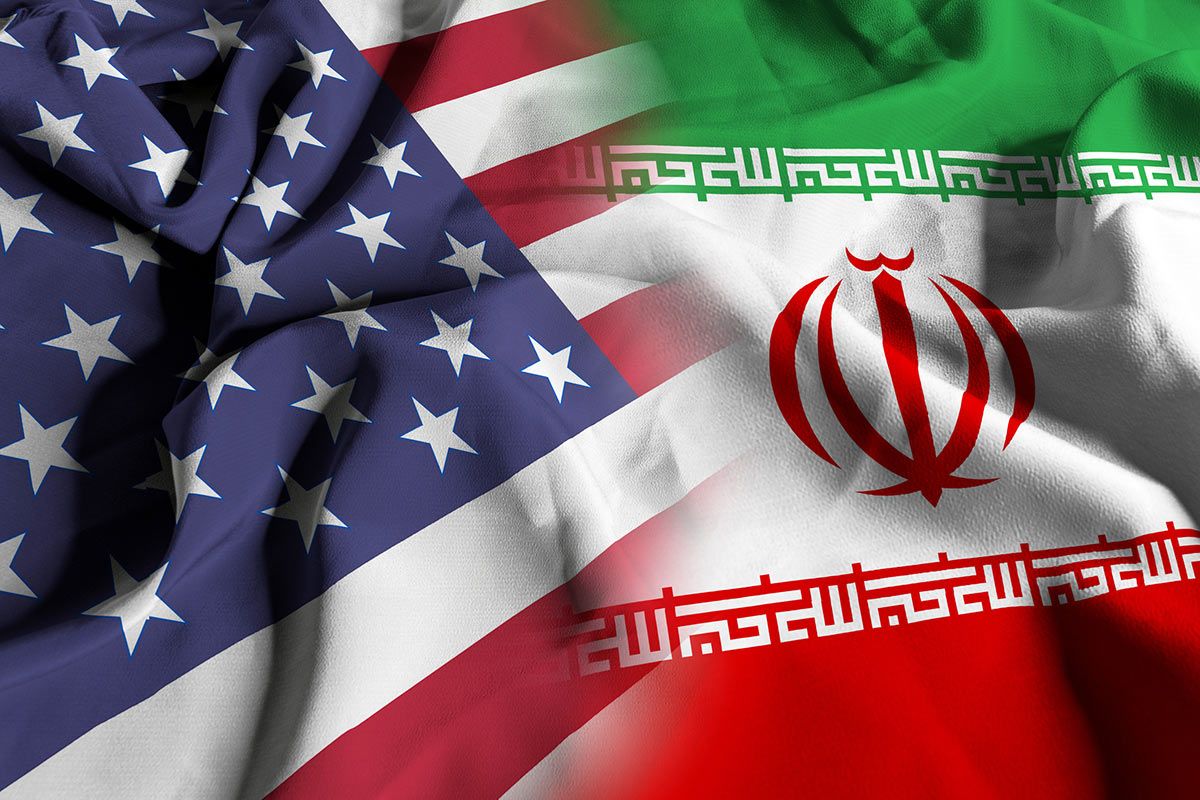
Expert Speak | 17 June, 2026
The US-Iran Peace Deal: Experts React
In the early hours of 15 June, United States (US) President Donald Trump confirmed an announcement by Pakistani Prime Minister Shehbaz Sharif that a peace deal between the US and Iran had been reached, iterating that both sides had declared “the immediate and permanent termination of military operations on all fronts, including in Lebanon.” Trump subsequently emphasised that his efforts had saved Israel from nuclear extinction and made the Middle East safer. The deal — structured initially as a Memorandum of Understanding (MOU) — focuses on the cessation of hostilities and the toll-free reopening of the Strait of Hormuz, with mine clearance scheduled to begin following formal signature. Sixty days of negotiations on sanctions and Iran’s nuclear programme are expected to follow. A signing ceremony is scheduled for 19 June in Geneva, with Vice President JD Vance expected to attend.
ORF Middle East experts offer their quick takes below.
Tehran Endures: The Harder Phase Ahead
An agreement between Iran and the US has brought a three-month war to a close — for now. The fragility of the arrangement is visible to all. Tehran characterises it as a MOU, non-binding and premised on good faith. The contrast with the Trump administration’s terminology reveals an ideological contradiction. Trump officials continue to call it a “deal,” implying a time-bound framework of mutual obligations. The semantic gap is not trivial; it reflects fundamentally incompatible expectations of what comes next.
For Iran’s post-1979 revolutionary order, survival after weeks of bombardment — including the assassination of Supreme Leader Ayatollah Ali Khamenei — constitutes a victory in itself. But what lies ahead is equally precarious. A new leadership must consolidate itself domestically, rebuild a regional consensus with the Gulf states it repeatedly struck during the conflict, and reposition itself internationally as a responsible actor. None of this is straightforward: Tehran’s first visible deliverable to the world is a compromise with Washington.
The arrangement’s fundamental problem is that the variables determining its success lie substantially outside the control of either Iran or the US. These include Israel’s ongoing strikes against Hezbollah in Lebanon, the Gaza war, the status of the Strait of Hormuz, and the nuclear file with all its associated complexities. What the current deal is critically achieving — and perhaps the only claim that it can credibly make — is a cessation of active military operations, thereby creating space for dialogue. The immediate objective is conflict management rather than resolution.
Kabir Taneja is the Executive Director of the ORF Middle East.
Is Washington Entrapped in Iran’s Playbook?
The peace deal mirrors an earlier draft MOU from late May that crumbled before Trump’s sign-off. This time — after more than 38 public declarations that a deal was imminent — consensus was reached. Yet the celebrations mask a stark asymmetry. Iran’s Parliament Speaker Mohammad Bagher Ghalibaf, a hardline figurehead, declared Tehran had “taken a major step toward final victory” by resisting those who sought to “force the country into submission.”
The reality is that Iran retains the upper hand. Its ability to shut the Strait of Hormuz remains intact, and the question of tolls or fees on the waterway remains unresolved. The nuclear file is equally intractable: sticking points include the duration of any uranium enrichment suspension, the fate of existing highly enriched uranium — whether diluted, downblended, or removed — the dismantling of facilities at Natanz, Fordow, and Isfahan, and the release of frozen Iranian assets. President Trump has asserted Iran will “not have a nuclear weapon,” with “strong policing powers” to enforce compliance. How he intends to surpass the Joint Comprehensive Plan of Action (JCPOA) negotiated under Obama remains unclear, though he is likely to frame any outcome as a superior version.
Two immediate obstacles overshadow even these limited objectives: Israel’s continued operations in Lebanon, and persistent uncertainty regarding mine clearance in the Strait of Hormuz. The deeper challenge, however, is structural. A sequential deal of this design favours Iran, enabling Tehran to leverage control over Hormuz as a bargaining tool to delay concessions on the nuclear file. Regardless of its eventual outcome, Operation Epic Fury does not appear to have achieved its stated objective of degrading Iranian military capabilities.
Clemens Chay is Senior Fellow for Geopolitics at the ORF Middle East.
Four Fault Lines Behind the Peace Deal
The Trump administration’s interim peace deal with Tehran is best read as a fragile pause — and four fault lines explain why.
First, Israel was sidelined entirely. Netanyahu has conceded he does not even know the memorandum’s contents. Any durable agreement requires acceptance from the region’s most consequential military actor, yet Israelis across the political spectrum have denounced the deal — with opposition leader Yair Lapid demanding Netanyahu’s resignation. An aggrieved, excluded Israel is a structural spoiler.
Second, the framework declares an end to hostilities on all fronts, including Lebanon — but Israel insists it retains freedom of action against Hezbollah. Israeli officials have signalled that strikes in Lebanon will continue beyond the Iran war. A cornerstone clause of the deal has has been undermined before its formal implementation.
Third, Washington and Tehran are already narrating divergent futures. Iran’s deputy foreign minister has conditioned negotiations on the prior release of frozen assets; a US official flatly rejected this, stating that “no frozen funds will be released without the Iranians implementing their commitments.” These incompatible starting positions threaten to unravel the deal before substantive talks begin.
Fourth, and most gravely, the core nuclear questions are deferred. Iran retains roughly 440 kilograms of highly enriched uranium. Trump had previously vowed to seize or destroy it, but Supreme Leader Mojtaba Khamenei has forbidden its export. This is the central issue the war was ostensibly fought over — and it remains entirely unresolved.
With the MOU text still unpublished and the parties’ positions remaining mutually exclusive, the act of signing may prove to be the easier step. The real challenge will lie in implementation.
Samriddhi Vij is an Associate Fellow for Geopolitics at the ORF Middle East.
The Frozen‑Assets Gambit: Tehran’s Price for Peace
In the days following Parliament Speaker Mohammad Bagher Ghalibaf’s declaration that unfreezing Iran’s overseas assets was a precondition for talks with Washington, the presence of Central Bank Governor Abdolnaser Hemmati in the Iranian delegation in Islamabad signalled that the issue would be central to negotiations. The stakes are significant: Iran’s estimated US$100 billion in frozen assets would provide much-needed relief to an economy in freefall — the rial has lost 20,000 percent of its value against the dollar over four decades, and roughly 45 percent in 2025 alone. The conflict further deepened this monetary crisis. By mid-April, Iranian state television assessed wartime damage at US$270 billion — approximately 60 percent of GDP.
By late April, Ghalibaf and Hemmati had reportedly travelled to Qatar to negotiate the immediate release of US$12 billion, with a further US$12 billion to follow. In early June, senior regime figure Mohsen Rezaei publicly stated that the frozen assets question was blocking a breakthrough. Following the 15 June agreement, Iranian state media claimed the US had accepted Tehran’s demand — which Vice President JD Vance flatly denied.
For Iran’s negotiators, such claims may serve to reassure hardliners by portraying Washington as having conceded ground. Yet they must also deliver tangible results. Ahead of the agreement, they may have secured assurances that some funds would be released early in the 60-day period allocated to finalising a comprehensive deal.
Reports — denied by Trump himself — that Washington is considering a US$300 billion reconstruction fund for Iran suggest the US is still devising how to deploy financial incentives to shape a settlement. Crucially, for Tehran, unfreezing assets constitutes both proof of American commitment and a symbolic blow to the regime-change option championed by Israeli Prime Minister Benjamin Netanyahu.
Akram Zaoui is an Associate Fellow for Geopolitics at the ORF Middle East.
A Peace Deal That Sidelines the Gulf
Between the lines of statements emerging from Gulf capitals, a consistent message to Washington is taking shape. Bahrain, Qatar, Kuwait, and the UAE have each reminded their counterparts that any final deal must hold Iran to the principles of “good neighbourliness.” Saudi Arabia formulated the same idea, calling for a lasting agreement that accounts for “the security interests of regional countries.” The concern is legitimate: reported snippets of the US-Iran deal contain no commitment by Iran to refrain from aggressing on or interfering with Gulf neighbours — this after over 7,000 projectiles were fired by Iran and dozens of individuals were caught in Iranian proxy cells across the Gulf.
The contradictions from Washington are compounding Gulf frustration. US officials now appear to expect Gulf states to contribute to a US$300 billion reconstruction fund for Iran — just days after Treasury Secretary Scott Bessent suggested it was the Gulf that could demand compensation from Iran through frozen assets. By disregarding the costs borne by the Gulf, Washington risks pushing these states toward direct deals with Iran to negotiate their own peace terms — a prospect a senior US official has dismissed as “preposterous.” From Washington’s standpoint, the scepticism may be warranted: for a direct Gulf-Iran deal to move from preposterous to plausible, two things would need to happen simultaneously. First, a solidification of a unified Gulf front capable of securing favourable terms; and second, genuine goodwill from an Iran that is currently more assertive than at any point in recent memory.
Mahdi Ghuloom is a Junior Fellow for Geopolitics at the ORF Middle East.