 Global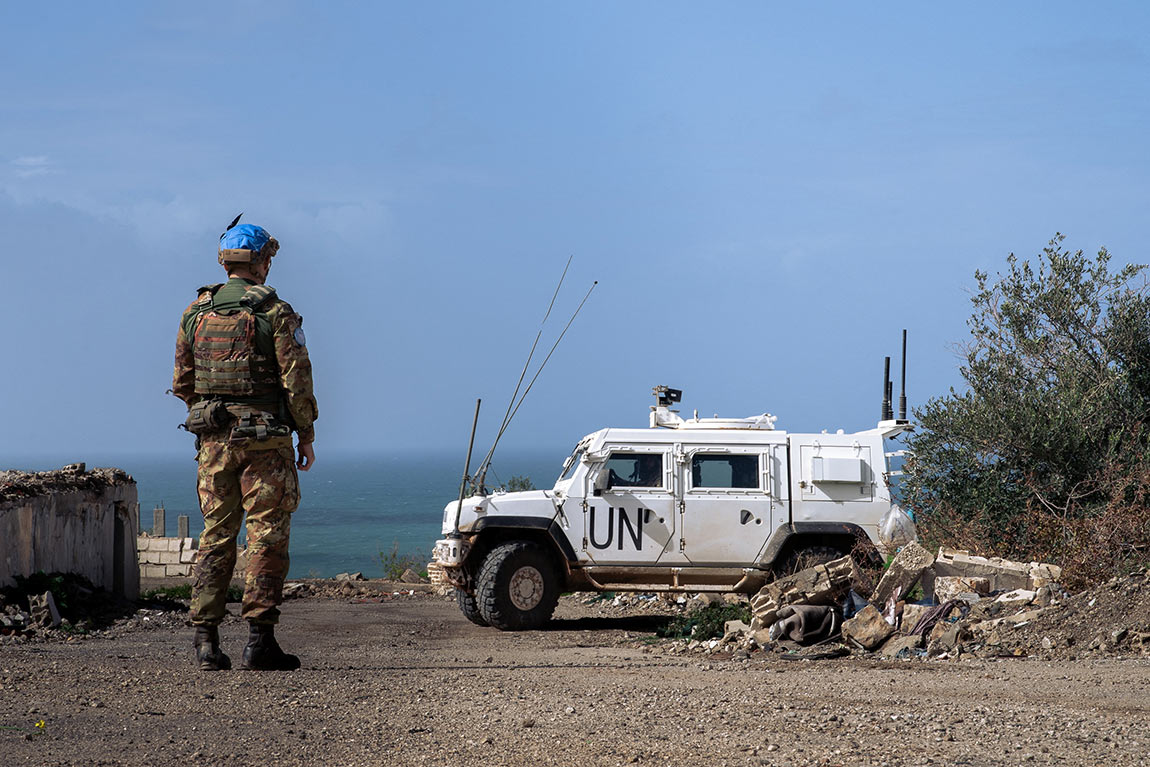
Expert Speak | 14 October, 2026
Europe’s Role in Strengthening Lebanese Security Capacity Post UNIFIL
Spotlight
- UNIFIL’s withdrawal from Lebanon exposes its unresolved sovereignty gap as financial, political, and security constraints limit the Lebanese Armed Forces’ (LAF) ability to assume sole responsibility for southern Lebanon.
- European states have a direct stake in the transition as major contributors to UNIFIL and supporters of Lebanon’s security institutions.
- The EU’s new support mission can strengthen Lebanese security capacity but cannot replace UNIFIL’s peacekeeping, monitoring, and reporting functions or resolve the political disputes that constrain the LAF.
As the United Nations Interim Force in Lebanon (UNIFIL)’s mandate expires on 31 December 2026 and it begins its withdrawal, a deeper problem than the absence of an international peacekeeping force is being exposed—whether, and under what conditions, security authority can be transferred to the Lebanese state. The transition is intended to place greater responsibility for security in southern Lebanon with the state, yet the conditions for this transfer remain unresolved. Lebanon argues that international support is necessary to preserve stability and implement Resolution 1701, which calls for the cessation of hostilities and establishes security arrangements between the Blue Line and the Litani River.
The challenge is not simply to equip the army, but to enable the Lebanese state to exercise authority without creating another form of indefinite external security management.
The United States (US) and Israel have opposed extending UNIFIL’s mandate, while favouring the security framework outlined in the June 2026 Israel–Lebanon Trilateral Framework, which links Israel’s withdrawal and reconstruction assistance to verified disarmament of non-state armed groups by the Lebanese Armed Forces (LAF).
The European response reflects this tension. The 17 September 2026 Paris consultations, co-hosted by France and Jordan, focused on the resources required for the LAF to assume greater responsibility, while the European Union (EU) develops new mechanisms to support Lebanon’s security. The challenge is not simply to equip the army, but to enable the Lebanese state to exercise authority without creating another form of indefinite external security management.
Beyond UNIFIL: The Sovereignty Gap
The debate over UNIFIL’s future stems from a structural problem that the mission was not designed to resolve: Lebanon’s incomplete monopoly over the use of force. UNIFIL was established in 1978 and substantially expanded following the 2006 war, and has supported the implementation of Resolution 1701 by monitoring the cessation of hostilities, reporting violations, and assisting LAF deployment in the south. It was not, however, mandated to forcibly disarm Hezbollah or resolve the political question of who exercises authority over armed force in the country.
The US argues that UNIFIL has failed to contain Hezbollah. While Israel concurs, its envoy Danny Danon has indicated that foreign assistance to train and support the LAF would be less sensitive as Israel wants to work with the LAF in a similar manner to its coordination with the Egyptian and Jordanian militaries.
Lebanon argues that transferring security responsibility cannot be separated from the international role UNIFIL plays under Resolution 1701. At the United Nations General Assembly in September 2026, Lebanese Prime Minister Nawaf Salam warned that UNIFIL’s withdrawal without an alternative could leave gaps in monitoring, reporting, and liaison, while stressing the international community’s responsibility to support Lebanese sovereignty. Parliament Speaker and Amal Movement leader Nabih Berri similarly cautioned against ending the mission without any alternative arrangements, arguing that Israeli military activity obstructs the implementation of the ceasefire. Since the Amal Movement is Hezbollah’s long-standing political ally, Berri’s position illustrates that concerns regarding the conditions for a post-UNIFIL transition extend beyond the Lebanese government.
This will create a sequencing problem for the transition. United Nations Security Council Resolution 2790 sets out UNIFIL’s withdrawal and calls for the Lebanese government to assume sole responsibility for security in southern Lebanon, while also requesting options for international support to implement Resolution 1701 after the mission’s departure. Yet, continued Israeli military activity, including the maintenance of military positions and a security zone extending approximately 6–10 kilometres into southern Lebanon, is altering the environment in which the LAF is expected to deploy and exercise authority.
The LAF’s ability to assume sole security responsibility is constrained by financial weakness and political fragility. Since 2019, Lebanon’s economic crisis and currency depreciation have eroded military personnel’s purchasing power and limited the state’s capacity to fund equipment, training, and sustained deployments, undermining operational readiness. The LAF also operates within a confessional political system, according to which security decisions are shaped by competing communal and political interests. Given Hezbollah’s military capabilities and political influence, any attempt to enforce state authority against the group risks triggering domestic confrontation, further constraining the LAF’s room for manoeuvre.
Europe’s Security Role
Europe’s role in the post-UNIFIL transition reflects both its strategic interests in Lebanon and its existing contribution to international security. The EU has direct interests in Lebanon’s territorial integrity and regional security, as well as collaborating with the country in migration, mobility, and economic relations. Lebanon hosts large refugee populations and is facing a prolonged economic crisis, making its stability relevant to European humanitarian and migration policies. The EU also seeks to support the Lebanese government’s efforts to restore state authority and establish a state monopoly over arms.
European states also have a direct operational stake in UNIFIL’s withdrawal. They contribute more than 3,000 of UNIFIL’s 7,565 personnel, including 732 Italian, 711 French, and 664 Spanish peacekeepers.
The EU has supported these objectives through financial assistance and security-sector engagement. During her recent visit to Beirut, EU’s High Representative/Vice President Kaja Kallas reaffirmed its commitment to strengthening Lebanese institutions. The EU has provided €182 million in support to the LAF since 2022 through the European Peace Facility (EPF), including a €100 million package adopted in June 2026 to improve territorial control, multidomain awareness, maritime security, protection of military sites, and healthcare.
European states also have a direct operational stake in UNIFIL’s withdrawal. They contribute more than 3,000 of UNIFIL’s 7,565 personnel, including 732 Italian, 711 French, and 664 Spanish peacekeepers. Indonesia remains the largest individual contributor, sending 756 peacekeepers, but European states collectively form the largest contributor group. The end of UNIFIL’s mandate therefore has direct implications not just for future assistance to Lebanese institutions, but for on-ground European security engagement.
On 12 October 2026, the EU Council established the European Union Support Mission in Lebanon (EUSM Lebanon) under the Common Security and Defence Policy, with an initial three-year mandate. The mission will have military and civilian pillars. It will advise and train the LAF in areas including land-border surveillance; maritime security; intelligence, surveillance and reconnaissance (ISR); and counter-smuggling, while supporting the Internal Security Forces in areas including cybercrime, anti-smuggling, and port security governance. Operational planning must still be completed before a separate Council decision launches the new mission.
While EUSM Lebanon has introduced a new instrument to strengthen Lebanese security institutions, it is not a successor to UNIFIL and does not replicate the latter’s peacekeeping, monitoring, and reporting functions. France and Italy have also led discussions on a possible multinational arrangement to support the LAF, although the relationship with EUSM Lebanon remains unclear. The 17 September 2026 Paris meeting brought together political and military representatives to discuss the capabilities required for the LAF to expand its deployment as UNIFIL withdraws.
In parallel, Prime Minister Salam has pressed Washington to establish a clear timetable to implement the Trilateral Framework, which envisages Israeli withdrawal alongside Hezbollah’s disarmament and more LAF deployment. His 28 September 2026 meeting with US Secretary of State Marco Rubio shows that Beirut is seeking to move the political agreement forward while European governments work on the institutional capacity required to support its implementation. Without progress on the security framework, a stronger LAF may still lack the conditions in which to exercise authority; without a capable LAF, an Israeli withdrawal would leave unresolved questions over who can enforce the resulting security arrangements.
Without progress on the security framework, a stronger LAF may still lack the conditions in which to exercise authority; without a capable LAF, an Israeli withdrawal would leave unresolved questions over who can enforce the resulting security arrangements.
Israel’s 27 October election adds another timing constraint. Reports in September suggested that progress in the US-brokered Israel–Lebanon talks could remain limited until after the vote, narrowing the window for aligning the political framework for Israeli withdrawal, the future of international monitoring, and the LAF’s deployment capacity.
From International Presence to Lebanese Authority
The expiry of UNIFIL’s mandate will test whether international assistance can translate into effective Lebanese state authority. For Europe, the challenge is not just to establish a successor mechanism, but to ensure that its support helps the LAF exercise its responsibilities rather than sustaining indefinite external security management. Europe can provide the resources, expertise, and political backing, but disputes over armed authority, Israeli military positions, and the terms of the security settlement remain political questions. Ultimately, the transition’s success will depend on whether the LAF is given not only the capacity, but also the political and territorial conditions, to exercise state authority. Without progress on these constraints, a new international arrangement may help manage the security gap but will not resolve the sovereignty problem that produced it.
Giada Kabrit is Program Assistant and Intern Coordinator, ORF Middle East.
The author acknowledges the use of ChatGPT 5.5 for language refinements prior to submission.