 Global
Expert Speak | 21 October, 2026
Morocco’s Geoeconomic Strategy at a Turning Point
Spotlight
- In the past decade, Morocco has successfully aligned foreign and industrial policies.
- These policies have increased growth and strengthened the country’s strategic position in its regional environment, cementing its status as a leading partner to the West and enabling it to advance its agenda of territorial integrity.
- Yet, the uneven distribution of development dividends, declining interest in institutional politics, new constraints on international trade, and the political cost of Morocco’s partnership with Israel are challenges it will need to navigate.
July to October 2026 has been eventful for Morocco. On 16 September, the kingdom and Israel agreed to establish embassies in each other’s territory, announced agreements on investment protection and double taxation, and committed to increasing flight connections. Leveraging economic statecraft and acting despite domestic opposition, Rabat doubled down on the Abraham Accords as a cost-effective strategic multiplier. The underlying equation is simple: open commitment to the Accords facilitates access to cutting-edge Western military technology while shoring up Morocco’s status as an ally of the United States (US) and, more broadly, the West.
The following day, the European Parliament issued a statement effectively threatening to withdraw “financing and market access” from Morocco. The European Union (EU) accounts for about two thirds of Morocco’s goods exports. This was in response to approximately 80,000 migrants’ entry into the Spanish enclave of Ceuta in summer 2026. It denounced the “instrumentalisation of irregular migration as a tool of hybrid warfare”, seemingly echoing disputed speculation that Morocco had weaponised migration to target an adversary (the Spanish government) of the Netanyahu–Trump tandem in hopes of currying favour with the latter, or to advance its claims of sovereignty over Ceuta.
A week later, Moroccans elected a new House of Representatives. In a sign of dwindling confidence in institutional politics, the number of voters was the lowest since 2007. Regions home to large cities—Agadir, Casablanca, Rabat, and Tangier—that have driven Morocco’s integration into global value chains, had below-national-average voter participation rates. Among the youth, civic disengagement has gone hand in hand with low economic participation. For every age group under 60, the younger the cohort, the more markedly it was underrepresented on electoral lists, as youth unemployment reached 27.2 percent in the second quarter of 2026.
These three episodes showcase the intersecting tensions Moroccan policymakers need to navigate and reflect the daunting task awaiting Morocco’s next government, appointed on 16 October 2026.
The Genesis of an Aspiring Connector Economy
Morocco’s situation is not bleak. Public investment has shored up gross domestic product (GDP) growth close to 5 percent in 2025. In 2024, it became Africa’s most visited country. In March, S&P Global Ratings confirmed its investment-grade rating for Morocco’s Eurobonds. The African Development Bank ranked Morocco as the continent’s most industrialised nation. This success is the result of accumulated policies over the decades.
In 2024, it became Africa’s most visited country. In March, S&P Global Ratings confirmed its investment-grade rating for Morocco’s Eurobonds. The African Development Bank ranked Morocco as the continent’s most industrialised nation.
Since the 1960s, Morocco has leveraged international partnerships, allowing for the steady transfer of financial flows, industrial know-how, political support, and military technologies. Cementing its proximity with the West, it established security ties with Israel in the early years of its independence. It has cultivated privileged relations with fellow Arab monarchies that have financed infrastructure, weapon acquisition, and real estate and tourism projects.
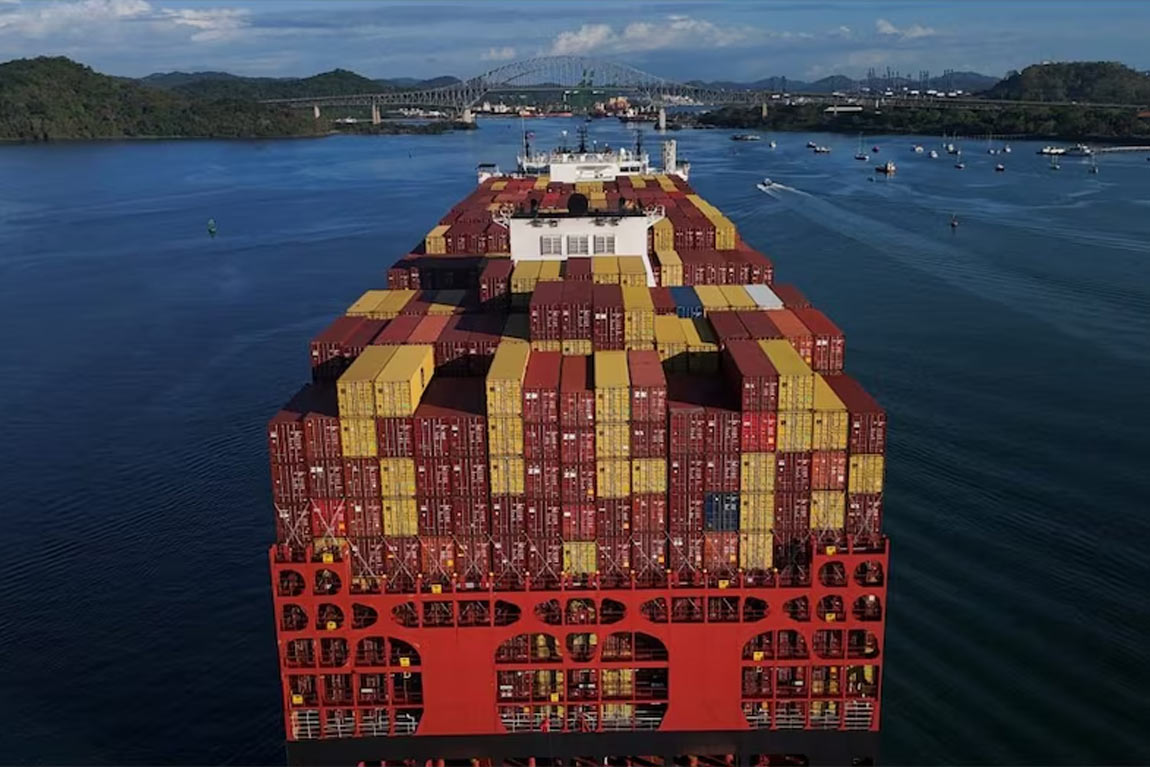
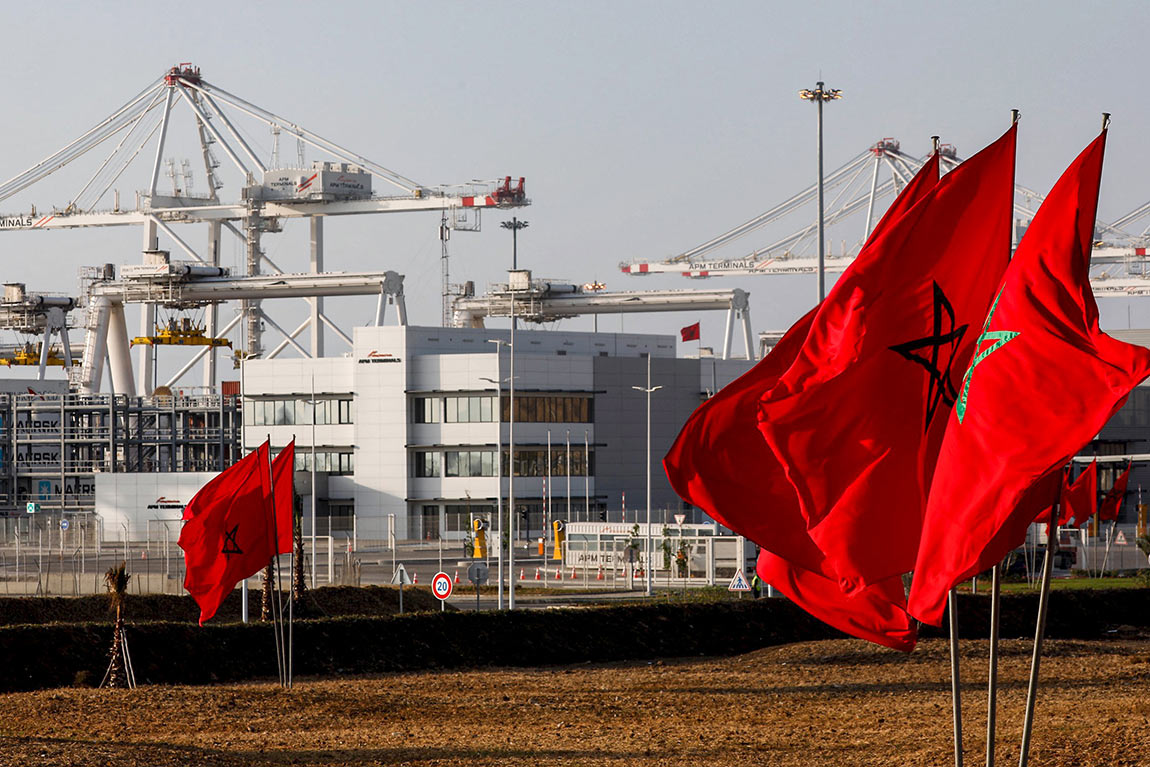
Since the 1990s, Morocco sharpened its focus on economic development. It concluded free trade agreements with the EU (1996), the United Arab Emirates (UAE) (2001), and the US (2004). Early 2000s onwards, it accelerated investment in infrastructure, gradually expanding the Tanger Med port—now the largest in Africa and the Mediterranean. It leveraged partnerships with French automakers to become Africa’s top car maker in 2026.
Since US President Donald Trump’s first term, capitalising on these strengths, Morocco has harnessed global geoeconomic fragmentation to position itself as a connector economy linking China to the West. Chinese investment—for example, in batteries and other auto components—as a share of foreign investment has steadily progressed, from 2.2 percent in 2021–24 to 3.3 percent in 2025.
Prisoner to Geography
For Morocco, exports and foreign investment-led growth is more than a matter of balance of payments, development, job creation, and domestic stability. It is dictated by the necessity to finance its military and territorial integrity in a perilous regional environment.
The country’s singular history provides useful context. The Alaouite dynasty has ruled the kingdom since the seventeenth century. It survived colonisation and the overthrow of monarchies across the African, Mediterranean and Islamic worlds. From 1956 to 1979, it consolidated its territory over six successive phases of decolonisation from two colonial powers, France and Spain.
The world’s tenth-largest gas producer in 2025, Algeria has a landmass more than three times that of Morocco, an output roughly 60 percent larger, and a population about one-quarter greater. Its defence spending was over two and a half times Morocco’s between 1999 and 2025.
In the 1960s, the monarchy collided with Arab socialist regimes, chief among them its neighbour Algeria. Obtaining the international recognition of its sovereignty over Western Sahara[a] has been a national cause since 1975. Algeria has been the main sponsor of the Polisario,[b] Morocco posits the Western Sahara issue as an artificial problem created by Algeria.
Meeting the challenge posed by Algeria is a strategic matter. The world’s tenth-largest gas producer in 2025, Algeria has a landmass more than three times that of Morocco, an output roughly 60 percent larger, and a population about one-quarter greater. Its defence spending was over two and a half times Morocco’s between 1999 and 2025. Consequently, Morocco has devoted a consistently higher share of output to military expenditure than the global average since 1975, by about 1.2 percentage points. This comes on top of tax cuts, transfers, and investment—US$9 billion for a 2015–25 plan alone—in Western Sahara.
The Trump Opportunity
Following Trump’s 2016 election, Morocco’s strategic position improved.
Algeria experienced a political crisis. In 2019, protests led to the overthrow of Abdelaziz Bouteflika, who had ruled the country since 1999. Demonstrations contested the military’s hold on power. Infighting within the security apparatus, trials against figures of the Bouteflika era, and rapid turnover in diplomacy and security services weakened the nation.
The Abraham Accords opened new perspectives. In December 2020, Morocco became the fourth Arab country—after the UAE, Bahrain and Sudan—to normalise relations with Israel during the last months of Trump’s first presidency. Simultaneously, the US recognised Morocco’s sovereignty over Western Sahara, committing to inaugurate a consulate in the territory.
Despite Israel’s war against Gaza, the kingdom held onto the Accords. In 2021–25, Israel became its second-largest arms supplier, accounting for a quarter of the kingdom’s imports. The Joe Biden administration in the US never rolled back its recognition of Morocco’s sovereignty over the Sahara. In 2025, as Trump returned to the White House, the Accords seemed to pay off. In October that year, for the first time, United Nations Security Council resolution 2797 framed autonomy under Morocco’s sovereignty as the only basis for negotiations between Morocco and the Polisario.
Doubling Down
Resolution 2797 laid the ground for negotiations, with rounds concluded in January and February 2026. Against this backdrop, anticipating the renewal of the United Nations mandate in Western Sahara in October 2026, Morocco sought to curry favour with Israel and the Trump administration.
First, it embraced Trump’s Gaza Peace Plan, joining the Board of Peace (BoP) and committing troops to the International Stabilisation Force in Gaza—one of five nations and the only Arab country to do so. In August, reports emerged that the BoP’s first contract would be awarded to build an outpost for 150 Moroccan soldiers.
Second, Morocco has leveraged economic assets to cement US support. It took part in the 2026 Critical Minerals Ministerial, signing a memorandum of understanding to facilitate US access to critical minerals, reportedly including in the Western Sahara. In August, King Mohammed VI announced that a US$1 billion expressway crossing the territory would be named after Trump.
The assessment underpinning these commitments is that the political cost of engaging with Israel remains contained. According to a survey conducted by Arab Barometer in August–November 2025, Moroccans held the most favourable views of Trump’s regional policies among surveyed Arab publics—about two-thirds of respondents—and of Israel, at 13 percent, while no other surveyed country exceeded 5 percent.
Costs and Limits
The Accords, though, have difficult-to-ignore limits.
First, Algeria has reclaimed some of its clout. The Strait of Hormuz’s closure has increased Algiers’ strategic value to the EU as an energy supplier. It has promoted mining and shale gas as avenues for cooperation with the US. Masad Boulos, US envoy for African and Arab Affairs—and father-in-law to one of Trump’s daughters—recently hailed the quality of the Algeria–US relationship. He voiced doubts regarding any imminent resolution of the Western Sahara affair, suggesting that the US would not pressure Algeria and the Polisario into an agreement.
Second, fearing that China is using the kingdom as a launchpad to circumvent import tariffs, the EU has dialled up pressure over Chinese investment in Morocco—for example, by imposing duties on aluminium wheels. Through subsidies and localisation rules, a planned EU Industrial Accelerator Act could undermine Morocco’s competitiveness as a manufacturing hub, particularly in the automotive and clean technology sectors. In June 2026, the Moroccan minister of industry implicitly accused Europe of attempting to curb its industrial development.
Last, Palestine is a growing source of domestic discontent. By voicing opposition to the normalisation of relations with Israel, the Islamo-conservative Justice and Development Party quadrupled its number of parliamentary seats in the recent elections.
With Algeria’s position strengthening, Morocco’s connector-economy model under strain, weak political parties, a less-dependable US partner, rising youth frustration, and domestic constituencies unsettled by the plight of the Palestinian people, the next Moroccan government will face no shortage of challenges.
Akram Zaoui is Associate Fellow, Geopolitics, ORF Middle East.
The author acknowledges the use of Microsoft Copilot for language refinement prior to submission.
[a] The terminology ‘Western Sahara’ is used here in line with the territory’s internationally recognised designation under United Nations terminology.
[b] The ‘Polisario’ is a movement that seeks Western Sahara’s independence.