 Global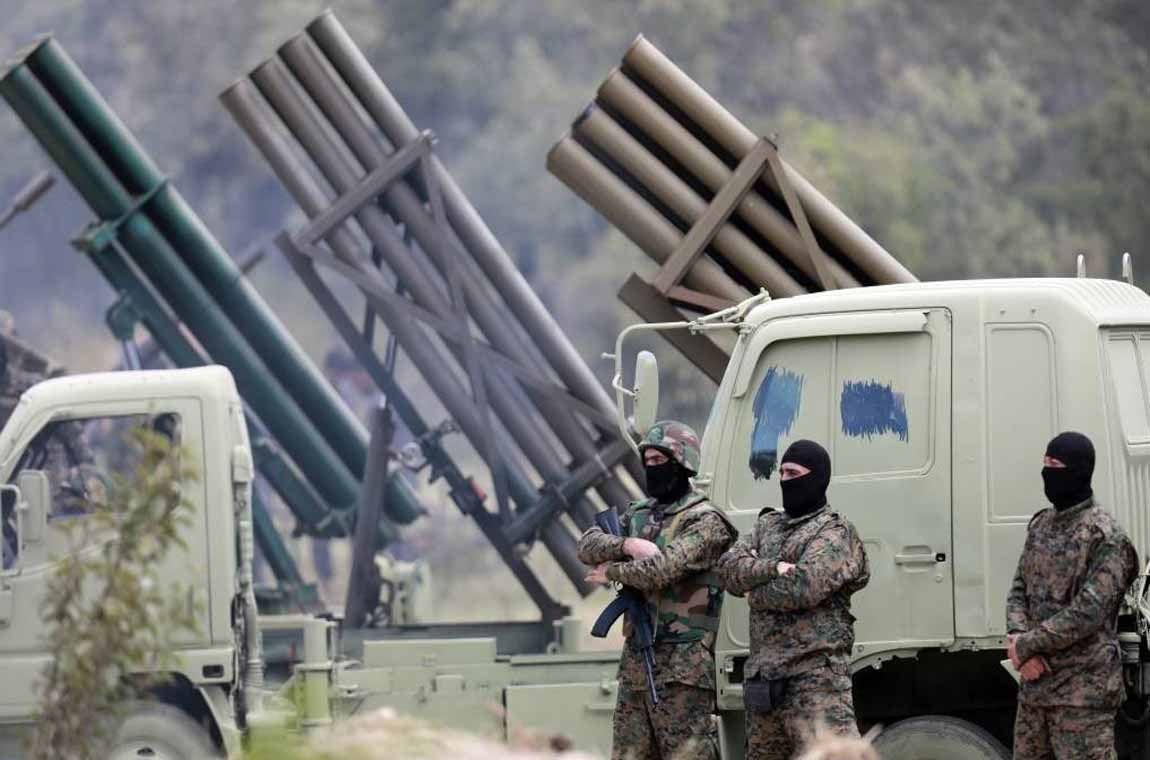
Expert Speak | 09 July, 2026
The Limits of Lebanon’s New Security Framework: Diplomatic Design vs Political Reality
Spotlight
- The framework wrongly assumes that Beirut has the capacity to enforce security, treating disarmament as a standalone technical issue that will automatically trigger the expansion of state authority.
- It prioritises border stabilisation over post-conflict governance. Without immediate civilian structures and public services, the LAF will act as an isolated border guarantor.
- The agreement remains externally conditioned; Israel retains operational reluctance to fully withdraw from pilot zones, while Iran exercises Hezbollah as a vital instrument to preserve regional leverage.
The signing of the 14-point trilateral framework between the Republic of Lebanon, the State of Israel, and the United States (US), on 26 June 2026, has been presented as a diplomatic breakthrough. It outlines a phased withdrawal of Israeli forces from the Lebanese territory, the deployment of the Lebanese Armed Forces (LAF) across the south, and the gradual restoration of the state’s monopoly over arms. For Washington, it represents a practical road map to reduce hostilities and reinforce Lebanese state institutions after months of conflict.
Yet, the agreement exposes a deeper structural problem. It is built on the assumption that the Lebanese state possesses the political authority and institutional capacity to execute a comprehensive security arrangement across its territory. The reality is more complex. Israeli military operations have continued after the signing of the agreement; Hezbollah has rejected the framework outright; Iran has condemned it as an attempt by the US to sideline a principal regional ally; and Lebanon remains divided over the future of its security architecture. The principal challenge here is the widening gap between diplomatic design and political reality.
A Fragile Security Framework
The agreement propagates Israeli withdrawal and the deployment of the LAF, the dismantling of armed infrastructure outside state control, and the establishment of the Lebanese army as the sole military force north and south of the Litani River. To support this transition, the US has committed US$100,000,000 in humanitarian assistance alongside direct military funding to strengthen the LAF’s operational capacity during the initial changeover.
While these objectives appear coherent on paper, they rely upon politically contested assumptions. The agreement operationalises Hezbollah’s disarmament as a sequencing issue, presuming that the technical elimination of the group’s weaponry is a standalone solution that will automatically trigger the expansion of state authority. Hezbollah is not simply an armed organisation operating beyond state authority; it is also a political actor with parliamentary representation, an extensive social network, and an integral component of Iran’s regional deterrence strategy. Any attempt to separate the group’s military future from these broader political realities risks underestimating the complexity of practical translation.
The agreement operationalises Hezbollah’s disarmament as a sequencing issue, presuming that the technical elimination of the group’s weaponry is a standalone solution that will automatically trigger the expansion of state authority.
The framework also creates an asymmetry in obligations. Lebanon is expected to undertake politically sensitive structural reforms, including the restructuring of LAF deployment protocols, border-monitoring mechanisms, and domestic security vetting. Furthermore, the process will be implemented by a newly established military coordination group, while Israel retains broad discretion to invoke self-defence as justification for continued operations and must consent to the handover of pilot zones to the LAF. This will lead to an imbalance in enforcement credibility as compliance expectations are not matched by equivalent constraints on escalation. The imbalance risks weakening public confidence in the agreement before its principal commitments can be realised.
The Challenges of Internal Legitimacy
The agreement has exposed Lebanon’s persistent divisions over the meaning of sovereignty and the future of its security umbrella. President Joseph Aoun and Prime Minister Nawaf Salam have presented it as an opportunity to restore state authority and reduce the role of armed actors outside its control. For political forces that have long prioritised institutional consolidation, the agreement fits within a broader strategy of rebuilding state capacity after years of institutional erosion.
Hezbollah and its primary Shia ally in Lebanese politics, the Amal Movement, approach the same text from a fundamentally different position. Naim Qassem, Hezbollah’s secretary-general, rejected the framework outright, calling it “null” and a “humiliation” where the Lebanese government was effectively surrendering to Israel. Meanwhile, Nabih Berri, Parliament’s speaker and president of Amal, warned that the deal could further divide the population and ignite violent confrontations among domestic parties. This unified stance masks a deep ideological divergence: while Hezbollah acts as a direct extension of Iran’s regional deterrence axis, Amal operates as a purely domestic state actor, rejecting the deal to preserve its internal political leverage rather than to satisfy Iran.
This political deadlock sharply contrasts with the reality facing southern Lebanese and northern Israeli civilians. Thousands of displaced southern residents rushed to return to their communities the moment a ceasefire was announced. For them, the priority is survival and return, yet operational realities on the ground have revealed that there is no clear or effective state authority over these southern areas where Hezbollah governs.
The result is that Lebanon is formally represented as a unified negotiating partner while remaining internally divided over the most basic question the agreement seeks to resolve—namely, who holds legitimate authority over the use of force. Diplomatic recognition of the Lebanese state does not resolve this gap; rather, it will reveal faultlines through stalled progress.
Beyond Security: The Governance Vacuum in Southern Lebanon
The biggest limitation of the framework lies in what it does not address. It devotes considerable attention to security arrangements, force deployment, and border stabilisation but offers far less detail on how southern Lebanon will be governed, rebuilt, and economically supported once active hostilities subside.
This omission touches upon the core of state legitimacy. Restoring authority in the south requires more than a military presence, it demands immediate deployment of civilian administrative structures, such as functioning municipalities, infrastructure repairs, and public services, to support the massive influx of returning residents.
Without this state-led governance, the LAF will merely act as an isolated border guarantor while daily administration remains unresolved, a vulnerability compounded by the upcoming expiry of the United Nations Interim Force in Lebanon’s (UNIFIL) mandate at the end of 2026. The long-term operational oversight of the border remains ambiguous, despite recent pledges by France and Italy to set up a replacement multinational coalition.
If recovery in the south continues to depend on fragmented or informal provision rather than coordinated state-led governance, the agreement may struggle to shift the underlying balance of legitimacy, and Hezbollah would still function as the sole viable provider.
Hezbollah’s political resilience has historically been linked not only to its military role, but also its capacity to provide reconstruction and social services where the state has been absent or constrained. If recovery in the south continues to depend on fragmented or informal provision rather than coordinated state-led governance, the agreement may struggle to shift the underlying balance of legitimacy, and Hezbollah would still function as the sole viable provider.
The framework, therefore, resolves the question of immediate security more clearly than that of post-conflict governance. This imbalance might affect its long-term durability.
Regional Diplomacy and Competing Negotiating Tracks
The framework’s limitations become clearer when placed alongside parallel diplomatic efforts involving Iran. While Washington pursued a bilateral arrangement focused on Lebanon and Israel, American discussions with Iran in Switzerland sought to manage broader regional escalation dynamics involving multiple interconnected actors.
These processes operate on different assumptions. The Lebanese track treats Hezbollah as a domestic challenge to be managed through state consolidation. By contrast, the regional track, when viewed through an Iranian lens, demonstrates how the group is exercised as Tehran’s vital instrument to project power, enforce deterrence, and retain regional leverage vis-à-vis Israel, its allies, and the broader region. Since these assumptions do not align, progress in one arena does not necessarily translate into stability in the other; instead, one can complicate the other.
The outcome is a fragmented diplomatic environment in which key actors operate across separate, non-aligned negotiating tables. Consequently, Hezbollah’s rejection of the framework should be understood as more than a domestic political stance; it is a direct reflection of its international affiliations.
Conclusion: Will the Accord Survive?
The 26 June framework represents a key diplomatic development, but its sustainability will depend on conditions beyond its formal provisions. Its long-term survival is contingent on external actors; both Israel and Iran retain substantial leverage and a clear ability to alter Lebanon’s domestic dynamics.
In the absence of a broader regional framework to mitigate these external pressures, it will probably function as a short-term stabilisation mechanism rather than a durable settlement.
For Israel, a deep-seated operational reluctance to execute a full military withdrawal remains a primary obstacle. It has conditioned its exit on the consensus-based handover of pilot zones and maintains broad self-defence parameters despite public assurances of having no expansionist designs. Meanwhile, for Iran, Hezbollah represents its most critical regional proxy and a vital strategic asset to project power in the Levant. Tehran’s calculation is directly tied to its broader geopolitical stand-off, meaning it can use the group’s armed presence to preserve its leverage regarding shifting fronts in Syria or Gaza, or to sabotage a US-brokered peace that threatens to sideline its influence.
The sustainability of the framework will, therefore, depend on whether it can be implemented within a fragmented political environment where state authority remains contested and externally conditioned. In the absence of a broader regional framework to mitigate these external pressures, it will probably function as a short-term stabilisation mechanism rather than a durable settlement.
Giada Kabrit is Program Assistant and Intern Coordinator at ORF Middle East.
The author acknowledges the use of Gemini 3.5 (Flash) for language refinements prior to submission.