 Global
Expert Speak | 26 June, 2026
Saudi Arabia: A Choice of Influence Under Regional Pressure
The following excerpt is from Chapter 2 — Whither the Board of Peace? Perspectives from Washington and the Gulf.
Saudi Arabia has maintained a consistent stance on the Palestinian issue since at least the 1980s. From the Fahd Peace Initiative (1981) to the Arab Peace Initiative endorsed by the Arab League (2002), the kingdom has consistently emphasised that implementing a two-state solution is essential for Israel’s peaceful integration into the region and that the Palestinians’ right to self-determination is non-negotiable. Debates concerning potential Saudi-Israeli normalisation following the Abraham Accords, along with the reduced prominence of the Palestinian issue among Saudi younger generations, have led some observers to argue that Saudi Arabia’s position has fundamentally shifted. Nevertheless, Riyadh continues to pursue the same diplomatic agenda, positioning itself as an alternative to both normalisation without the establishment of a Palestinian state and the “Axis of Resistance” project, which opposes the existence of the State of Israel.
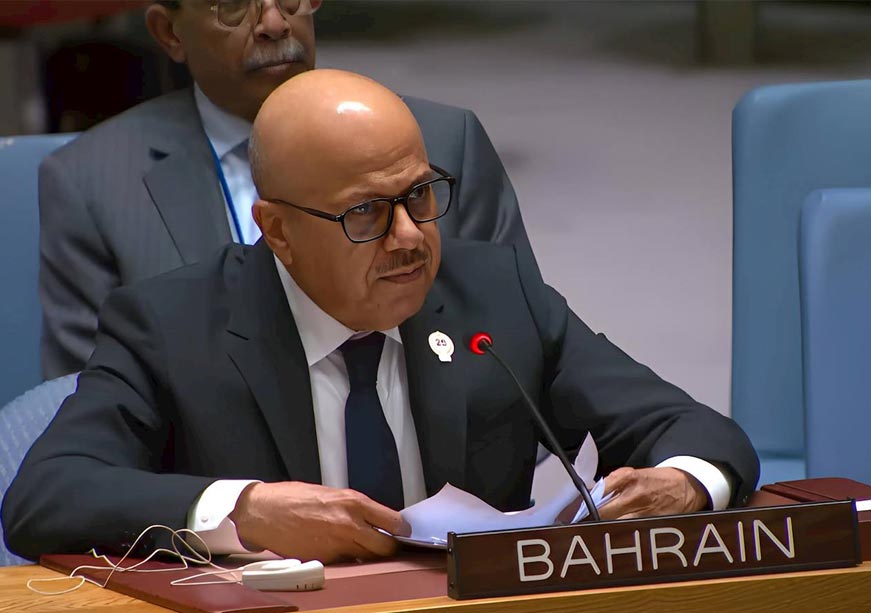
On 21 January 2026, in Davos, Prince Faisal bin Farhan signed the Board of Peace (BoP) charter for the Kingdom alongside seven other Arab or Muslim countries. This collective announcement signals that Saudi participation is part of a group effort, and not an individual initiative, guaranteeing that BoP membership does not become a tool of regional competition. The joint statement underscores the signatory countries’ pledge to “consolidating a permanent ceasefire, supporting the reconstruction of Gaza, and advancing a just and lasting peace grounded in the Palestinian right to self-determination and statehood,” while stressing Saudi Arabia’s hope for a limited scope of the BoP’s mandate: “ (…) supporting the implementation of the mission of the Board of Peace as a transitional administration, as set out in the Comprehensive Plan to End the Gaza Conflict and endorsed by United Nations Security Council Resolution 2803.”[1] This deliberately consensual wording, however, masks more complex calculations.
Established following diplomatic efforts related to the post-Gaza war,a the BoP is the current United States (US) administration’s response to more ambitious proposals, including the Franco- Saudi proposal for a two-state solution, as stated in the New York Declaration on 29 July 2025.[2] This multilateral framework aligns more closely with the traditional Saudi approach than participation in mechanisms such as the BoP. The New York Declaration, on the other hand, aimed to advance the two-state solution through United Nations mechanisms (the statement refers in particular to “relevant UN resolutions—such as UNSC 242 or GA 19”—and the role of UNRWA) grounded in international law, while the BoP has faced early scrutiny over its governance and its relationship with established multilateral frameworks. The BoP challenges the New York initiative by creating institutional mechanisms associated with Donald Trump, structured as a consortium of states that require membership fees of US$1 billion and grant limited control over its decisions.
In this context, the key question is why Riyadh has chosen to engage in an uncertain framework led by a controversial US initiative and whose membership includes some of Saudi Arabia’s regional competitors. Rather than signalling a principled commitment, this decision reflects a strategy to preserve Saudi influence as the regional order evolves. Saudi Arabia’s involvement in the BoP is less about alignment and more about positioning Riyadh as a regional pivot amidst rising intra-Gulf rivalries, tensions with Iran, and significant national security threats.
Staying at the Centre of the Diplomatic Game
Saudi Arabia’s membership in the BoP is primarily a positioning strategy intended to avoid being sidelined in the shaping of the post-Gaza landscape. With reconstruction, security, and governance of the Occupied Palestinian territories unresolved, Riyadh cannot allow other actors, especially Israel, the US, the United Arab Emirates (UAE), Qatar, and Türkiye, to set the agenda on their own. Participation, even within an imperfect framework, enables Riyadh to influence the crisis-resolution process from the outset. Riyadh also anticipates that Gaza’s reconstruction will require renewed engagement with the Palestinian Authority, which it hopes will govern Gaza and advance a viable institutional framework for Palestinian statehood.
This decision also aims to maintain privileged access to Washington. The BoP, led by the US administration, provides a direct channel for political coordination. By participating, Saudi Arabia resumes its hedging strategy: cooperating with the US on key issues without fully aligning with its positions, especially given the limited progress on the Palestinian issue. This arrangement offers an alternative to formal normalisation with Israel, which would be politically costly at present. Rising tensions with the UAE following the Yemen crisis and disputes over the Horn of Africa triggered a smear campaign in Washington against Saudi Arabia.[3] Riyadh saw its participation in the BoP as a strategic move to mitigate further reputational risk in the US capital. The involvement of multiple Gulf and Middle Eastern powers raises the political cost of abstention. In the context of increasing rivalry, absence would mean losing diplomatic influence.
Beyond tactical considerations, Saudi Arabia’s engagement reflects a broader ambition for leadership, aiming to ensure a stable state-based regional order. With support from China, Iran and Saudi Arabia began to improve their relations in 2023, initiating a process of rapprochement that persisted until the Iranian attacks on Gulf Cooperation Council (GCC) countries in March and April 2026. After the fall of Bashar al-Assad, Saudi Arabia adopted a policy of supporting the new government in Damascus, described as having “no ceiling,” according to Saudi Investment Minister Khalid al-Falih.[4] This support encompasses economic measures (approximately 60 billion riyals in investment), diplomatic efforts— evidenced by the initial success in lifting US sanctions during President Donald Trump’s visit to Riyadh in May 2025—and security cooperation with Türkiye.[5] Participation in the BoP, along with significant financial commitments, support the Saudi ambition for its heavyweight position in the region and seek to reinforce the Kingdom’s image as both stabilising and indispensable.
Managing Unpredictability
Saudi Arabia’s inclusion in the BoP theoretically provides tangible leverage over the post-Gaza situation. Participation allows Riyadh to influence reconstruction priorities, financing mechanisms, and security arrangements essential for stabilising the territory. This involvement also strengthens its image as a responsible power contributing to regional crisis management, beyond financial support.
However, these potential gains are accompanied by certain political ambiguities. The BoP gives limited attention to the political aspects of the Palestinian issue, particularly sovereignty and statehood. For Riyadh, which links normalisation with Israel to substantial progress on these points, there is a risk of appearing to support a technocratic approach to reconstruction without a credible political solution. This exposes the Kingdom to criticism from its own public opinion and regional partners. Furthermore, structural limitations undermine the Peace Board’s credibility. Governance remains unclear, with concentrated decision-making and limited transparency into funding. There is a large gap between pledged funds and Gaza’s needs. The project’s viability also depends on uncertain political conditions, particularly the consolidation of the ceasefire and the unresolved role of Hamas, both of which are largely beyond the BoP’s control.
Documents from the presentation in Davos and the BoP’s inaugural meeting mention only Gaza.[6] However, The BoP charter defines its mission as follows: “The Board of Peace is an international organization that seeks to promote stability, restore dependable and lawful governance, and secure enduring peace in areas affected or threatened by conflict.”
Saudi Arabia’s onboarding comes at a time when threats to its national security are mounting, particularly in Yemen and the Horn of Africa, and its interest in preserving or restoring stability is rising. Since December 2025, Riyadh has been viewing the worsening security in its immediate regional environment as a systemic threat. The Southern Transitional Council’s largescale campaign in the Yemeni governorates of Hadhramaut and al-Mahrah threatens the fragile balance supported by Riyadh and undermines border security. Additionally, political shifts in Sudan, tensions in Ethiopia, and rivalries over Eritrean ports amount to destabilisation across the Red Sea coast and the Horn of Africa.
The situation drives port militarisation, empowers non-state actors, and invites interference from rival powers like Israel. These crises threaten regional maritime security—an aspect critical to Saudi Arabia’s economy—and turn the Red Sea into an arena of competition and complex risks. Despite Saudi Arabia’s security concerns, the BoP has yet to provide effective solutions or prevent the escalation of these specific crises. The recent outbreak of war in Iran by Israel and the US occurred without the consultation of regional allies or BoP participants, leaving them to face the consequences.
Reimagining the BoP Amidst Regional Transformations
While Saudi Arabia initially joined the BoP to influence the post-Gaza situation, ongoing regional realignments have changed its significance. Growing intra-Gulf rivalries, particularly with the UAE, could turn the BoP into a platform for indirect competition. Once closely aligned, Riyadh and Abu Dhabi now differ on economic, security, and diplomatic priorities. Participation in the Peace Board would allow Riyadh to prevent the Conclusion
Saudi Arabia’s involvement in the BoP is primarily a strategic calculation. It is less about supporting a Pax Americana and more about securing a central role in shaping the post-Gaza era and the regional order. By joining with other regional powers, Riyadh aims to preserve its influence, maintain access to Washington, and manage competition. Emirates from gaining exclusive political benefits on the Palestinian issue.
Simultaneously, Iran’s intensifying operations towards the GCC countries in response to the military campaign initiated by Israel and the US are altering Saudi Arabia’s strategic priorities. Military threats, risks to energy infrastructure, and the potential for wider conflict have placed national security at the forefront. From the Saudi perspective, the BoP should facilitate deeper engagement with Washington and enable more effective coordination with other actors to prove itself useful.
Originally intended to support Gaza’s stabilisation, the BoP could now become a broader platform for regional crisis management. However, this reconfiguration presents a paradox: while the BoP’s political value to Riyadh increases, its operational credibility declines. The war in Iran has diverted resources and attention from Gaza, while expanding conflict and security threats throughout the region. If the BoP neither meets its primary objective of managing the post- Gaza crisis nor helps to prevent further regional escalation, it risks being perceived as little more than a coercive platform for US allies rather than a credible space for promoting peace.
However, this strategy is unfolding within an uncertain framework. The BoP’s political ambiguities, institutional weaknesses, and lack of guarantees for a lasting Palestinian solution limit its effectiveness. The rapidly changing regional environment is also shifting Saudi priorities. The BoP now serves more as a tool for strategic adaptation than stabilisation, and its relevance may not extend beyond the current US administration. This poses a risk for Riyadh, as it may have undermined regional or international multilateralism to accommodate the ambitions of an unpredictable American partner. Ultimately, by joining the BoP, Riyadh is not committing to a specific peace initiative. Instead, its participation equates to exercising a confluence of normative, discursive, and reputational powers to avoid marginalisation.
Xavier Guignard is a Visiting Scholar at the Prince Saud al-Faisal Institute for Diplomatic Studies in Riyadh.
[1] Republic of Türkiye, Ministry of Foreign Affairs, “Joint Statement by the Foreign Ministers of Türkiye, Egypt, Indonesia, Jordan, Pakistan, Qatar, Saudi Arabia and UAE,” January 21, 2026, https://www.mfa.gov.tr/jointstatement- by-the-foreign-ministers-of-turkiye-egyptindonesia- jordan-pakistan-qatar-saudi-arabia-anduae- 21-01-2026.en.mfa.
[2] United Nations, Question of Palestine, “New York Declaration on the Peaceful Settlement of the Question of Palestine and the Implementation of the Two-State Solution,” https://www.un.org/unispal/document/unhigh- level-international-conference-new-york-decla
[3] Camille Lons, “Saudi-UAE Strategic Friction and Regional Fragmentation,” European Council on Foreign Relations, January 6, 2026, https://thesoufancenter.org/ intelbrief-2026-january-6/.
[4] Muwafeq Mohammed, “Saudi-Syrian Investment Forum 2025 Aims for Lasting Economic Partnership,” Asharq Al-Awsat, July 24, 2025, https://english.aawsat.com/ business/5168054-saudi-syrian-investment-forum-2025- aims-lasting-economic-partnership.
[5] Hesham Alghannam, “Syria Becomes a Front Line in Protecting Saudi Security,” Carnegie Endowment for International Peace, March 26, 2025, https:// carnegieendowment.org/research/2025/04/syriabecomes- a-front-line-in-protecting-saudi-security.
[6] Board of Peace, “Presentations,” https://boardofpeace. org/presentations. ration-29jul2025/.