 Global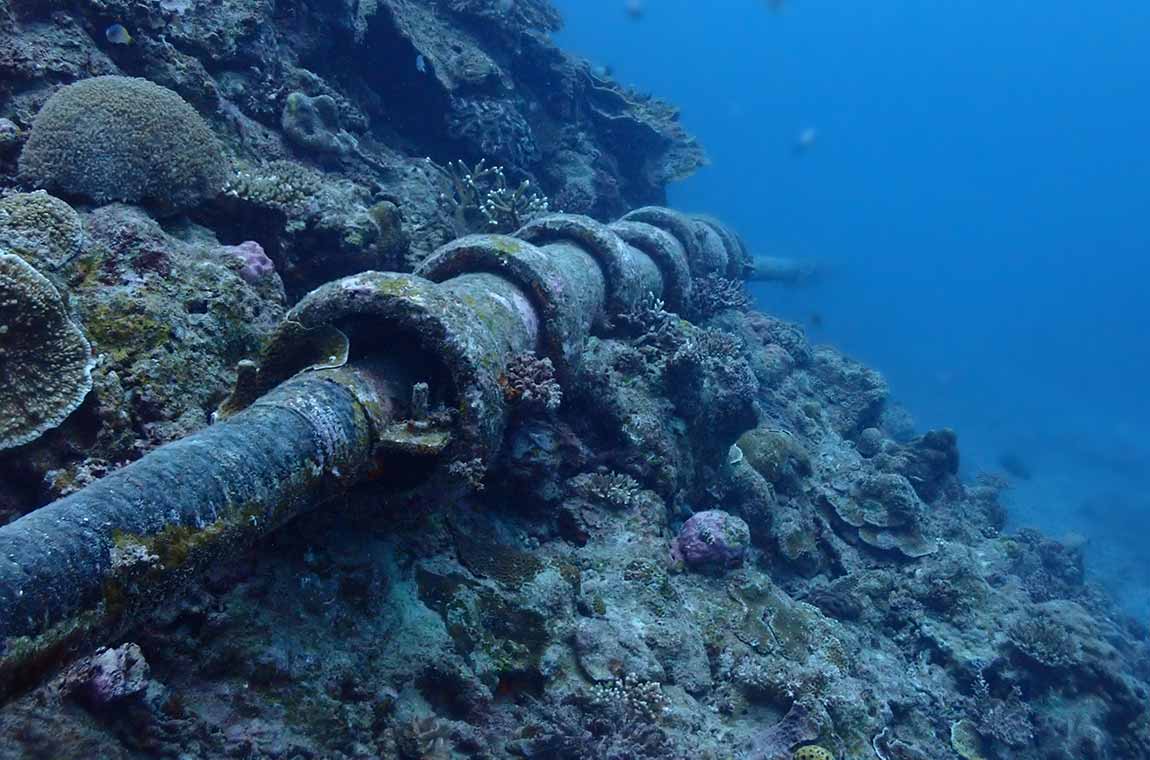
Expert Speak | 08 July, 2026
Subsea Cable Financing in the Middle East
Spotlight
- Global subsea cable financing has shifted from carrier consortia to content platforms, but in the Gulf, it remains funded by carriers, states, and regional capital.
- Financing structure is security structure—hyperscalers can exit, but Gulf owners do not have that option.
- India is a likely beneficiary of the current crisis as content platforms reroute towards it.
Subsea cables carry almost all the world’s intercontinental data. For most of the cable era, telecommunications carriers paid for them. Over the past decade, however, a small group of content providers has started financing new cable directly to carry its own traffic. In the Middle East, though, carriers and the state remain the payers. The war risk concentrated in the Red Sea and the Strait of Hormuz has led to two questions: who finances a cable, and who absorbs the loss when it fails?
The Global Landscape: Who Pays for Subsea Cables?
For most of the cable era, telecommunications carriers paid for subsea cables. Capacity was financed through “consortium” clubs: coalitions of incumbent operators that jointly owned a cable, shared its capacity, and recovered costs by selling bandwidth to third parties. In 2010, established telecom carriers such as AT&T and Telstra accounted for roughly 75 percent of international bandwidth and drove most of cable construction through consortia.
That model has now been inverted. A small oligopsony of content providers, including Google, Meta, Amazon, and Microsoft, anchors global cable finance. Before 2012, they accounted for under 10 percent of capacity usage; they now command 75 percent of international bandwidth. Their deployed international capacity rose ninefold to 962 terabits per second (tbps) between 2015 and 2019. As dominant consumers of data bandwidth, they find it more economical to own fibre than to lease it. Currently, 100 percent of planned new cables on the Atlantic are content-provider-led, while the Pacific sees 80 percent content provider investment. Meta’s 50,000-km Project Waterworth, the world’s longest planned cable, is greater than the circumference of the earth.
There are two caveats to this. First, ownership is uneven. Carriers still dominate in Africa, the Middle East, and Latin America, but content provider demand growth is also fastest in these regions. Second, hyperscalers (large-scale cloud service providers) are owners, not resellers. They are more likely to consume their capacity, reshaping the carrier’s role. Therefore, the question of who pays is less a clean succession from the previous model and more a bifurcation of the network into private and common-carriage layers.
Financing Structure as Security Structure
Who finances a cable determines who absorbs its loss and the security problem a region inherits. Financing structure is security structure: ownership both distributes the risk and dictates whether it can be averted.
Under the state finance model, the owner cannot leave, and the fibre becomes critical national infrastructure. It is the owner’s sovereign duty to protect the fibre, which becomes a potential target for hostile nations.
Two models bind the spectrum. Under hyperscaler finance, security is privatised and diffused. One firm spreads traffic across redundant routes, self-insures, and reroutes when a corridor turns hostile. Risk is absorbable but responsibility is externalised. The profiting party can exit, leaving the region stranded.
Under the state finance model, the owner cannot leave, and the fibre becomes critical national infrastructure. It is the owner’s sovereign duty to protect the fibre, which becomes a potential target for hostile nations. This fuses defence, insurance, surveillance, and diplomacy onto one balance sheet. State control hardens data sovereignty and concentrates protection of the system in the same hands.
The Gulf, which is state financed, has witnessed its critical data infrastructure become a target. Iran has threatened cables running in the Strait of Hormuz. To avoid this, cables have been laid in Omani waters, but this has led to connectivity clusters in a few landings, which could become a single point of failure for the regional economy.
The State of Play in the Gulf
The shift from telecom carriers to content platforms has not occurred in the Gulf, since it follows demand, not geography, and where the two diverge, the inversion stops. The recent conflict in the region means that cables have become costly to insure and repair. Consequently, the inversion mentioned above has not happened as platforms are routing their cables around the Red Sea and the Strait of Hormuz. In the Gulf, the carrier and the state remain the payers. On busy ocean routes, the same hyperscaler builds the cable and absorbs the loss when it breaks. However, in the Gulf, the two responsibilities fall on different parties. The cables are financed by carriers, and increasingly, regional capital, some of it sovereign and some private.
The 2Africa system reaching the Gulf is owned by an eight-member consortium, of which Meta is the only content provider. The Saudi Telecom Company (STC) has invested around US$205 million into 2Africa, and each regional landing is operated by a national carrier. The newer overland corridors, routed to circumvent the Red Sea, are also funded by carriers and regional capital. STC’s SilkLink across Syria is sovereign money, since STC is majority owned by the Saudi Public Investment Fund. The Emirati-Iraqi WorldLink to Turkey is privately financed. The capital behind both is regional, and in neither case is it from a content provider.
War-risk premiums through the Strait of Hormuz, which quadrupled in March 2026, have increased to reflect evolving security risks.
The content providers, meanwhile, are stepping back in the Gulf. Google and Meta have paused segments of their Red Sea cable projects, and Meta’s Project Waterworth has been rerouted down the African coast. When a regional initiative stalls, the loss affects smaller firms and hyperscalers with stakes in the physical infrastructure differently. D9, a small listed infrastructure investment firm currently being wound down, was forced to sell its 2Africa fibre pair at a discount, and by doing so they had to publicly report a permanent loss. The hyperscalers have stakes in stranded regional subsea cable projects as well, but firms of that size can absorb the loss. War-risk premiums through the Strait of Hormuz, which quadrupled in March 2026, have increased to reflect evolving security risks. Both the financing and the losses settle on the regional owners, the carriers, states, and funds, while the large platforms steadily reduce their regional stake.
A Forward-Looking Analysis of the Middle Eastern Landscape
The regional pattern is unlikely to reverse, because the Gulf’s own artificial intelligence (AI) buildout is reinforcing the carrier-and-state model rather than replacing it. The Gulf is building data centres at gigawatt scale, from Stargate in Abu Dhabi to HUMAIN in Saudi Arabia. However, data centres earn their value by serving traffic across borders, which depends on international cable capacity, a separate layer that needs financing to build and keep open. In other places, demand on this scale would prompt a content platform to lay its own cable; here, it does the reverse. The continuing war risk in the region is pushing platforms to route their fibre around the area. The bandwidth that the Gulf’s ambitions depend on will, therefore, be paid for by its carriers and by regional capital.
That investment is increasingly going overland. The data corridors now planned through Syria, Iraq, and Turkey are based on a wager that land routes can carry traffic while sea routes experience volatility. However, a corridor’s security depends on the situation in the states it crosses, making these routes a test of diplomacy as much as engineering.
Waterworth lands in Mumbai and Visakhapatnam, and Google has committed around US$15 billion to Indian AI infrastructure over five years.
India will emerge as a beneficiary of this shift. The platforms routing around the Gulf are directing their subsea cables towards it, as it sits outside the chokepoints. Waterworth lands in Mumbai and Visakhapatnam, and Google has committed around US$15 billion to Indian AI infrastructure over five years. For the India–Gulf Cooperation Council (GCC) corridor, this sets the terms of exchange: Gulf capital and compute on one side, Indian geography and connectivity assurance on the other. What India needs is a cable-landing and permitting regime that can allow it to leverage what its geography offers.
Conclusion
This analysis separately explores two questions: who pays for a subsea cable and who bears its loss. However, there is a third, sharper variable—who has the option to leave. In the Middle East, this option is what platform ownership really buys. Spreading traffic across redundant routes is less an engineering hedge than a purchased exit. The Gulf’s sovereignty over the cable also means an inability to walk away from it. This is why the region should consider the mutualised model discarded by the market. Shared ownership is the only way to carry a risk no single owner can avoid.
The security-optimal structure would diversify ownership across many parties and cables to prevent monoculture, build redundancy across subsea and overland routes with multiple landing jurisdictions, align asset control with defensive capacity, and bind hyperscalers through anchor–tenant or co-investment commitments, so that the profiting party also has some investment in the cable. A mutualised insurance pool could prevent any failure from turning systemic. Security, thus, can be purchased through distributed ownership, not concentrated control.
Siddharth Yadav is Fellow, Technology at ORF Middle East
Samriddhi Vij is Associate Fellow, Geopolitics at ORF Middle East
The authors acknowledge the use of Gemini Flash 3.5 for preliminary literature review.