 Global
Special Reports | 12 May, 2026 Download Report (PDF)
Shifting Sands: A Middle East in Conflict and Transition
Attribution: Kabir Taneja, Mannat Jaspal, Clemens Chay and Siddharth Yadav, Eds., “Shifting Sands: A Middle East in Conflict and Transition,” ORF Special Report No. 305, ORF Middle East, May 2026.
Editors’ Note
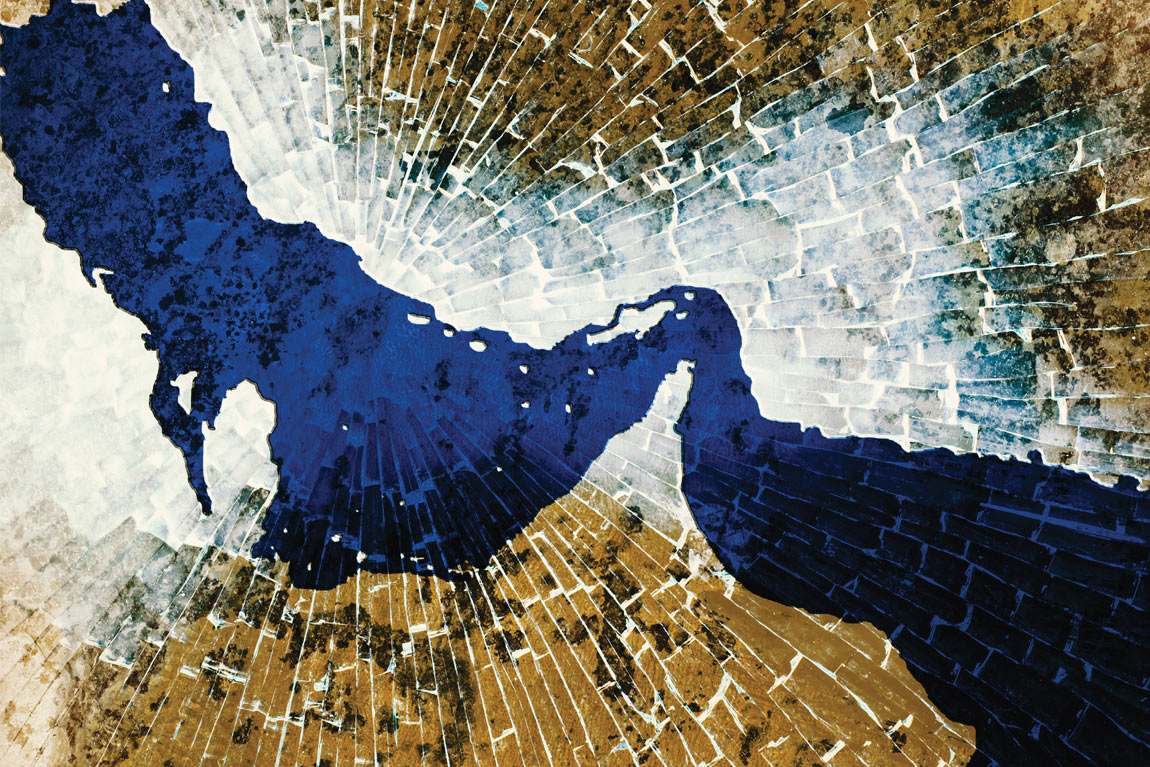
The Middle East is undergoing a churn that began in October 2023 with Hamas’s attack on Israel. Since then, Israel has mobilised a maximalist military campaign across the region, leading to a direct confrontation in February-end involving the United States (US) and Israel on one side and Iran on the other. In March, the US and Israel again targeted Iran, prompting Tehran to mobilise a strategy of striking neighbouring Gulf states to intensify the conflict and turn it into a global one, hoping it would shift the tide against Washington, DC, through international economic shocks.
Today the conflict resembles a new Cold War. A resumption of hostilities remains likely amid a precarious ceasefire, as the core drivers of these military exchanges—chief among them Iran’s nuclear programme—remain unresolved. Instead, the closure of the Strait of Hormuz, through an Iranian blockade and a counter-blockade by the US, has disrupted maritime trade, energy supplies, and food security, with cascading effects on global economic outcomes. As economies absorb the impact of high prices and disrupted supply of essential commodities—from oil and gas to fertilisers—regional geopolitical dynamics continue to shift and realign, reinforcing a narrative of instability in the near term.
This report seeks to align these developments within a focused research scope, examining how the Middle East may be analysed in the coming weeks and months within global systems.
In the first chapter, Mahdi Ghuloom argues that the Iran-US-Israel conflict and its ramifications on the Gulf States have shaken the region’s “oasis model” and pushed its foreign policy towards short-term economic recovery and hard security imperatives. While long-term strategic ambitions remain in place, the conflict has exposed vulnerabilities across the GCC, particularly around trade chokepoints, expatriate confidence, tourism, and defence. In response, the Gulf states are likely to prioritise investment reassurance, domestic stabilisation, alternative trade corridors, and deeper defence cooperation with the United States and its allies.
Samriddhi Vij and Akram Zaoui follow with a review of key aggregates to assess how non-Gulf economies in the Middle East and North Africa (MENA) differ in their ability to cushion their economies against shocks, and how the Middle East crisis both catalyses and reveals diverging trajectories. While energy exporters fare better—with North African producers positioned to benefit—the structural driver of resilience remains a commitment to better policymaking and reform which, in turn, is informed by more robust domestic institutions.
Focusing on chokepoints, energy, and connectivity, Mannat Jaspal and Reem Sagahyyroon argue in their chapter that the Strait of Hormuz crisis has triggered one of the world’s most severe energy shocks in recent history, disrupting over 13 million barrels per day of supply and exposing the fragility of global energy systems. While prices remain temporarily contained due to reserves, alternative routes, and stockpiling, structural constraints—damaged infrastructure, limited pipeline capacity, and rising insurance risks—will prolong supply uncertainty.
The ceasefire offers limited relief, and energy shortages are far from over. Extending their view beyond energy, Cauvery Ganpathy and Leigh Mante examine the centrality of the Middle East to multiple global supply chains, apart from oil and gas, making it difficult to localise and limit the impact of the crisis. This essay explores the longer-term effects of supply chain upheavals and infrastructural damage on food, water, and economic security within the region and beyond.
Finally, sustainability and the protection of technological assets in conflict zones have expanded beyond military concerns into the civilian domain. Elizabeth Heyes investigates how technological infrastructure is increasingly exposed to geopolitical, climate, and cyber risks that are interconnected and difficult to contain. The report closes with an article by Siddharth Yadav, which considers how technological sovereignty may evolve and argues that recent developments in the Middle East have shifted the debate from an abstract policy concern to an immediate strategic priority.
Read the report here.
All views expressed in this publication are solely those of the authors, and do not represent the Observer Research Foundation, either in its entirety or its officials and personnel.