 Global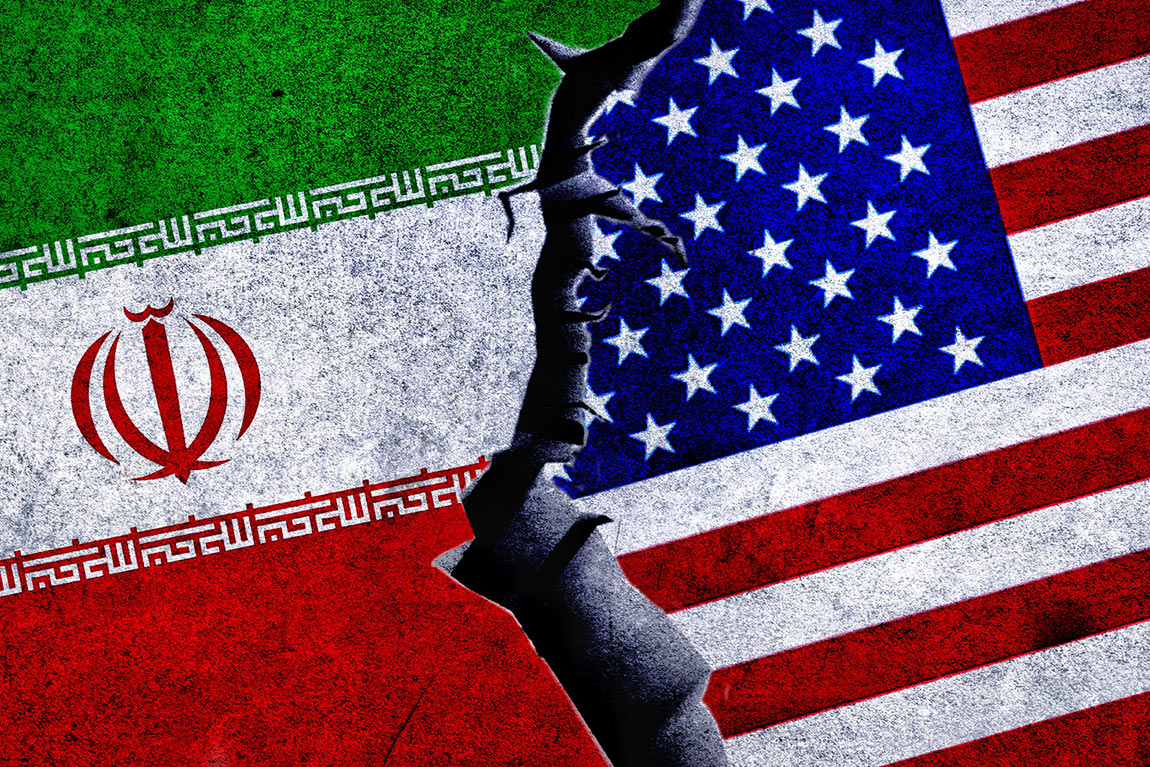
Expert Speak | 30 June, 2026
Oman: Positive Neutrality and the Limits of U.S.-Led Peace
The following excerpt is from Chapter 3 — Whither the Board of Peace? Perspectives from Washington and the Gulf.
On 19 February 2026, Oman’s Ministry of Foreign Affairs confirmed that Foreign Minister Sayyid Badr bin Hamad Al- Busaidi attended the first Board of Peace (BoP) meeting, but strictly as an observer. The official statement framed participation as consistent with Oman’s “fixed approach” to dialogue, respect for international law, and United Nations (UN) resolutions supporting a two-state solution with East Jerusalem as the Palestinian capital.[1] Rather than praising the institutional design of the BoP, the statement anchored engagement in normative principles. By sending the foreign minister to the meeting while avoiding membership, Muscat signalled constructive engagement without institutional alignment.
Political scientist, Omran Al-Abri, characterises this posture as “observation without commitment”, maintaining awareness and presence while avoiding binding obligations.[2] This observer posture builds on Oman’s earlier reaction to the Gaza ceasefire initiative. In January 2026, the Foreign Ministry welcomed international efforts tied to UN Security Council Resolution 2803[3] while stressing the need for a clear roadmap toward Palestinian statehood.[4] The emphasis on timelines reflects a core Omani concern that reconstruction cannot replace a political settlement.
The inaugural BoP meeting introduced a framework combining reconstruction funding with the prospect of an international stabilisation force. Yet, uncertainty surrounding governance structures, financial oversight, and the political horizon for Gaza persists. From an Omani perspective, these ambiguities raise questions about institutional durability. Muscat’s diplomatic tradition privileges multilateral legitimacy over initiatives closely associated with individual leaders or shifting geopolitical alignments. The proposed stabilisation force deepens these concerns. While some states frame the mission as humanitarian, the presence of external command structures blurs the boundary between reconstruction and political leverage. Oman historically favours mediation and confidence-building roles rather than externally imposed security arrangements.
Decoding the Logic of Positive Neutrality
Rather than issuing explicit criticism, Muscat relies on layered signalling: official statements, media framing, and elite discourse that link institutional concerns to foreign-policy doctrine. Oman’s observer participation reflects what its policymakers and analysts often describe as “positive neutrality”: a doctrine that, as Al-Abri notes, has functioned as an institutionalised methodology in Omani foreign policy since at least the mid-1980s.[5] This posture is communicated through three mutually reinforcing layers of signalling. At the official level, the Ministry of Foreign Affairs framed participation within a consistent normative framework centred on international law, self-determination, and UN legitimacy. The language avoids endorsing the BoP’s institutional framework; instead, it presents engagement as part of Oman’s broader diplomatic ethos.
Semi-official media narrativesa echo this stance. Coverage in the Oman Daily, for example, adopted a neutral, wire-style format that relayed announcements without celebratory framing. The coverage juxtaposed funding pledges and military planning with references to Palestinian fears of exclusion, continued Israeli strikes, and UN humanitarian warnings. Rather than elevating individual political leadership, the framing redirected attention toward legitimacy and humanitarian realities, signalling cautious observation rather than endorsement.
A third layer emerges through elite diplomatic commentary. Reflecting on Oman’s observer status, Omani academics and diplomats, earlier cited in this article, framed the move as consistent with a doctrine of ‘positive neutrality’, emphasising the continuity of messaging, independence of decision-making, and openness to all parties. Drawing parallels with Switzerland’s and Austria’s observer postures, these commentaries present participation not as hesitation but as a strategic investment in diplomatic capital.[6] This positioning enables Oman to maintain access without assuming alignment. Together, these layers reveal a coherent communication strategy: institutional caution is translated into discursive restraint, reinforcing Muscat’s cultivated role as an ‘interlocutor state’: a country that develops a reputation for trustworthiness to become a trusted go-between, thus securing a more independent niche in an otherwise contested regional system.
Regional Calculus and Perception Risk
More strategically, Oman’s observer posture reflects disagreement not only with the BoP’s ambiguities but with its sequencing. Public descriptions of the initiative place reconstruction funding, governance transition, and an international stabilisation force at the centre of the immediate postwar agenda, while leaving the political horizon contingent on later developments. Muscat’s own language has pointed in the opposite direction. In welcoming the initiative tied to UN Security Council Resolution 2803, the Foreign Ministry simultaneously insisted on a clear roadmap and defined timeline towards the twostate solution. What Oman rejects is sequencing reconstruction and stabilisation before securing a credible political horizon for Palestinian selfdetermination.
Financial pledges at the inaugural meeting reinforced concerns that reconstruction without political settlement risks becoming managerial rather than transformative. The scale of that gap has since become concrete: the BoP has received virtually none of the US$17 billion pledged by its members, of an estimated US$70 billion required, and Arab governments remain unwilling to contribute while a credible path to Palestinian statehood is absent, confirming that the shortfall is not incidental but structural.[7]
Oman’s positioning also reflects a quieter regional calculus. Muscat traditionally coordinates with the Arab League and OIC (Organization of Islamic Cooperation) consensus on Palestine. Several non-Abraham Accords states—Algeria, Tunisia, and Iraq—have similarly refrained from full membership. By maintaining observer status, Oman preserves proximity to this camp while continuing constructive engagement with Washington’s initiative. This balancing allows Muscat to remain regionally credible among states wary of rapid normalisation dynamics, while avoiding isolation from emerging diplomatic frameworks. Regional dynamics reinforce this caution.
As regional analysts note, Oman has sought to maintain an independent diplomatic trajectory amidst shifting GCC alignments and growing unease over deeper Israel-UAE (United Arab Emirates) security cooperation.[8] Al-Abri makes the perception risk explicit: full membership in a body widely perceived in the region as closely aligned with the strategic priorities of the United States (US) and Israel would erode Oman’s credibility as a state that simultaneously sustains diplomatic and security relationships with Gulf states, Iran, Israel, the Palestinians, and the US.[9] Historical memory, including of the Dhofar war and earlier periods of external interference,b informs Muscat’s sensitivity to initiatives that could reshape regional security frameworks.
Palestinian Commitments and Domestic Resonance
Beyond the general logic of positive neutrality, Oman’s observer posture reflects a set of specifically Palestinian policy commitments that the BoP’s institutional design directly challenges. Muscat has consistently conditioned engagement with Israeli-linked frameworks on measurable progress towards negotiated settlement. When the Netanyahu government accelerated settlement expansion in 1996, Oman suspended its trade representation with Israel, signalling that access remained contingent rather than unconditional.[10]
While Abraham Accords partners deepened security and weapons-trade ties with Israel, absorbing nearly a quarter of its record 2022 defence exports,[11] Oman held firm: comprehensive peace is inseparable from Palestinian selfdetermination, with full statehood and East Jerusalem as its capital as the non-negotiable threshold. This is not diplomatic temperament but a longstanding and specifically Palestinian condition, one that places the terms of resolution firmly with Israel, and makes Oman’s constraint publicly legible rather than merely implied.[12], [13]
The Palestinian issue remains the deepest layer shaping Oman’s positioning. Official statements consistently foreground self-determination, international law, and the two-state solution. Yet, Oman’s stance is not driven solely by diplomatic calculus; it is also rooted in societal dynamics. Public solidarity has intensified since October 2023, with youth activism playing a visible role. A generation shaped by the Second Intifadac demonstrates heightened awareness, framing Palestine as a central moral cause through expanded donations, campaigns, and gatherings near the Sultan Qaboos Grand Mosque. Meanwhile the Grand Mufti’s repeated public interventions, including explicit endorsement of the Majlis al- Shura boycott proposal, illustrate how religious authority amplifies and legitimises that pressure on official positioning.[14]
Institutional initiatives further illustrate this societal dimension. In February 2026, the Ministry of Endowments and Religious Affairs launched the Palestine Endowment Institution, which is designed to channel charitable contributions through a governance-based framework that supports Palestinians.[15] The initiative reflects how state institutions translate public sentiment into structured humanitarian engagement. At the same time, historical complexity remains.
While many younger Omanis are less aware of earlier periods of pragmatic engagement with Israel in the 1990s or Sultan Qaboos’s cautious relations with the Palestine Liberation Organization (PLO) amidst the Dhofar conflict, these memories continue to shape elite strategic thinking. The coexistence of strong public solidarity with cautious diplomatic positioning underscores the balancing act at the heart of Oman’s foreign policy. This domestic resonance helps explain why Oman’s room for manoeuvre on Palestine is narrower than on other regional files. Alignment with a framework perceived to dilute Palestinian agency would not only affect external credibility, but also sit uneasily with a deeply embedded moral consensus at home.
The War and the Limits of the Peace Board
That sensitivity has been sharpened by the most significant regional rupture since the BoP’s founding meeting. The escalation of hostilities between the US and Iran following the collapse of nuclear talks in late February 2026 has materially altered the regional environment in which the BoP must operate and has lent Oman’s observer posture a retroactive coherence it might not otherwise have possessed. Gulf states that had anchored their economic futures in stability, through tourism, aviation, technology investment, and data infrastructure, now find that strategic proximity to American security arrangements carries acute vulnerability rather than guaranteed protection. The disruption of maritime traffic through the Strait of Hormuz has compounded these risks, threatening energy supply chains and economic planning across the region.
From this vantage point, Oman’s refusal to bind itself institutionally to a US-led peace framework appears less like hesitation than foresight. A state that had already committed to full membership in the BoP would now find itself entangled with a belligerent power whose regional credibility is in question. Indonesia’s trajectory makes the contrast concrete. Jakarta committed 1,000 troops to Gaza’s stabilisation force, then froze all BoP discussions in early March 2026 following US-Iran escalation. President Prabowo Subianto indicated he would withdraw if the Peace Board ceased to serve Palestinian interests.[16] The Indonesian case precisely illustrates the institutional entanglement that Oman’s observer posture was designed to avoid.
Foreign Minister Al-Busaidi’s March 2026 assessment in The Economist was unusually candid: America had “lost control of its own foreign policy,” a judgement carrying weight from the official who mediated recent US-Iran nuclear talks.[17] Whether this represents coordinated policy or personal intervention in crisis remains unclear. Time will clarify if this candour reflects a durable recalibration of Oman’s diplomatic voice.
For the BoP, the implications are significant. A reconstruction framework premised on American leadership cannot be insulated from the political consequences of that leadership’s conduct elsewhere in the region. Oman’s posture of presence without institutional commitment positions Muscat to remain a viable interlocutor regardless of how the conflict resolves—precisely because it never staked credibility on American stewardship. The war raises a prior question about the BoP’s adequacy: whether Gaza-centred reconstruction can carry weight while wider regional conflict remains unresolved.
Al-Busaidi’s writing implies an answer.[18] He argues that durable peace requires bilateral reconciliation between Washington and Tehran, serving both parties’ national interests and not externally imposed stabilisation. He proposes multilateral nuclear transparency as a confidencebuilding path. From this vantage point, Oman’s conception of peace is architecturally more ambitious than the BoP’s mandate: reconstruction without regional de-escalation is not a peace process but a holding pattern.
Conclusion
Oman’s observer participation reaffirms its diplomatic doctrine of engagement without endorsement, and involvement without sacrificing neutrality and multilateral legitimacy. Through layered signalling, official statements, media framing, and elite diplomatic discourse, the Sultanate communicates a clear strategic message that influence does not require alignment. That judgement has since found later external corroboration, as Russia’s Foreign Ministry publicly questioned whether the BoP could coexist with the United Nations Security Council (UNSC) as the only universally recognised body for maintaining international peace and security.[19] It is a concern that reinforces the multilaterallegitimacy logic underpinning Oman’s choice of observer status from the outset.
The Peace Board’s design, founded outside the UN framework, premised on donor-led reconstruction, and conditioned on external stabilisation ahead of political settlement, runs directly counter to the normative architecture that Muscat has consistently upheld—one that is grounded in international law, UN Resolutions, and the primacy of Palestinian self-determination. In a region defined by fluid alliances and experimental security, Oman’s posture exemplifies a distinct form of small-state statecraft, one that balances pragmatism with principle. By remaining at the table without binding itself to the structure, Muscat preserves the autonomy necessary to defend its ordering of peace-making, where Palestinian agency, legal legitimacy, and political horizon precede reconstruction rather than follow from it.
Sumaiya Al-Wahaibi is a Post-Doctoral Researcher at the University of Copenhagen’s Department of Cross-cultural and Regional Studies.
[1] Ministry of Foreign Affairs of Oman, “Oman at Inaugural Meeting of Board of Peace,” February 19, 2026, https:// www.fm.gov.om/en/37658/.
[2] Omran Al-Abri, Head of the Department of Political Science, Sultan Qaboos University, interview with the author, conducted online, March 11, 2026.
[3] United Nations Security Council, Resolution 2803 (2025), S/RES/2803, https://undocs.org/S/RES/2803(2025).
[4] Ministry of Foreign Affairs of Oman, “Oman Welcomes US President’s Efforts to Consolidate Ceasefire in Gaza,” January 22, 2026, https://www.fm.gov.om/en/35575/.
[5] Omran Al-Abri, Head of the Department of Political Science, Sultan Qaboos University, online interview with the author, March 11, 2026.
[6] Marwan Al Balushi (@marwanbalushi80), “Oman’s Observer Status at the Board of Peace Reflects the Continuity of its Positive Neutrality Doctrine,” X, February 20, 2026, https://x.com/marwanbalushi80/ status/2024794432847921260?s=20.
[7] Karen DeYoung and Gerry Shih, “Lacking Money and Support, Trump’s Board of Peace Stalls in Gaza,” The Washington Post, June 1, 2026, https://www.washingtonpost. com/national-security/2026/06/01/trumps-board-peacestalls- out-gaza-reconstruction/.
[8] Giorgio Cafiero, “Where the Saudi-UAE Rift Leaves Oman, Qatar,” Amwaj Media, February 21, 2026, https:// amwaj.media/en/article/where-the-saudi-uae-rift-leavesoman- qatar.
[9] Al-Abri, interview with the author, March 11, 2026.
[10] Majid Al-Khalili, Oman’s Foreign Policy: Foundation and Practice (Westport, CT: Praeger Security International, 2009), p. 115.
[11] Mohamed El-Shewy, Mark Griffiths, and Craig Jones, “Israel’s War on Gaza in a Global Frame,” Antipode 57, no. 1 (2025): 75–95. The statistic is drawn from SIPRI data cited therein.
[12] Gawdat Bahgat, “Security in the Gulf: The View from Oman,” Middle East Policy 30, no. 3 (2023): 97–106.
[13] James Worrall, “Dissenting from the Inevitable? Understanding Omani Approaches to Israel and the Abraham Accords,” Middle Eastern Studies 61, no. 3 (2025): 371–386.
[14] Ibid.
[15] “MERA Establishes RO 1mn Palestine Endowment Foundation,” Muscat Daily, February 23, 2026, https:// www.muscatdaily.com/2026/02/23/oman-establishesro1mn- palestine-endowment-foundation/.
[16] Stanley Widianto, Stefanno Sulaiman, and Simon Lewis, “Indonesia Will Quit Trump’s Board of Peace if It Does Not Benefit Palestinians, Prabowo Says,” Reuters, March 6, 2026, https://www.reuters.com/world/asia-pacific/ indonesia-says-will-withdraw-board-peace-if-it-does-notbenefit- palestinians-2026-03-06/.
[17] Badr bin Hamad Albusaidi, “America’s Friends Must Help Extricate It from an Unlawful War,” The Economist, March 18, 2026, https://www.economist.com/ by-invitation/2026/03/18/americas-friends-must-helpextricate- it-from-an-unlawful-war.
[18] Badr bin Hamad Albusaidi, “America’s Friends Must Help Extricate It from an Unlawful War,” The Economist, March 18, 2026, https://www.economist.com/ by-invitation/2026/03/18/americas-friends-must-helpextricate- it-from-an-unlawful-war.
[19] “Russia Questions How Trump’s Board of Peace Will Work with UN Security Council,” Reuters, February 26, 2026, https://www.reuters.com/world/china/russiaquestions- how-trumps-board-peace-will-work-with-unsecurity- council-2026-02-26/.