 Global
Expert Speak | 13 November, 2026
Institutionalising Maritime Governance in the Gulf: Limits and Opportunities
The following excerpt is from Chapter 4 — Hormuz: Breaking the Insecurity Continuum
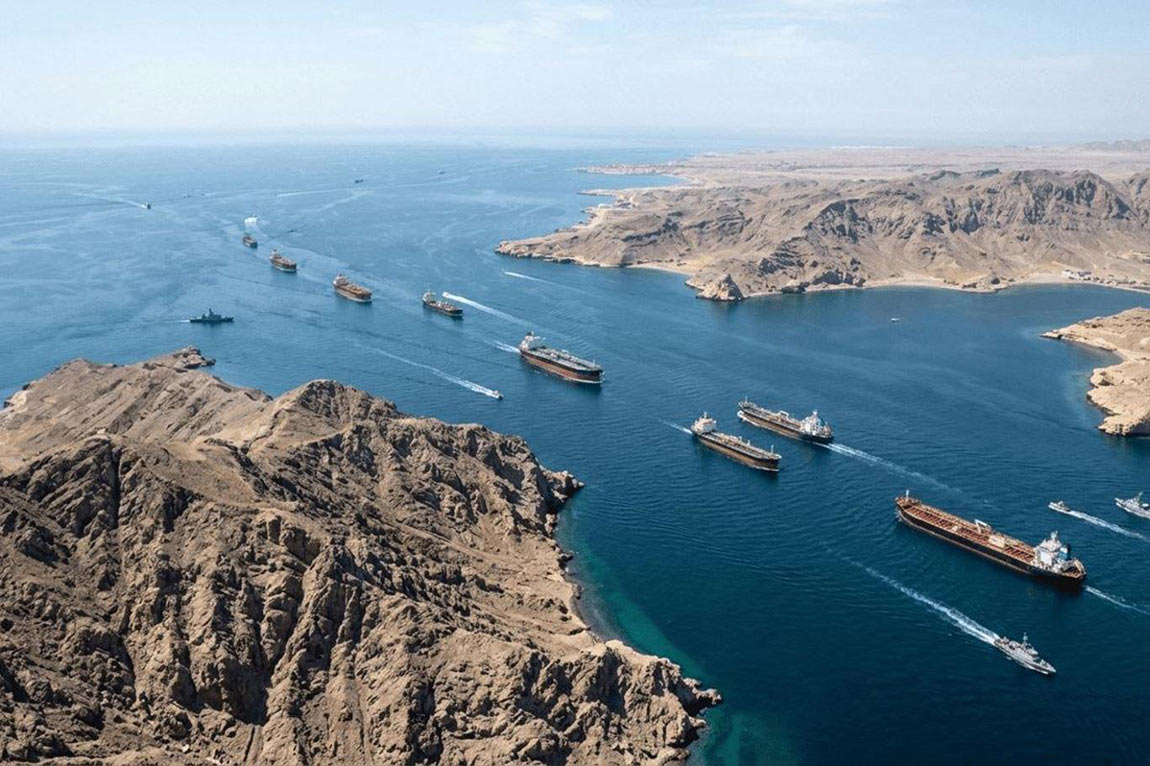
Once seemingly insulated from geopolitical volatility, the Gulf states have been drawn into direct confrontation with Iran during its 2026 war with the United States (US) and Israel, facing security threats as well as economic disruption throughout the conflict. One of the main vulnerabilities exposed by the war is the Gulf states’ dependence on maritime chokepoints, which Iran can exploit, from the Strait of Hormuz to the Bab el-Mandeb, directly threatening their economic and security interests by disrupting energy exports and access to global markets.
Over the past two decades, Gulf Cooperation Council (GCC) states have made massive investments in world-class maritime infrastructure. State-owned enterprises, including DP World and the Saudi Ports Authority (Mawani), have transformed the region into a global logistics hub through investments in ports such as Jebel Ali, Yanbu, and Fujairah. These ports have become critical nodes within international supply chains. The conflict, however, has exposed a declining maritime security in the Gulf. As major players in international energy security and key exporters of strategic resources such as minerals, the Gulf states need to adopt a new approach to maritime security. Building greater resilience is essential to ensure that these vulnerabilities cannot be exploited again by adversaries, particularly as this threatens the reliability of Gulf states as economic and energy-exporting powerhouses.
One solution could be a more institutionalised approach to maritime security cooperation between the Gulf states. A GCC-level institutional framework capable of overseeing regional maritime governance that is supported by common legal frameworks, joint planning mechanisms, and coordinated security policies could strengthen maritime security. This would also contribute to the security and stability of global maritime trade.[1]
Despite the potential benefits of such cooperation, long-standing challenges stemming from regional competition, divergent strategic priorities, and differences in geography and maritime interests have historically prevented meaningful progress. The current conflict in the Gulf presents an important opportunity to overcome impediments to deeper regional cooperation, given the shared vulnerabilities GCC states have experienced throughout the war.
Reducing Dependence on the Strait of Hormuz
Though the US and Israel’s concern with preventing Iran from asserting sovereignty over the Strait is shared by the GCC states, the Gulf states are entering an era focused on regional interconnectivity. Lessons from the current conflict, during which Gulf states with alternative export routes have experienced less economic disruption than those that are heavily dependent on the Strait,[2] have highlighted the importance of investing in railways, pipelines, and logistics networks to strengthen economic resilience and reduce dependence on maritime chokepoints.[3]
Some alternatives have already been developed, in part because Gulf states recognised the risks created by their dependence on the Strait and sought to reduce their vulnerability to potential disruption. Saudi Arabia’s East–West Pipeline, the UAE’s Abu Dhabi Crude Oil Pipeline to Fujairah, and Oman’s geographic position outside the Strait of Hormuz have all enhanced resilience. Meanwhile, efforts such as the UAE’s to expand hydrocarbon pipeline capacity to transport more oil directly to ports beyond the Strait, have reduced GCC states’ dependence on the chokepoint and ensured energy exports can continue if maritime access is disrupted.[4]
Other GCC states, however, are less geographically advantaged. Kuwait, Qatar, and Bahrain remain more dependent on the Strait, with their geographic constraints entailing greater cooperation with other GCC states to develop bypass options. Existing infrastructure, such as the Dolphin Gas Pipeline between Qatar and the UAE, demonstrates that cross-border energy cooperation is both technically and politically feasible. While these projects were not originally designed to bypass the Strait, they highlight the potential for deeper regional integration. Other options, like a future pipeline connecting Kuwait to Saudi Arabia’s existing export network, thus providing the former access to Red Sea ports and reducing reliance on the Strait, must be explored.[5] Access to alternative ports, pipelines, and shipping routes, such as Saudi Arabia’s less-exposed port of Yanbu, should also be considered. As no single measure can fully mitigate this dependence on the Strait of Hormuz, institutionalising maritimesecurity cooperation can provide the foundation for a more resilient and diversified regional maritime network, while complementing the GCC objective of reducing reliance on individual maritime chokepoints.
Institutionalising Maritime Governance in the GCC: A Way Forward
While Gulf states have heavily invested in developing their individual maritime infrastructure and capabilities, Iran has been more successful in shaping the wider maritime environment in the region. The consequences of this are evident in the latter’s ability to weaponise maritime traffic.
In addition to the Strait of Hormuz, the Bab el-Mandeb Strait represents a bargaining chip for Iran. Ansar Allah (Houthi), its proxy, has already used the chokepoint to disrupt maritime traffic and could potentially exploit it further. In July 2026, the Houthis announced a maritime blockade targeting Saudi-linked shipping through the Bab el-Mandeb, warning vessels associated with Saudi Arabia that they could be targeted. Since then, Houthi forces have attacked several vessels, including Saudi-linked oil tankers, demonstrating their ability to threaten shipping through this strategically important maritime chokepoint.
This shows how Iran and its proxies have been able to shape the regional maritime security environment. For the GCC, the challenge, therefore, is not simply to protect individual maritime assets, but to develop a more coherent strategy for shaping the maritime environment in its own interests. Two areas provide particularly important opportunities.
The first lies in strengthening maritime cooperation with Pakistan in the Gulf of Oman and wider Indian Ocean. Pakistan’s deep ties with Saudi Arabia have provided a foundation for maritime security cooperation, with recent reports suggesting that Saudi investors are considering increasing investment in Pakistan’s Karachi Port.[6] Other Pakistani ports, such as Gwadar, hold strategic significance, given their proximity to the Gulf and the wider Indian Ocean. Iran’s reported reliance on Gwadar as an alternative maritime outlet demonstrates the strategic importance of Pakistan’s maritime infrastructure.[7] Therefore, Saudi engagement with Pakistan’s maritime sector can be viewed as a means of increasing GCC influence across the wider Indian Ocean while also providing greater access to maritime infrastructure beyond the Strait of Hormuz.
The second opportunity area is in strengthening maritime cooperation with states in the Horn of Africa around the Red Sea and Bab el-Mandeb. The UAE has recognised the strategic threat posed by the Houthis since 2015 and has sought to strengthen its maritime presence in the Horn of Africa. Its earlier efforts in Djibouti were not successful, but it has since pursued arrangements involving ports in Somaliland to enhance strategic access and mitigate the risk of Houthi disruption to this critical maritime chokepoint.[8]
As these options demonstrate, greater coordination among GCC states in the maritime domain can enhance their collective influence while complementing broader economic, political, and strategic objectives. The benefits of such coordination are evident in Europe, where institutional frameworks have facilitated cooperation among states and enabled them to collectively respond to maritime security challenges. European coordination has, for example, strengthened the ability of states to exert pressure on Russian maritime threats.[9]
Addressing Limits and Challenges
One of the few lessons emerging from the conflict with Iran is the value of regional cooperation. The development of a GCC-wide framework for maritime coordination, however, should not be limited to countering Iran. Rather, it should enable the GCC states to use their collective economic importance to international trade and maritime commerce to build resilience against disruption and strengthen their ability to shape the maritime security environment around them. This is particularly important given the GCC’s historical difficulty in translating its economic and strategic importance into sustained collective influence over the maritime security environment.
Coordination carries a political cost. It requires GCC states to move, at least in certain areas, from competition towards cooperation. GCC states have developed rivalries over economic interests, political priorities and regional influence, which have often constrained sustained collective action. Saudi–UAE competition, including over ports and regional influence in the Horn of Africa, as well as divergent strategies in Yemen, illustrates these tensions. The Qatar diplomatic crisis further demonstrated how broader political disagreements can undermine regional cooperation. These divisions mean that any maritime institution must be designed carefully to insulate practical security cooperation from wider intra-GCC competition.
The challenge, therefore, is to develop maritime institutions that identify areas of common security interest while remaining sufficiently insulated from broader political differences. Maritime security offers a particularly useful starting point since many of the GCC states share a direct interest in protecting commercial shipping, ensuring freedom of navigation, maintaining the security of critical maritime infrastructure, and preventing disruptions to the trade routes on which their economies depend. Building cooperation around these shared interests could provide a practical mechanism for strengthening collective action without requiring the GCC states to resolve their wider political differences.
Such a framework should include all GCC states and be anchored within the existing GCC institutional structure while providing mechanisms for direct engagement with established regional partners. Countries such as Pakistan, Egypt and Türkiye, already have important security and economic relationships with the Gulf states, and could contribute to a broader maritime security network. Collective engagement with these partners would allow the GCC to pool diplomatic, economic and maritime leverage rather than relying primarily on individual bilateral relationships.
Importantly, the framework should not be defined principally around the Iranian threat. Although stronger GCC maritime coordination would strengthen the region’s ability to deter and respond to Iranian coercion, making Iran the sole organising principle would unnecessarily narrow the institution’s purpose and risk turning it into a reactive security mechanism. Instead, cooperation should focus on shared interests, including freedom of navigation, the protection of commercial shipping and critical infrastructure, responses to maritime disruptions, and resilience across the wider maritime environment linking the Gulf to the Red Sea, Arabian Sea, and Indian Ocean. This broader approach would allow the GCC to address the Iranian challenge while simultaneously advancing its economic, diplomatic and other interests.
Conclusion
Institutionalising maritime cooperation could move the GCC from episodic coordination towards sustained collective action. A framework built around information sharing, maritime domain awareness, joint planning, coordinated responses to disruptions and engagement with regional partners would strengthen the GCC’s ability to protect its maritime interests and respond collectively to emerging challenges. It would also enable Gulf states to leverage their central role in global trade to build resilience and enhance their collective influence, making maritime cooperation a practical instrument for advancing wider GCC objectives rather than an institution focused solely on security threats.
Naser Alsayed is Senior Fellow, Fiker Institute and the Shaheen Institute for Strategy Development; and Climate Adaptation and Finance Consultant, Global Green Growth Institute.
[1] S. Albimani and S. Kardaş, Common Maritime Security Policy in the GCC: Revisiting the Challenges in the Wake of the Red Sea Crisis, Middle Eastern Studies (Advance online publication).
[2] T. Callen, “The Economic Impact of the Iran Conflict on the Gulf,” AGSI, March 26, 2026.
[3] I. Alhalawany, “Connectivity Without Transformation in the Middle East,” Arab Gulf States Institute in Washington, June 22, 2026.
[4] J. Ambrose, “UAE to Complete Second Oil Pipeline Bypassing Strait of Hormuz by 2027,” The Guardian, May 15, 2026.
[5] N. Tayim, “Kuwait Eyes Regional Pipeline Tie-ups to Bypass Hormuz,” Argus Media, June 10, 2026.
[6] I. Dilawar, “Pakistan Port Weighs $5.4 Billion Karachi Waterfront Project Backed by Saudi Consortium,” Arab News, July 17, 2026.
[7] N. Ali, “A Strategic Conundrum: Pakistan’s Transit Corridor to Iran as Lifeline or Liability,” Middle East Institute, June 17, 2026.
[8] O. Caslin, “Saudis In, UAE Out? Why Djibouti Has Become the Gulf ’s Indispensable Outpost,” The Africa Report, January 7, 2026.
[9] P. Guastamacchia, “UK Unveils Plan for 10-Country Nordic Naval Alliance to Counter Russian Maritime Threat,” Euractiv, April 29, 2026.