 Global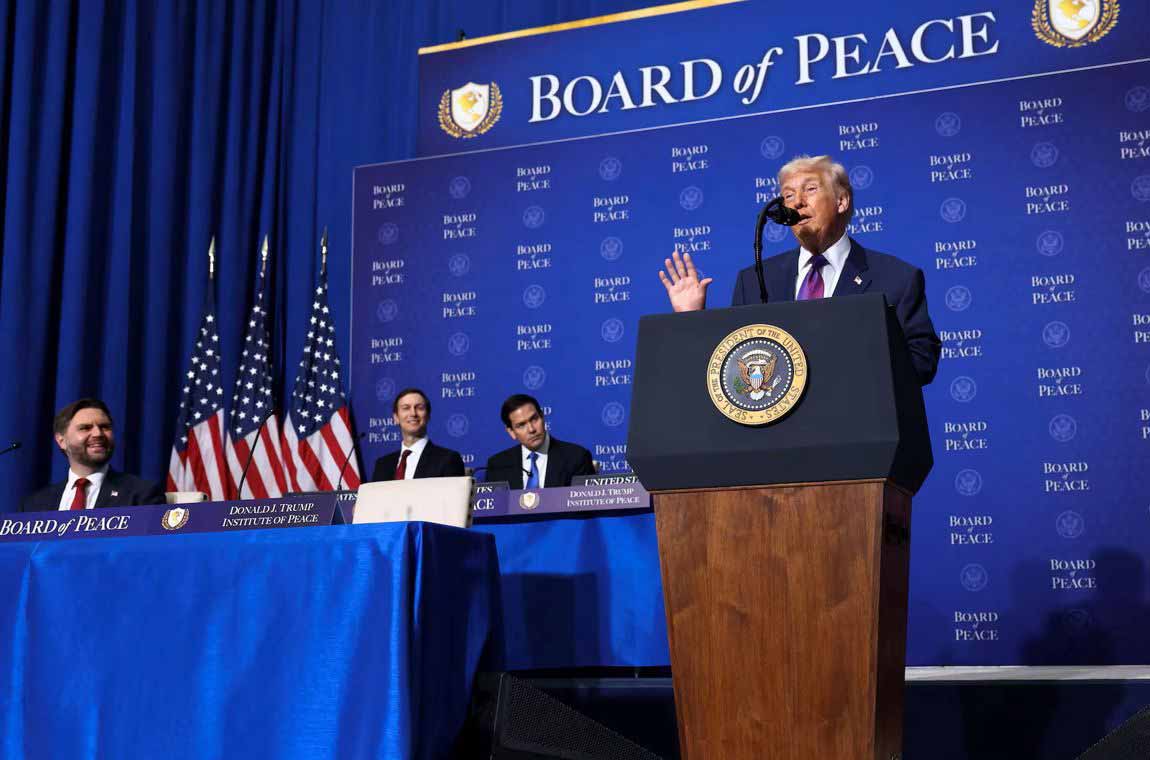
Expert Speak | 20 July, 2026
The View from Washington: Between Ambition and Distraction
The following excerpt is from Chapter 7 — Whither the Board of Peace? Perspectives from Washington and the Gulf.
The Board of Peace (BoP) was conceived as a forum for ending the Gaza war and managing the post-conflict reality in the coastal strip. However, it soon became clear that United States (US) President Donald Trump aspires for the BoP to play a more expanded role in addressing conflicts across the globe. This controversial goal has raised serious questions regarding the wisdom and practicality of this approach, and is generating reactions ranging from scepticism to fierce opposition. The Iran conflict has only exacerbated matters.
Even if the US administration were to continue pursuing this ambitious goal, its chances of success are minimal without demonstrating its ability to make progress regarding the conflict for which it was originally created, namely, Gaza. The Peace Board’s February 2026 inaugural meeting— whether in terms of attendance or substantive progress—and developments in Gaza do not bode well for its ambitions.
Background
The idea of the BoP can be traced to the Biden Administration (2021-2025) but got its first official public mention when President Trump announced his 20-point plan to end the Gaza war.1 The Plan envisioned the Board as a “new international transitional body” that “will set the framework and handle the funding for the redevelopment of Gaza”. The Peace Board was endorsed, along with the rest of the Plan, by a United Nations Security Council (UNSC) Resolution 2803 on 17 November 2025, and was given a mandate for two years.2 On 19 February 2026, the BoP convened its inaugural meeting in Washington DC. Additionally, it appointed a high representative for Gaza and various governing bodies, including the National Committee for the Administration of Gaza (NCAG), the body of Palestinian technocrats created to administer the Strip in accordance with the Plan.
The 20-point plan had a meaningful start: the Gaza ceasefire was largely implemented and all Israeli hostages were released. The international enthusiasm that marked the initial announcement, however, soon gave way to scepticism. Progress stalled with the advent of phase II of the Plan (dealing, inter alia, with Hamas disarmament, further Israeli withdrawals in Gaza, and reconstruction), raising questions about the Trump Administration’s sustained commitment and attention to the Plan.
The publication of the BoP’s Charter3 raised further alarm as it did not even mention Gaza and instead foresaw an expanded, indefinite mandate for the Board to address conflicts across the globe. This left many countries uneasy about the BoP competing with the UNSC. The French foreign ministry’s statement that the BoP “needed to recenter to focus on Gaza in line with a United Nation resolution”4—a diplomatic way of saying that it had overreached and overstepped its mandate—reflected the sentiment of many states in Europe and beyond. Even countries that showed initial enthusiasm grew hesitant. For example, Indonesia—which had committed a significant number of troops in support of the Board’s mission—announced that “all BoP discussions are on hold as all attention has shifted to the situation in Iran.”5
Losing Momentum?
The announcement of the Gaza ceasefire in October 2025 witnessed one of the largest gatherings of regional and world leaders regarding the Palestine–Israel conflict in recent memory. In a marked contrast, the inaugural meeting of the Peace Board in February 2026 was only attended by one regional head of state, the king of Bahrain. Other Middle Eastern states mostly sent foreign ministers or even lower-level representatives. Moreover, no permanent member of the UNSC—besides the US—participated. Key European countries either skipped the meeting or participated only as observers.
Beyond diplomatic optics, the BoP’s inaugural meeting did not produce a clear, unified position on key next steps in Gaza, particularly regarding the issue of Hamas disarmament. While President Trump, Israeli Foreign Minister Gideon Sa’ar and the Board’s High Representative Nickolay Mladenov focused on disarmament, Arab speakers largely shied away from explicitly mentioning it.
To be sure, the next steps in Gaza are objectively complex as they require major political decisions from the parties—specifically on disarmament as it relates to Hamas, withdrawals from Gaza, and allowing reconstruction as it relates to Israel. Yet, the failure to produce a unified position by the participants was also due to the lack of sustained high-level attention by the US. The key senior US officials in charge of this portfolio—US Special Envoys for Peace Missions Steve Witkoff and Jared Kushner—also handle other demanding portfolios such as Iran and Ukraine. Moreover, the delay in establishing the Peace Board, which occurred three months after the announcement of the ceasefire, allowed Hamas to entrench itself in Gaza and begin rebuilding itself, complicating matters and dampening initial international enthusiasm. The Iran war has further shifted focus away from the BoP. As the world—including the main mediators, Qatar, Türkiye, and Egypt—is understandably consumed by the war, the situation on the ground has stagnated. Talks regarding Hamas disarmament have failed to produce results, as the group awaits the outcome of the war and the fate of its allies in Tehran. In the meantime, a new reality is crystallising whereby Hamas is tightening its grip on the 47 percent of Gaza under its control, while Israel is solidifying its presence in the remaining 53 percent.
Though the inaugural meeting did succeed in securing pledges of US$17 billion, much of what was discussed in the meeting revolved around polished, futuristic visions of Gaza. The slick presentations of high-end hotels, state-of-the-art internet connectivity and ambitious economic plans seemed detached from the current reality of Gazans who struggle to meet their basic needs. In the intervening months, the lived reality in Gaza has not improved significantly, and pledged funds have been slow to materialise, deepening the lack of trust in the Board. While basic humanitarian aid—stopped in the early days of the war—has resumed,6 there has been no progress on the rehabilitation of Gaza, let alone on reconstruction. The National Committee for the Administration of Gaza (NCAG) remains based in Cairo, unable to enter Gaza.
Moreover, of the US$17 billion, US$10 billion were pledged by the US, setting the US as the leading contributor by a vast margin. The Iran conflict has created additional uncertainty about the future of these pledges. Even before the war, there were concerns regarding the president’s ability to produce these funds. The costs created by the war are raising further questions regarding the availability of these funds and congressional willingness to allocate them.
In addition to the US, Gulf states pledged a total of US$4 billion. These funds primarily reflect the Gulf Cooperation Council’s (GCC’s) longstanding commitment to aiding Gaza. But the commitment also reflects these countries’ desire to remain in lockstep with President Trump. Gulf economies, however, have been significantly impacted by the war, and it can be expected that GCC members will be reexamining their economic priorities once the extent of the damage becomes clear. Moreover, GCC states were against starting the war and, more importantly, are worried that the US may end the war in a way that does not safeguard their interests. These financial and political concerns may impact some of the GCC’s contribution to the BoP, particularly if the war ends in a manner that is unsatisfactory to various Gulf capitals.
The loss of momentum does not only impact the future of Gaza, it also undermines the Trump Administration’s very vision of the BoP as a platform for international peace diplomacy. This vision is already regarded with suspicion by many countries that believe that the UN’s role in addressing global conflicts—flawed as it may be—should be preserved. Several countries have also been concerned by the concentration of power in the hands of the chairman according to the Board’s Charter. The unilateral way in which the Iran military campaign was initiated, compounded with the bellicose language used by Trump against various traditional allies during the war, has deepened these concerns.
Next Steps
The impact of the Iran conflict on the BoP can only be judged once the war ends and its aftermath becomes clear. For now, however, the Iran war has created many uncertainties that have added to pre-existing scepticism about the BoP’s effectiveness, mission, and decision-making process. To address this, the Peace Board will need to quickly demonstrate its ability to fulfill—or at least make significant progress on—its original mission once the war is over. To that end, Gaza will be the test case. If the BoP can prove that it can successfully manage the implementation of the Gaza Plan, it will gain credibility that can be leveraged towards expanding its role. If it fails in this first task, detractors will feel vindicated and its potential supporters will be hesitant to fully commit.
For the BoP to show consistent progress in advancing the Gaza Plan, the US administration will need to engage in three main lines of effort.
First, it must produce a unified, explicit diplomatic position on Hamas disarmament. Without this, other aspects of the Gaza Plan cannot proceed. While diplomatic positions, forceful as they may be, are unlikely to produce immediate Hamas disarmament, they will create constant pressure on the group. To achieve such an outcome, the BoP will also need to secure Israeli commitment to implementing its obligations under the Plan.
Second, the BoP’s high representative must be empowered. While senior US officials will need to engage in high diplomacy with member states, the high representative is the point person for the day-to-day handling of the Gaza portfolio. The Iran war has impeded his ability to deliver, as the attention of senior US officials, as well as key regional mediators, has been consumed by the war. As a result, his most immediate priority—helping establish civilian Palestinian governance in Gaza— is already facing multiple challenges from Hamas, Israel, and the Palestinian Authority. To reverse this, the Peace Board’s leadership will need to demonstrate support for the high representative as soon as the war is over.
Third, the NCAG needs to be equipped and empowered to succeed. Ideally, the NCAG should be able to begin its work in Gaza immediately. Realistically, though, Hamas and Israel are unlikely to facilitate that before the end of the war. In the meantime, efforts should focus on securing resources and funding. Once the war is over, the BoP will need to press Israel and regional mediators to ensure that Israel, the Palestinian Authority and Hamas do not undermine its work. Given the entrenchment of Hamas and Israeli positions in the areas of Gaza under their respective control during the war, reversing this and enabling the NCAG to begin its work may require the direct intervention of President Trump.
More broadly, while success in Gaza is a necessary condition for establishing the BoP’s credibility, it is not sufficient. As long as the BoP is seen as an effort to undermine the UN and other international organisations, and decisionmaking remains concentrated in the hands of the chairman, many states will remain reluctant to support it.
Ghaith al-Omari is the Rosalinde and Arthur Gilbert Foundation Senior Fellow at The Washington Institute for Near East Policy.
[1] Rapid Response (@RapidResponse47), “President Donald J. Trump’s Comprehensive Plan to End the Gaza Conflict,” X, September 29, 2025.
[2] United Nation, “Security Council,” November 17, 2025.
[3] Board of Peace, “The Charter”.
[4] “France Says Surprised by European Commission Presence at Board of Peace,” Reuters, February 19, 2026.
[5] Stanley Widianto, “Discussions with Board of Peace ‘On Hold’ Due to Iran War, Indonesia Says,” Reuters, March 4, 2026, .
[6] “For First Time in Two Months, 323 Trucks Enter Gaza in One Day,” Asharq Al Awsat, April 15, 2026.